


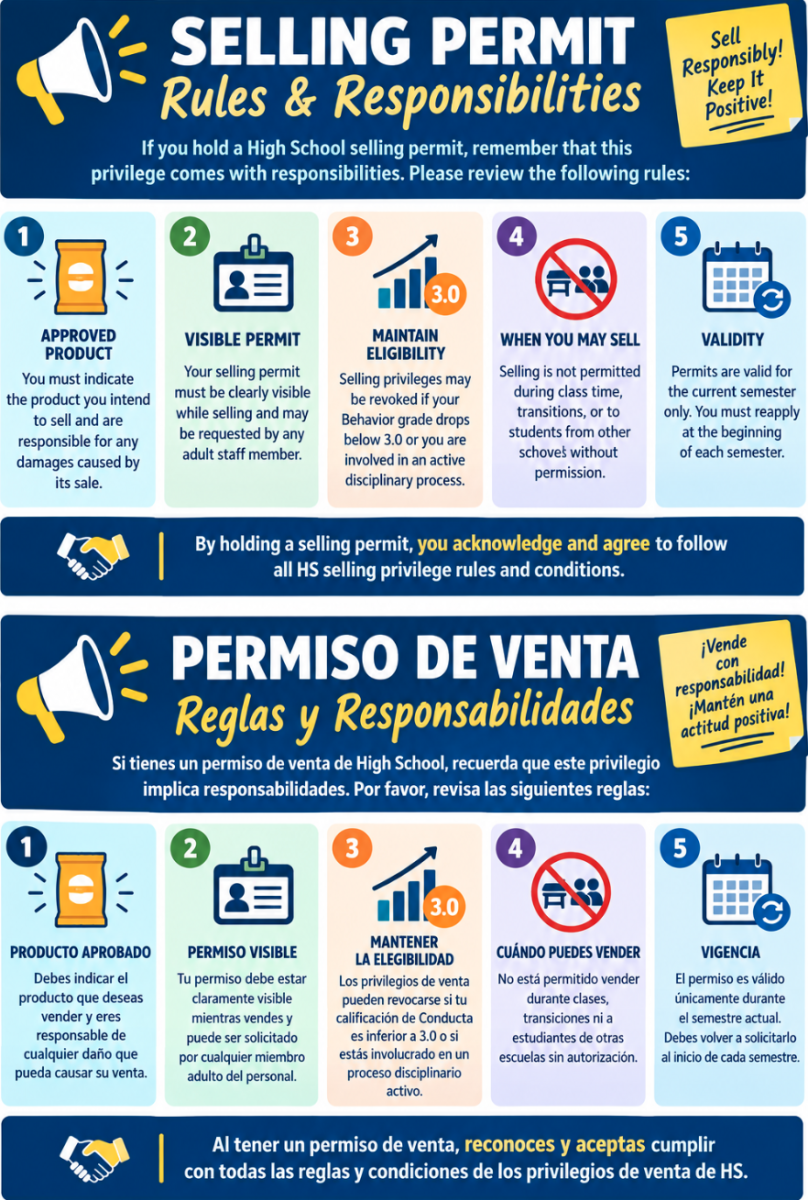
A new school permit is changing how students sell food at Columbus School, creating a system the administration says will improve safety while students argue that the additional requirements are making it harder to earn money and develop their businesses. The policy was introduced largely in response to concerns surrounding student-sold food. According to school administrator Paul Navarra, allowing students to sell food without a standardized process creates potential health risks. “There’s a risk of contamination, there’s a risk of students getting sick” (Navarra, personal interview, 2026). To address those concerns, students who want to sell food must complete additional safety requirements demanded by Colombian health law. “They have to have food handling and safety training,” Navarra explained (Navarra, personal interview, 2026). The school hopes that these requirements will reduce health risks while establishing clearer expectations for student sellers.
However, Navarra said the permit is not intended simply to restrict students. Instead, the school views the process as an opportunity for students to gain skills that can extend beyond campus. “The cool thing about that is like these students are getting real-world skills, and they’re getting the certifications that are going to help them sell outside of the school” (Navarra, personal interview, 2026). That emphasis on preserving student opportunities was also reflected in the administration’s decision to allow selling to continue. Navarra specifically credited Vice Principal Mr. Valentin with advocating for students to retain the ability to sell and earn profits rather than having student sales eliminated entirely. “Mr. Valentin said, no, you really have to give them a chance to get their profits because we should be supporting them developing their new skills” (Navarra, personal interview, 2026).
While the administration sees the permit as a compromise between safety and opportunity, student seller Violeta Eastman describes a system that has made selling significantly more difficult. “Selling has become much more complicated due to this new permit being required of us, as many of the requirements involve delays, are impossible to obtain, or are simply difficult to navigate” (Eastman, personal interview, 2026). According to Eastman, the new requirements have also changed the student marketplace itself. She noted that many students who previously sold products have stopped because of the permit, leaving fewer sellers. Although this has created less competition for the students who remain, it has also affected students who depend on peer sellers for snacks during the school day. “I’ve noticed that many people crave something sweet after lunch and get desperate to buy a treat,” Eastman said. She added that students who normally purchase snacks from their peers can end up going without food when those sales are unavailable (Eastman, personal interview, 2026).
For some students, however, the consequences extend beyond convenience. Eastman said student selling can provide money for important personal and family needs. “It has a huge impact because many people use these permits to help their families, buy necessities, and even help others, and with this ban, that money won’t be easy to come by” (Eastman, personal interview, 2026). Eastman also warned that making legitimate selling more difficult could encourage students to avoid the formal system altogether. In her view, when students cannot navigate the requirements, “they start selling illegally and on the sly” (Eastman, personal interview, 2026).
The two perspectives reveal a policy caught between two goals: regulating student sales for safety while preserving the entrepreneurial opportunities they provide. Navarra sees training and certification as a way to make selling safer and teach transferable skills. Eastman argues that the same requirements can prevent students from accessing those opportunities in the first place.
For Eastman, the issue ultimately extends beyond individual transactions. “I think it has a negative impact, as it prevents us from showcasing our entrepreneurial efforts and making money. Many of the products come from small businesses and are sold only at the school” (Eastman, personal interview, 2026).