


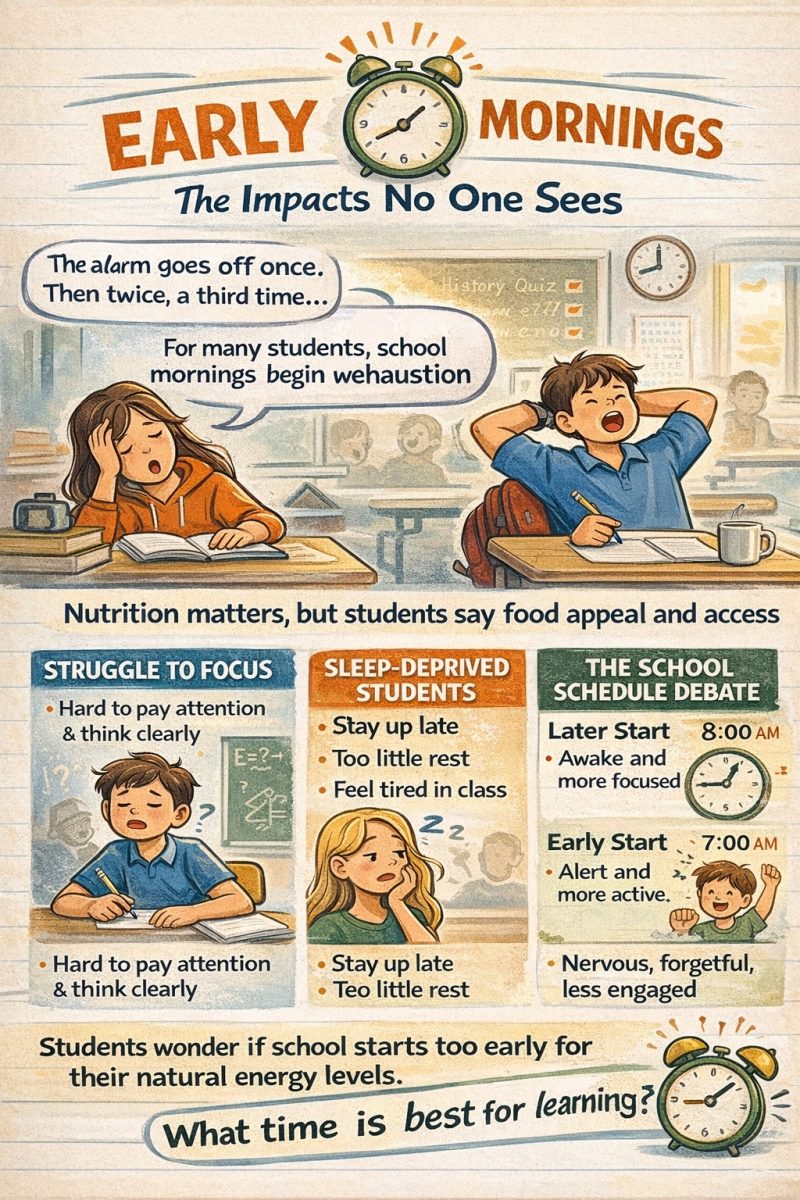
The alarm goes off once. Then twice. A third time. For many students, school mornings begin with exhaustion, making it hard to focus in their first classes or even wake up on time. Mariana Echavarria, an 11th grade student at TCS and a member of the Robotics Team, shared her routine:
“So basically I have to set three alarms. I put one at 6:10, another at 6:20, and then at 6:30 I wake up.”
Her experience highlights how tired many students feel before school even begins.
Another student explained that being sleepy affects learning, especially in demanding classes that require focus and mental effort, such as calculus. Ariana Agudelo, an 11th grade student at TCS, shared:
“If the first class is very theory-heavy, such as a language class or a calculus class, then it affects me negatively because I’m not as concentrated as I should be since I’m sleepy.”
When students do not get enough rest, their brains can struggle to pay attention, process information, and retain what they learn. Agudelo emphasized that lack of sleep affected an important presentation. She explained that she forgot her lines and did not perform as well because she was “really tired” and not in the best mood. These experiences suggest that early mornings can impact focus, confidence, and academic performance.
Sleep schedules also play an important role in how students perform at school. Echavarria admitted that on school nights she sometimes stays up until 11:00 or 11:30 p.m., even though she knows her ideal bedtime should be earlier. Going to sleep late means fewer hours of rest, which can make it harder to wake up, concentrate, and participate confidently the next morning. When students are tired, they may feel less prepared, think more slowly, and feel more nervous about answering questions or presenting in class.
Others noted feeling more productive later in the day, with one student saying, “I feel like I can get more done on a Sunday afternoon.” This creates a conflict between students’ natural energy levels and early school schedules, raising questions about whether school start times align with when students are most alert and ready to learn.
While many students feel early mornings are challenging, not everyone believes that starting school later is the best solution. John Higuita, a high school technology teacher who also teaches at a university, shared that students are often “fresh” early in the day and participate more actively than after lunch, when they are more tired and ready to rest.
“For me, starting later is not positive,” Higuita said. “The best option is to start early.”
He also expressed concern that ending school later could create new problems, such as reducing time for after-school sports, homework, or family activities in the evening.
Concerns were also raised about finishing school too late in the day. Some experts believe students feel more productive later in the afternoon because their biological rhythms shift during adolescence, making it easier to focus as the day progresses. However, others argue that students can still be alert in the morning after a full night of rest, which is why earlier schedules may work well for some.
Higuita explained that finishing at 5:00 or 6:00 p.m. could make daily routines more stressful due to heavy traffic and other responsibilities. This could reduce time for homework, extracurricular activities, and rest. Added stress may affect student well-being by increasing fatigue and limiting time to relax or sleep. These considerations suggest that changing start times could create new challenges, even if it helps with morning tiredness.
Overall, the issue of school start times affects students in different ways. Some feel that early mornings hurt their focus and performance, while others believe starting earlier keeps students more engaged and prevents long afternoons. The central question remains whether school schedules match when students are most alert and ready to learn. These differing perspectives show that the conversation is complex, and any potential change would need to consider both students’ energy levels and their daily routines.