


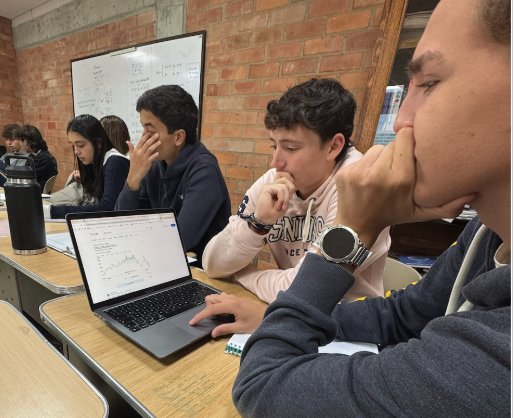
For some TCS seniors, investing began before they could vote. Pedro Yacaman, a 12th-grade student at TCS, said he was 15 when his father showed him an investing app, and he used birthday money to invest about 300,000 pesos in an S&P 500 fund. “I was 15. My dad showed me his investing app, and I put some birthday money, about 300,000 pesos, into an S&P 500 fund.” He believes starting early gives money more time to grow. “Because time does most of the work. If I start at 17 instead of 25, that’s eight extra years of my money growing without me doing anything.” However, Yacaman admits his knowledge is limited and comes mainly from social media. “Mostly YouTube and TikTok, honestly. I get the basics, but if you asked me how the fund picks its companies, I couldn’t really explain it.”
Matias Gomez, another TCS senior, also sees investing as a way to become independent. “Independence. I don’t want to depend on my parents forever, and this is the first thing I’ve done that’s actually mine.” Living in Colombia influences his thinking about money because his family often discusses rising prices. “Definitely. My parents always talk about how prices keep going up, so leaving money in a bank account feels like losing it slowly.” Still, Gomez believes teenagers should focus on developing good habits instead of trying to make quick money. “Start small, but start. The money you put in at 14 matters less than the habit you build.”
Pablo Mejia, a TCS senior, agrees that learning about investing early can be useful, but he worries that students sometimes follow trends without understanding what they buy. “Not really. A lot of people buy whatever their friends are talking about. They know the stock went up, but they couldn’t tell you what the company does.” Mejia learned this lesson through his own experience with cryptocurrency. “I bought a crypto coin everyone was hyping, and it dropped about 40 percent in a week. I panicked and sold, which was the worst thing I could have done.” His experience shows how excitement can lead to decisions people later regret.
The three seniors see different benefits and risks in starting young. Yacaman values giving money more time to grow, Gomez emphasizes independence and building habits, and Mejia warns against copying friends or chasing trends. Their experiences suggest that starting early is most useful when combined with learning and responsible decisions. Mejia now follows a simple rule when evaluating investments: “I don’t buy anything I can’t explain in one sentence. If I can’t explain it, I’m just gambling.”