


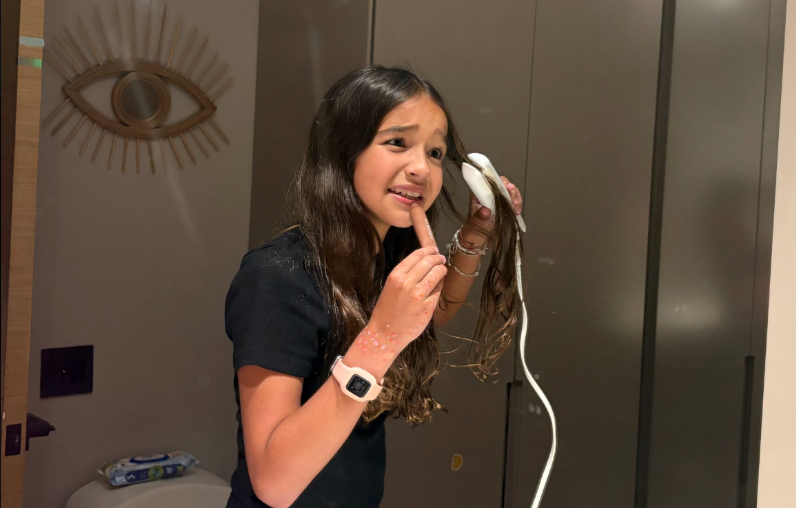
Walking through the hallways of TCS, girls see different beauty trends around them, from straight, highlighted hair to expectations about body shape. These unwritten standards can influence how girls see themselves, compare their appearance to their classmates, and feel about their own bodies. They can also affect how much time and money girls spend trying to fit these expectations.
Through the experiences of students from different grades, it becomes clear how beauty standards can become part of everyday life at TCS.
For ninth-grade student Emiliana Sanchez, the pressure to meet specific physical expectations begins as soon as students enter high school.
“Honestly, I think the standards expected of girls at Columbus are that they need to be super thin, that they be hyper-focused on their appearance, and that they have deeply internalized the idea that they have to be pretty.” Sanchez perspective shows how she sees these expectations as part of the environment girls experience at TCS, and how not only one but several girls feel and look this way.
This constant comparison quickly takes a toll on students’ mental well-being and self-esteem.
“I think it does affect them mentally, because they’re constantly comparing themselves to friends or other people,” Sanchez said. “…and they don’t feel beautiful themselves.”
Sanchez emphasizes that these expectations stem from a combination of peer commentary and online media.
“I think it mostly comes from three sources: things you hear about what people do to themselves, or what you’re told—for instance, regarding influencers—because they all fit such rigid stereotypes,” Sanchez said.
While Sanchez describes the internal pressure ninth-grade girls experience, Senior Tommaso Orsini extends the conversation by explaining how social observation and male perspectives reinforce those expectations. From a male senior’s perspective, the drive to meet beauty standards often stems from a desire for social security and validation.
“I personally think appearance is important for girls because they want to feel secure about how they look,” Orsini said. “They want to feel pretty and build an image for themselves, which is a big part of beauty standards from a male perspective as well.”
Orsini points out that casual commentary from peers across campus amplifies body image insecurities. “I feel it is not only boys, but everyone in society are used to making comments about people’s styles or weights or looks so I feel like the comments made by people can make women feel insecure about their looks, of how they dress, and things like that.”
That social pressure often forces girls to adapt to rapidly changing beauty trends just to feel included.
“I feel like, from my perspective as a man, women have pressure to stay on top of current beauty trends,” Orsini said. “Girls try to reach them to avoid feeling left out.”
Senior Sofia Gomez validates Orsini’s observation about trend pressure, pointing to specific hair styling habits as a primary example on campus.
“I think hair is a very important beauty standard at The Columbus School,” Gomez said. “A lot of girls have their hair straight and get highlights, which influenced me to get highlights in my own hair.”
Maintaining those hair trends requires significant financial investment and recurring salon visits.
“Since highlights are a big trend, every four to six months I get my hair done,” Gomez said. “It costs a lot of money, so it’s very time-consuming, and I invest a lot of money in my hair and the products I use.”
Reflecting on her transition from middle school to senior year, Gomez recalls how peer comparison shifted her relationship with her appearance.
Gomez’s experience shows how beauty standards can slowly become part of a girl’s life, even when she did not care about them before. What starts as a small change in appearance can become a need to look like everyone else. But no girl should feel that she has to spend money, change her hair, or change who she is to feel accepted. Beauty should not be the price girls have to pay to fit in. At TCS, the question is not only what makes a girl beautiful, but why so many girls feel they need to change themselves to be seen that way.