


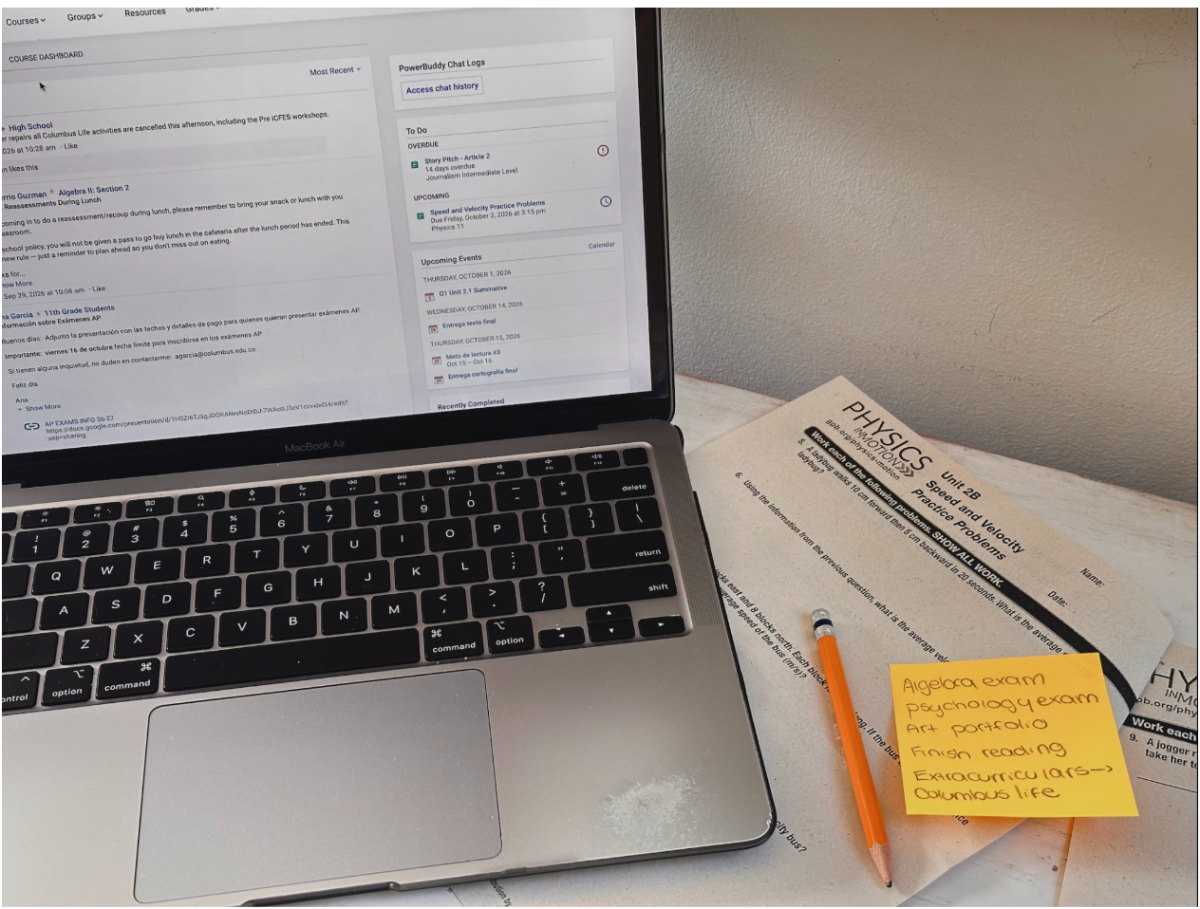
Late nights fueled by endless assignments, tense grade comparisons, and the constant worrying and pressure about peer expectations have become a standard part of the TCS high school experience. As deadlines pile up near the end of the quarter, the daily routine quickly shifts into balancing high grades and keeping up perfect appearances.
“The main sources that I think are affecting the students in our school, in our community, are first that in the last parts of the bimester, especially the last week, they get very overwhelmed with all the academic work,” Mentioned Mateo Arango, an 11th grade student at TCS.
This pressure is not only about schoolwork, but it also extends into how students dress and present themselves every day. Social expectations around physical appearance and clothes create an added layer of stress for students trying to fit in.
“I think it affects a lot because there are a lot of stereotypes about how people must look in school,” Mateo said. “For example, a new kid may enter the school and come with jeans, but after the first month they start using the PE uniform because they feel pressured. Also, there is a stereotype that we all need to have an iPhone or wear certain clothes.”
To navigate these constant social and academic standards, students often rely on their inner circle and community for guidance.
“I think what’s best for students is to have support with their friends, teachers, and counselors,” said Mateo.
While many students experience this pressure as an external force pushing them to fit in, high-achieving students who take on multiple leadership roles view their workload through a different lens. For example, eleventh-grader Rebecca Guerra explains that active involvement in school activities comes from personal interest rather than just trying to build an impressive personal profile.
“I think a common misconception is that students who seem to “do it all” are doing everything just for universities or to build the perfect résumé,” said Rebecca. “For me, a lot of the things I do are things I genuinely enjoy and care about. I choose to do it because I care about the community, the people we work with, and the impact we are trying to create. I do not think the goal is to be perfect at everything or to participate in everything just to look impressive. It is about having a plan, knowing what matters to you, and putting real effort into the things you choose to pursue.”
However, pursuing these goals requires making tough choices about personal time and learning to manage daily challenges. Finding room for personal hobbies and rest becomes a constant negotiation alongside school responsibilities.
“My time is not only divided between school and extracurriculars; I also want time to go to the gym, watch movies and series, read, and simply enjoy my free time,” Rebecca said. “Sometimes I do have to sacrifice those things when school or an extracurricular requires more of my attention, but I have learned to look at what I am gaining from that sacrifice. I also think balance means not making every setback into a huge deal.”
Instead of lowering expectations or assuming students cannot handle full schedules, Rebecca emphasizes that real support comes down to providing structure and understanding when commitments often overlap.
“I think students should be supported in making their own plans rather than being limited by assumptions about how much they can handle,” said Rebecca. “That support could mean helping students prioritize, organize their time, communicate when commitments overlap, or find solutions when things become difficult. I do not think schools should lower expectations or discourage students from being ambitious. Instead, they should give students the tools and flexibility to make their goals possible.”
Ultimately, supporting ambitious students isn’t about lowering the bar. Instead, it’s about giving them useful tools, guidance, and trust that they require to manage their high expectations and succeed on their own terms and personal goals.