


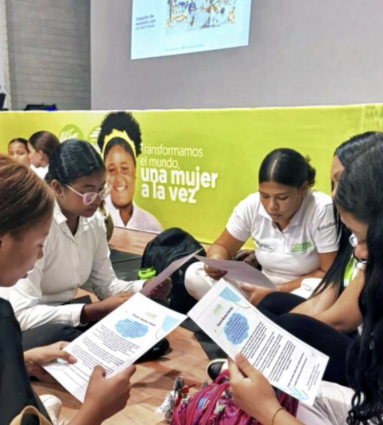
Every day, young mothers walk into classrooms or workplaces hoping for a chance to rebuild their lives, yet many are met with judgment instead of opportunity. In my research and interviews, I have seen how society repeatedly punishes adolescent mothers for their circumstances rather than supporting their potential.
This discrimination does not just harm individual women; it harms their children, their communities, and future generations. Despite policies that supposedly protect their right to study or work, stigma and institutional barriers continue to push them out. After speaking with people who work directly with young mothers, one thing became impossible to ignore: the system is failing them long before they even begin.
Adolescent mothers face discrimination in both education and the workforce due to social stigma, weak institutional support, and structural inequality. This discrimination traps them in cycles of poverty, but research and real stories show that with childcare, flexible schooling, and fair hiring practices, these young women can break the cycle. Society must stop judging them and start investing in them.
Educational discrimination is one of the strongest forces pushing young mothers into poverty. Studies from the National Library of Medicine reveal how teachers often shame adolescent mothers instead of welcoming them back to class. One participant described being told, “You came here to get pregnant. Go take care of the baby” (National Library of Medicine, 2024). When humiliation comes from the very people who should help them learn, many girls simply stop returning. The same study found that “most girls were out of school, out of training, and out of employment… unable to find well-paying jobs,” which shows how exclusion from school immediately limits their future earning power (NLM, 2024). Once pushed out of education, these young mothers face very few doors left to open.
The workforce is no more forgiving. In my interview with Santiago from Fundación La Juanfe, he explained that many employers hold a deeply rooted bias: “Organizations believe young mothers won’t have enough time to do their jobs because they must take care of their kids.” That assumption alone prevents countless women from being considered for stable employment. Human Rights Watch echoes this discrimination, stating that adolescent mothers are “denied their basic right to education for reasons that have nothing to do with their desire and ability to learn” (Human Rights Watch, 2022). When a young mother is pushed out of school and then rejected at work, poverty becomes almost inescapable, not because she is incapable, but because the system is intentionally rigid.
Yet, the path to change is clear. Santiago emphasized that flexible schedules are one of the most powerful tools: “The best way to help is by providing schedules so they can combine work with the education and growth of their children.” He also stressed the importance of financial programs and job training, which open doors that would otherwise remain closed. In my interview with NGO supporter Luz Adriana Ochoa, she described how transformative real support can be: “When a young mother receives childcare, mentorship, or flexible schedules, it’s like watching someone finally breathe after holding their breath for years.” Both of these points of views align with each other, and seem appropriate knowing that schedules are one of the biggest systemic issues holding mothers back.
Some people argue that schools and workplaces cannot adjust their systems without lowering standards or creating exceptions. But neutrality is a myth when the system is already built against certain groups. Research shows that adolescent mothers in Latin America are three times less likely to reach university-level education because of structural barriers, not because of personal shortcomings (Reproductive Health, 2024). Changing the system is not special treatment, it is correcting decades of inequality.
The truth is simple: adolescent mothers are not lacking ability; they are lacking opportunity. Education access, childcare, flexible schedules, and fair employment practices are the difference between a lifetime of poverty and a future of possibility. If we want stronger communities and real progress, we must stop punishing young mothers for their circumstances and start supporting their potential. The cycle of poverty ends when opportunity begins, and that responsibility begins with us.