


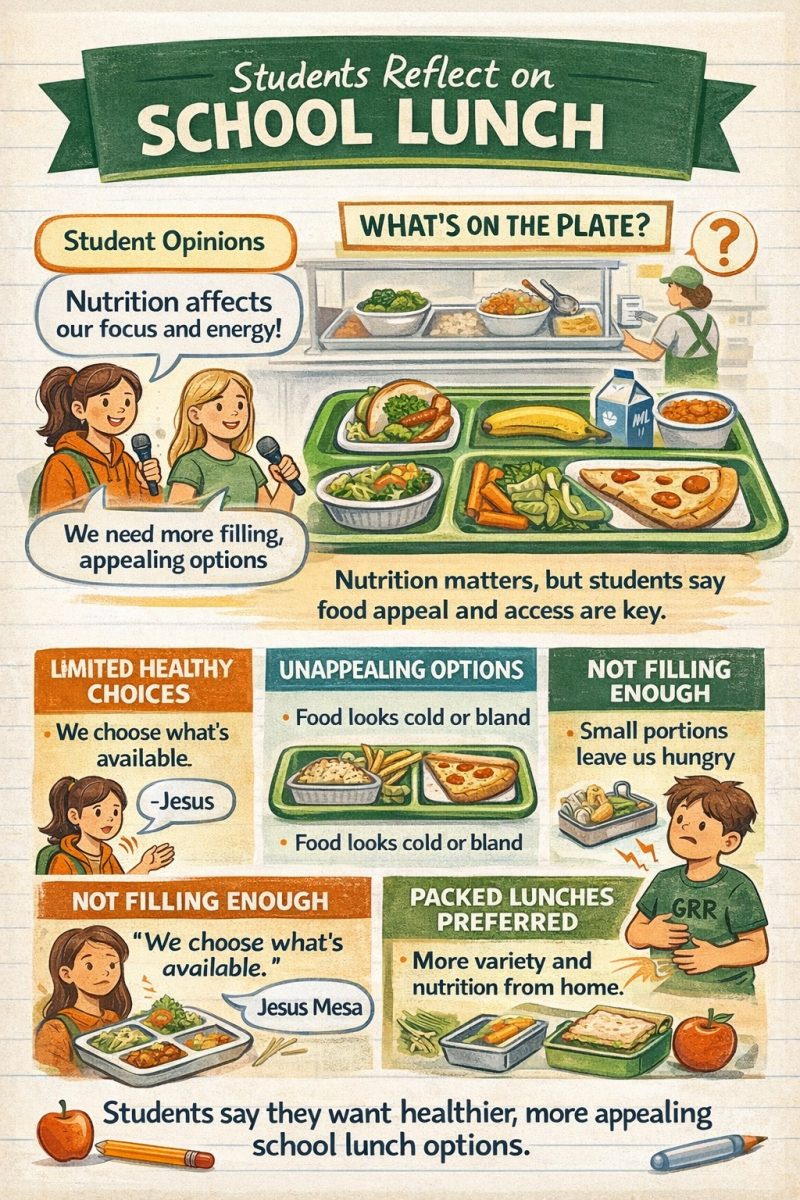
Students at the school are paying closer attention to what they eat and how it affects their day, especially when it comes to school lunches. While opinions vary, a common theme emerges: nutrition matters, but availability and appeal strongly influence what students actually choose to eat.
Several students connected food directly to their energy levels and academic performance. Camilo Hoyos, a 12th-grade teacher, summarized it simply: “You are what you eat.” Maria Jose Mesa, a 12th grader, agreed.
“If you eat non-nutritious foods, then obviously that’s going to affect your performance,” Mesa said.
For some students, the impact is immediate. Sofia Betancourt, also in 12th grade, described how healthier choices help her stay focused later in the day.
“It makes me feel great in my last classes because it gives me energy to get through them,” Betancourt said.
When asked how the school could better support healthy eating habits, students emphasized the importance of what is offered in the cafeteria. Mesa suggested that availability plays a key role in decision-making.
“Selling nutritious meals — if the only things available to buy are nutritious items — then students don’t have a choice but to buy them,” Mesa said.
This perspective highlights how access can shape behavior. If healthier options are the most visible and convenient, students may be more likely to choose them.
Some students pointed to specific menu items they appreciate. Betancourt mentioned the cafeteria bowl as a balanced option.
“I really enjoy the bowl because I think it is the healthiest option the school offers,” she said. “It has protein, vegetables, and rice — it’s everything you want in one meal.”
However, not all lunch options receive the same response. Appeal and presentation also matter.
“The problem with the school lunch is that most of the options are cold and not really appealing,” Mesa said.
Feeling full is another concern. Students noted that portion size can affect focus during afternoon classes.
“I think that student lunches are not filling enough,” Mesa said. “It can cause students to be distracted and inattentive during class.”
Even when healthier options are available, students admit they are not always the first choice.
“I think the cafeteria provides healthy food options for students,” Betancourt said. “The problem is that most of the time we don’t find them appealing enough, or I see my friends just grab a plate of fries.”
Packed lunches were also mentioned as an alternative. Mesa observed that lunches brought from home often reflect more personal preferences.
“I notice that packed lunches are usually more nutritious and more suited to what the student wants,” Mesa said. “They also normally contain more vegetables that people don’t usually eat with school lunch.”
Together, these perspectives show that students understand the connection between nutrition, energy, and focus. While healthy options may already exist, students suggest that making nutritious food more appealing, filling, and accessible could encourage better eating habits throughout the school day.