


By the time the school day ends, the day is far from over at The Columbus School. Practices, assignments, commitments, and expectations continue long after the final bell at 3:15 pm, leaving many students navigating a constant cycle of responsibilities.
“I feel a lot of pressure from my friends because they always come at me,” said Luciana Fajardo, a ninth-grade student at The Columbus School. “After all, I don’t spend that much time with them. But I think that I am trying to be better.”
For many students, pressure is not limited to social relationships. Academic performance and personal achievement often introduce an additional layer of expectation, especially for upperclassmen balancing long-term goals.
“And also I feel pressure to be a very good tennis player because I am trying to qualify for nationals,” said Annika Pettersson, a 12th-grade student at The Columbus School.
Despite these challenges, students often develop strategies such as time-management techniques, structured routines, and support systems to manage competing demands.
“Well, I have a trainer who helps me maintain a good sleeping schedule and a good routine. So I don’t really have a problem with that,” Pettersson said.
Teachers observe how these pressures manifest in academic environments.
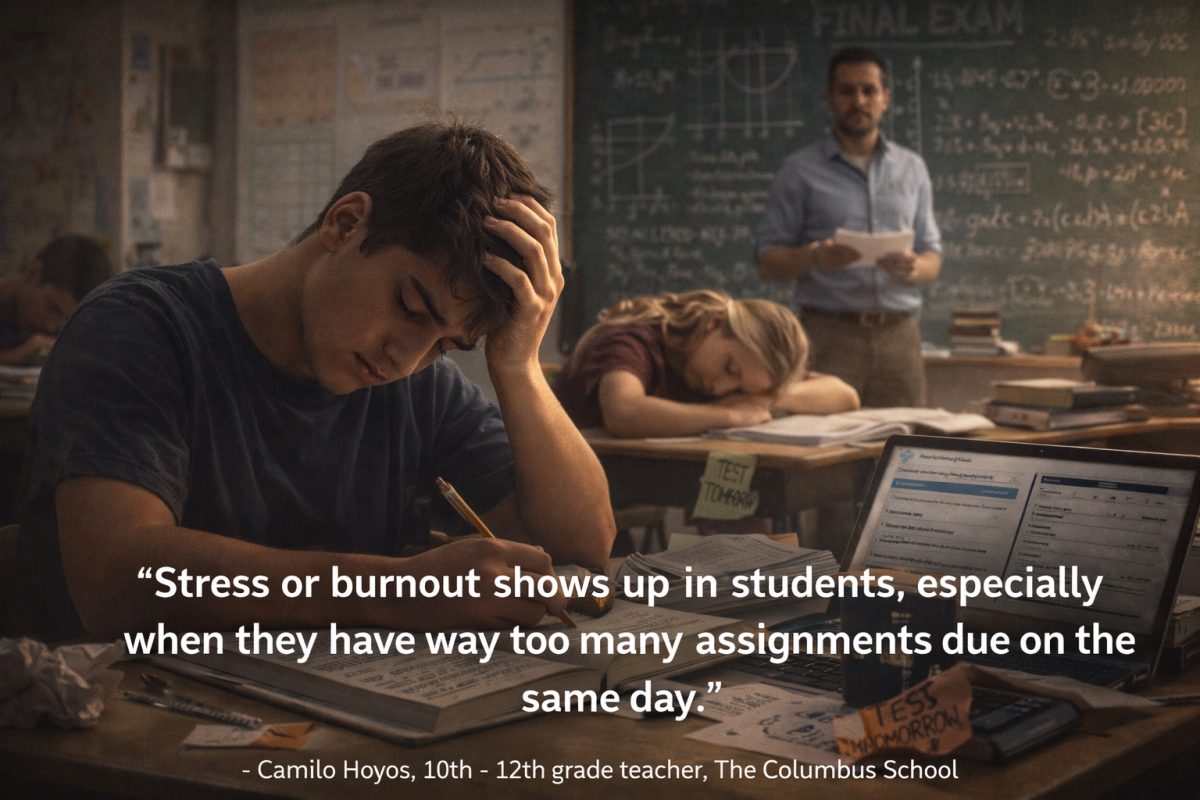
“Stress or burnout shows up in students, especially when they have way too many assignments due on the same day,” said Camilo Hoyos, a teacher of grades 10 through 12 at The Columbus School.
He noted that this has been a repeated pattern he has observed over time.
“For example, during several days of tests, I can definitely see an increase in their stress levels,” Hoyos said.
Stress presents itself differently from one student to another, as individual workloads, coping mechanisms, and personal expectations vary.
“It all depends on each individual, but I have noticed some students display signs of tiredness,” Hoyos explained.
Teachers describe these effects as both subtle and visible, often reflected in students’ daily classroom behavior.
“For example, they fall asleep in class, or they literally refuse to work,” Hoyos said.
Others experience stress through physical symptoms.
“Some are more physical, like headaches, or they get sick in some way,” Hoyos added.
The effects of student stress extend beyond individual experiences, influencing the broader classroom environment as well.
“It definitely affects teachers as well, because if a student is stressed, their performance level goes down,” Hoyos said.
Together, these perspectives reveal how pressure, stress, and burnout ripple through the learning environment. While experiences vary, the shared theme remains clear: the demands students face can shape not only their well-being, but also the broader classroom dynamic. As busyness increasingly becomes a marker of success, an important question remains: How much pressure is productive, and when does it begin to undermine the very goals it aims to achieve?
By the time the school day ends, the day is far from over at The Columbus School. Practices, assignments, commitments, and expectations continue long after the final bell, leaving many students navigating a constant cycle of responsibilities.
“I feel a lot of pressure from my friends because they always come at me,” said Luciana Fajardo, a ninth-grade student at The Columbus School. “After all, I don’t spend that much time with them. But I think that I am trying to be better.”
For many students, pressure is not limited to social relationships. Academic performance and personal achievement often introduce an additional layer of expectation, especially for upperclassmen balancing long-term goals.
“And also I feel pressure to be a very good tennis player because I am trying to qualify for nationals,” said Annika Pettersson, a 12th-grade student at The Columbus School.
Despite these challenges, students often develop strategies such as time-management techniques, structured routines, and support systems to manage competing demands.
“Well, I have a trainer who helps me maintain a good sleeping schedule and a good routine. So I don’t really have a problem with that,” Pettersson said.
Teachers observe how these pressures manifest in academic environments.
“Stress or burnout shows up in students, especially when they have way too many assignments due on the same day,” said Camilo Hoyos, a teacher of grades 10 through 12 at The Columbus School.
He noted that this has been a repeated pattern he has observed over time.
“For example, during several days of tests, I can definitely see an increase in their stress levels,” Hoyos said.
Stress presents itself differently from one student to another, as individual workloads, coping mechanisms, and personal expectations vary.
“It all depends on each individual, but I have noticed some students display signs of tiredness,” Hoyos explained.
Teachers describe these effects as both subtle and visible, often reflected in students’ daily classroom behavior.
“For example, they fall asleep in class, or they literally refuse to work,” Hoyos said.
Others experience stress through physical symptoms.
“Some are more physical, like headaches, or they get sick in some way,” Hoyos added.
The effects of student stress extend beyond individual experiences, influencing the broader classroom environment as well.
“It definitely affects teachers as well, because if a student is stressed, their performance level goes down,” Hoyos said.
Together, these perspectives reveal how pressure, stress, and burnout ripple through the learning environment. While experiences vary, the shared theme remains clear: the demands students face can shape not only their well-being, but also the broader classroom dynamic. As busyness increasingly becomes a marker of success, an important question remains: How much pressure is productive, and when does it begin to undermine the very goals it aims to achieve?