


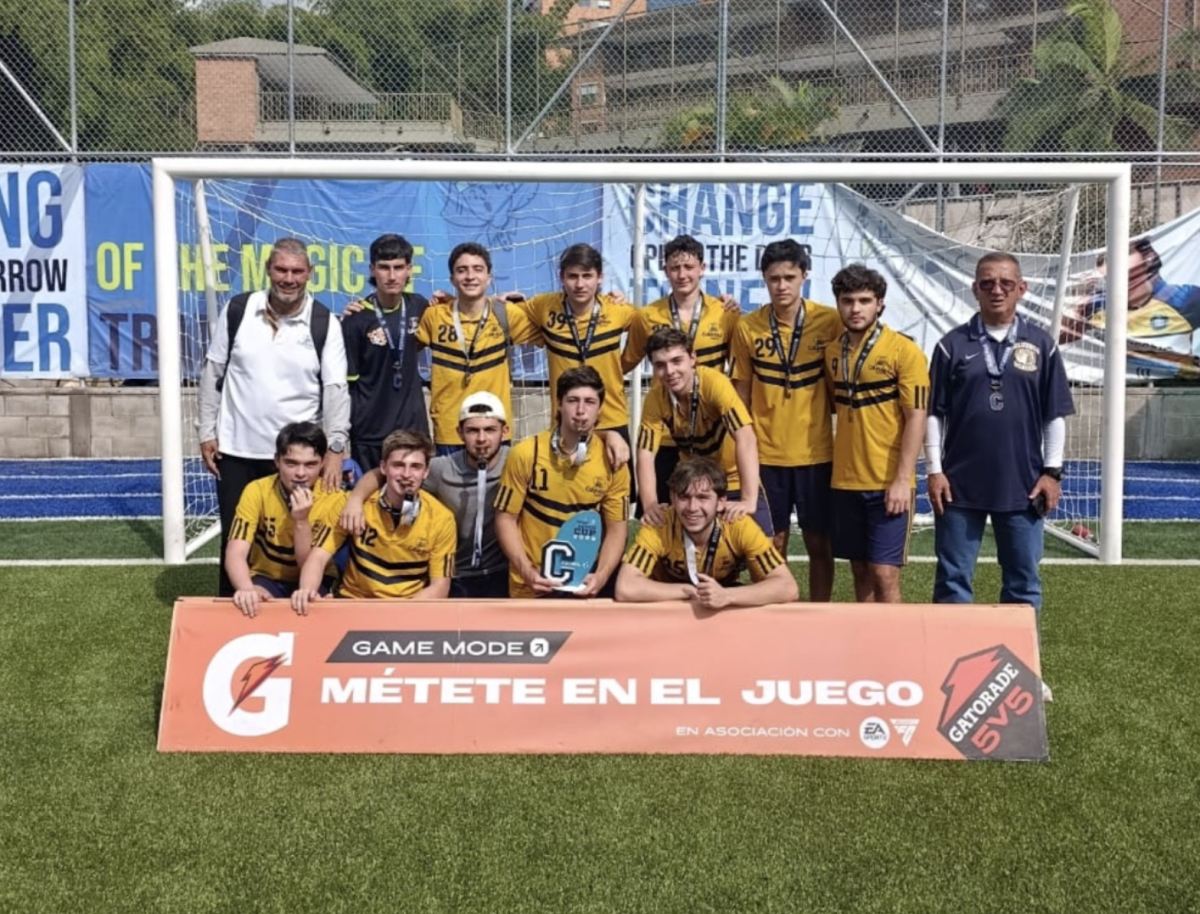
The last semester of 2025 tested The Columbus School varsity boys soccer team in ways that went far beyond wins and losses. After years of sustained success, the season became a turning point for a program forced to rebuild, redefine leadership, and regain confidence after a complete roster change.
Graduation played a major role in shaping the year. Every starter from the previous season had been a senior, leaving the team with an entirely new lineup and limited shared experience. “We had to rebuild the team from the bottom, getting used to playing together again,” said senior Miguel Gómez Vélez, one of the team’s key players. With new combinations on the field and little chemistry early on, consistency was difficult to achieve. “The lack of experience playing together eventually showed, and that affected the results,” he added.
Those challenges became most visible at Binacionales, the most important tournament in the ACCAS association, which brings together international schools from across Colombia. For more than three decades, The Columbus School had dominated the competition, winning 17 of the 31 tournaments and building a reputation as the most successful program in the association. The team also entered the event having won the previous four Binacionales in a row.
That history made this year’s outcome especially difficult. For the first time in school history, the team finished in eighth place at Binacionales, ending a long streak of dominance and exposing how much the program was still adjusting to change. The result marked a rare moment of struggle for a team accustomed to competing for championships.
Confidence quickly became a key focus throughout the season. Players emphasized how mental strength and mutual support often mattered as much as tactics or skill. “Confidence is huge. Supporting each other even when we make mistakes makes a big difference,” Gómez said. Moments of doubt affected performance, particularly in close matches where small errors had a larger impact.
From the coaching staff’s perspective, the season was never just about immediate results. Assistant coach Carlos Andrés Cadavid, a former professional player who once represented Independiente Medellín, emphasized the importance of continuity despite the setbacks. “Our goal was to keep the process going, even after so many players graduated,” he explained. Injuries, limited depth, and key losses throughout the semester made that process even more challenging, especially during tournament play.
Leadership also evolved as the season progressed. Senior Elías Peláez, the team’s first captain, pointed to a shift in unity after Binacionales. “After the tournament, the team started to separate, and that affected everything,” he said. A drop in collective commitment translated directly to performance. “When not everyone is fully committed, the results suffer.”
Despite the difficulties, there is a shared sense of optimism moving forward. With more time to train together and a clearer understanding of expectations, players believe improvement is realistic. “If we train more and stay together, I know we can improve,” Peláez said.
While this season may be remembered for its challenges, it also marked the beginning of a new chapter. For a program built on decades of success, the semester served as a reminder that rebuilding is part of growth — and that long-term identity is defined not only by trophies, but by resilience, accountability, and the willingness to start again.