


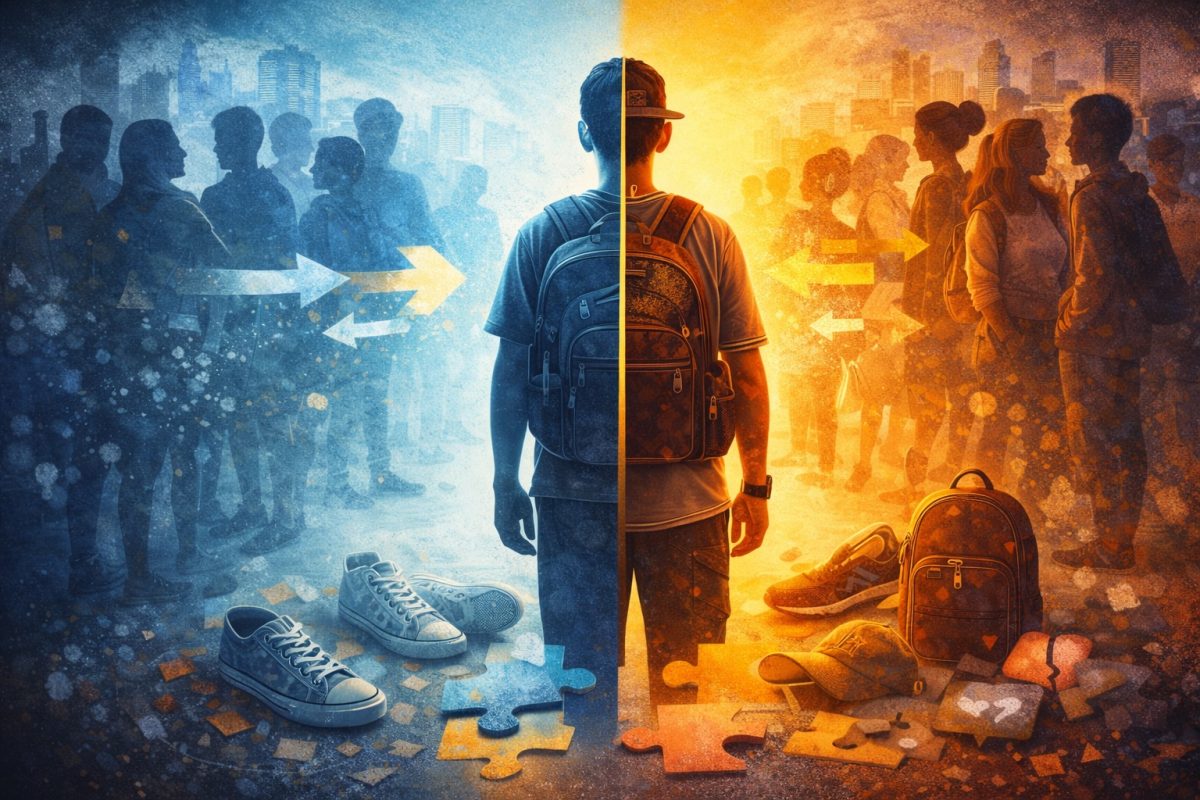
Walking through the halls of The Columbus School, it is easy to notice that many students look and act in similar ways. According to the students interviewed, Jeronimo Bernal and Antonia Salazar, this is not an accident. It is often the result of social pressure that pushes students to fit into certain groups.
One student explained that they have seen friends change after joining new social circles. Jeronimo Bernal shared, “I have had friends that were in other groups, and when they joined new groups they started doing the same bad things and changing habits, like drinking alcohol or getting close to drugs.”
This idea was echoed by another student who said, “I’ve seen friends switch groups when they go from middle school to high school. They suddenly start doing bad things they never did before, just because they wanted to fit in with the new people.”
Students also described how joining a new group can directly affect behavior. Antonia Salazar explained, “When someone joins a different group, it’s like they feel pressure to copy their habits, even if those habits aren’t good for them.” This suggests that fitting in can sometimes lead students to act in ways they normally would not, changing both how they behave and how they see themselves.
In some cases, the pressure to belong can lead to serious consequences. Several students mentioned situations where trying to fit in pushed peers toward unhealthy decisions. This shows how powerful social influence can be during adolescence.
Appearance also plays a major role in belonging. Antonia’s brother, Tomas Salazar, mentioned that how students look in middle school can influence what group they join. “Many students feel they need to dress nicely or be popular. Some feel they must act ‘cool’ to be accepted,” Paul Navarra said. Jeronimo Bernal added, “A lot of students think they have to dress really nicely or be popular in order to belong. The urban style that Medellín shows, and even how students wear the uniform, becomes a symbol of how they change how they act.”
Some students even feel they must project a tough image by acting secure, wearing expensive clothes, or following the style of the city. As one interviewee explained, “Some kids pretend to be ‘cool’ or tough just because they’re afraid no one will accept them otherwise.”
Trends at TCS also contribute to this pressure. Paul Navarra said, “Here at the school we have these trends where students wear the same shoes or backpacks to be part of certain groups.” Others agreed. “At The Columbus School in Medellín, many students wear the same shoes or backpacks because they don’t want to feel left out,” one student shared. Jeronimo Bernal added, “You can tell people follow trends here. If one group wears certain shoes, suddenly everyone else wants them too.”
Together, these voices paint a picture of a school environment where fitting in often means changing who you are, whether in behavior, appearance, or attitude. While belonging is important to many students, these interviews at TCS show that the pressure to conform can sometimes come at the cost of authenticity. The challenge for students is finding ways to belong without losing who they truly are.