


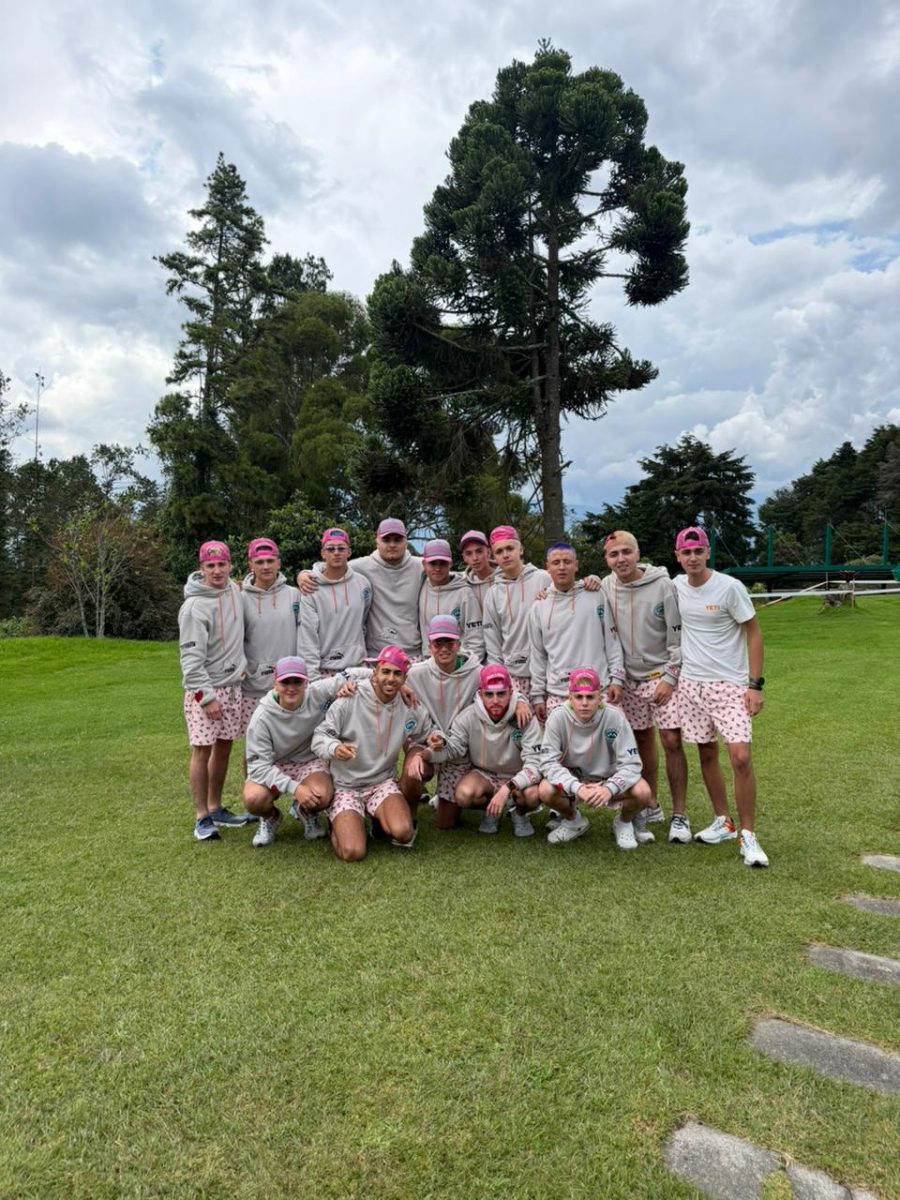
A group of students stands together before their trip to San Andrés, all wearing matching sweatshirts designed by one of their own. The designs are personal and full of inside jokes that only their friend group understands. For them, these sweatshirts are more than clothing, they show friendship, identity, and creativity. However, what students see as fun and meaningful has created a debate at school.
Student-designed merch has become more popular in recent years, especially in senior groups who want to create something that they will remember. Many students are inspired by past groups who made their own sweatshirts before them. As student designer Vicente Echavarría explains, “We wanted to make something that represented our group and that people would actually want to wear.” This shows that students are not just making clothes, but something that represents who they are.
The process of designing the merch is also important. Students often work together to share ideas and create something that is unique. Vicente explains that his group worked as a team and made different designs before choosing the final one. When they finished, many students reacted positively and more importantly, the merch had a deeper meaning. As Vicente says, “I think students like wearing merch that represents their group or their friends. It creates a sense of identity and belonging.”
For students, wearing these sweatshirts is about more than style, it is about connection. Cristóbal Villegas, a student who wears a merch made by his group, explains, “It represents our friendship, our shared interests, and our identity as a group.” This shows how important these designs are for friends, especially when they want to feel part of a group.
In addition, this merch gives students a chance to express themselves. Cristóbal says, “Students enjoy wearing it because it lets them express themselves and be part of something.” This expression is not always possible in a school environment, so merch becomes a way for students to show their personality.
However, not all designs are accepted by the school. Some include jokes or images that may not be appropriate. This creates a problem for students who want full creative freedom. Vicente explains this challenge: “One challenge we faced was the school’s restrictions. There were limits on what we could include in the design and how the merch could be used. This made it harder to fully express our ideas because we had to adjust parts of the design.” These limits can make students feel like their creativity is being controlled.
Cristóbal shares a similar opinion but also understands the other side. He says, “I felt a bit disappointed because it limits our creativity. But I also understand that schools have rules, especially if the designs are considered inappropriate.” His opinion shows that students can feel both frustrated and understanding at the same time.
From the school’s point of view, the rules are necessary. HS Principal Mr. Paul Navarra explains, “There was a lot of inappropriate imagery on certain senior sweatshirts.” This shows that the school is trying to avoid designs that may not be suitable for a learning environment.
Mr. Navarra also explains that these rules are meant to prepare students for the future. He says, “We want students to leave our school ready for college and career and with that students need to be able to read their environment and determine what is appropriate to wear.” This means students need to learn how to act differently in different places, like school or work.
At the same time, the school is not completely against student expression. Mr. Navarra adds, “I feel that we are pretty accommodating with the dress code and we allow students to express themselves. However, there are certain images that cannot be allowed.” This shows that the school is trying to find a balance between freedom and rules.
The main issue is finding that balance. Students want to be creative and express who they are, while the school wants to keep a respectful and focused environment. Both sides have their own valid points, which makes the situation more complicated.
One possible solution is better communication between students and the administration. In fact, Mr. Navarra mentions that the school is working on an approval process for future designs. This could help students share their ideas while making sure their designs follow the rules.
In the end, student-designed merch is more than just clothing. It represents identity, creativity, and friendship. At the same time, school rules exist to guide students and prepare them for real-world situations. Instead of seeing this as a conflict, both sides can work together to find a solution that supports both creativity and responsibility.
As the group of students stands together in their matching sweatshirts, their designs tell a story about who they are. The challenge now is making sure those stories can continue to be shared in a way that respects both student expression and school expectations.