


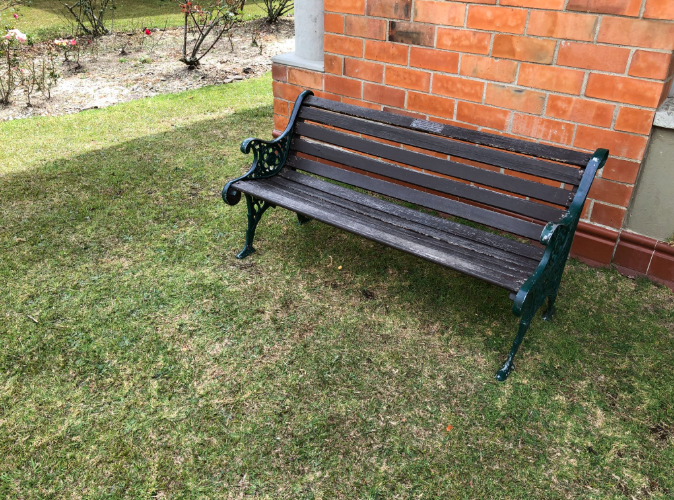
Imagine walking through the school’s boulevard as a student and deciding to sit on a bench, where you notice a small and shiny plaque on the top board of each bench. Most of the school’s benches hold plaques, yet students, visitors, and staff often lack knowledge of what these plaques represent and why they have been placed. For example, 11th-grade student Paula Jaramillo, 11th-grade student Nicolas Gomez, and 2026-2027 Senior Jacobo Beyer said they do not know the meaning behind the bench plaques, and Jacobo even said that in the morning, he passes by the plaques, wondering how students got their names on them.
The English teacher and curriculum coordinator, Emily Butterworth, said, “I do know that there have been classes that have donated benches in the past, and I think the class gets the plaques dedicated to them. I have seen that in my time. ”
The bench plaques were used as a way to recognize students and senior classes who have donated benches to the school. These plaques often mean a lot to these students and therefore have had a big influence on students who have been helped by donating these benches.
Butterworth explained her perspective on the influence the plaques hold over seniors: “Seniors care so much about getting their names on plaques, and when they come back, the first thing a lot of them do, and I’m not kidding, I’m talking about kids who graduated 30 years ago, they come back, and they want to show everyone their name on the plaque.”
She has emphasized the importance of recognition in plaques by the way that seniors often show others plaques they are being recognized on, whether they are Tiger Award Plaques, Athlete Plaques, Bench Plaques, or even High School Graduate Plaques. She also emphasizes the determination of students to leave a legacy, even through the donation of the benches.
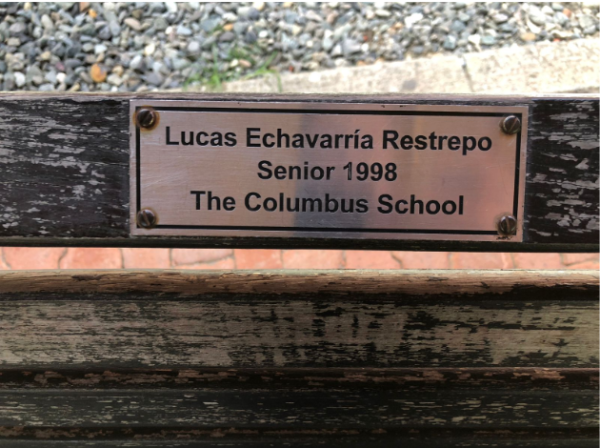 Butterworth added to the legacy idea by saying, “Especially for seniors, when they are leaving, they are thinking about their legacy and how they want to be remembered. And when their names go on a plaque, they serve as ‘oof, I’m gonna be remembered’.”
The Columbus School business manager, Elen Yepes, provided more background context on the school bench plaques by explaining how they came by the donation of the benches, and presented ideas regarding the impact of the school benches on her and the school culture, which differed from Butterworth’s.
She explains a little of the context behind the names on the plaques: “Who are the people named on the plaques? They are families, groups of students, and teachers who voluntarily chose to purchase and donate a bench to furnish the new campus. About eight years ago, the graduating class of that year revived the tradition and decided to donate another bench. That was the last one received to date. … The benches and their plaques were a one-off initiative that arose primarily during the transition to and arrival at this Las Palmas campus. The school itself does not have an ongoing program for producing or installing plaques,” Yepes said, translated from Spanish.
Yepes explained how the bench plaques usually highlight families, senior classes, and teachers who have helped with the donation of the school benches. These people have been written down on the respective bench they have donated, and since the tradition has been discontinued, the last plaque was placed 8 years ago. I also asked her about the impact they have had on the school, its culture, and her.
She also emphasizes the impact beyond the recognition in the plaques, and she goes into the impact they’ve had on the school’s culture and herself: “The greatest impact was the gesture of generosity and sense of belonging. Thanks to the initiative taken at that historic moment, the entire community today enjoys spaces for gathering and relaxation along the boulevard. … They remind me that the spaces we enjoy today exist thanks to the generosity of people who thought of future generations. It invites us to be grateful and to take care of our school for those who will come after us.”, Yepes said, translated from Spanish.
Upon explaining the impact it has had on the school’s culture and the significance that has come from this act of generosity, she also decided to talk about the people whom she thinks deserve a plaque yet haven’t received one, and whether she thinks the plaque tradition should continue.
Yepes ends off with a reflection on the meaning behind the generosity that comes with the plaques: “Since the plaques are neither an ‘award’ nor a form of institutional recognition, the issue is not about who ‘deserves’ one. Yet, every day at TCS, there are teachers, support staff, administrative personnel, students, and parents who do extraordinary work for the entire community without needing their names engraved on a plaque. … More than installing additional plaques, what truly matters is preserving the spirit that inspired them: a culture of caring for our campus and considering the well-being of others,” Yepes said, translated from Spanish.