


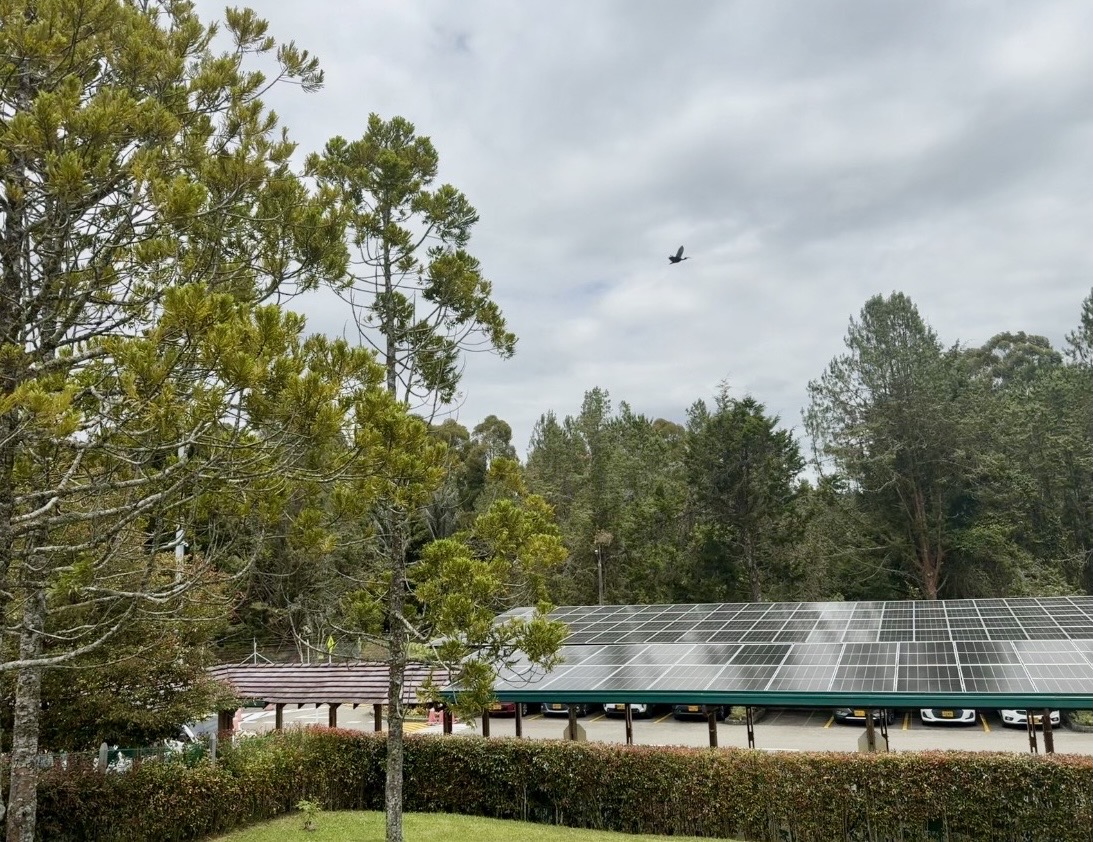
The TCS Campus: A Model Ecosystem for Thriving Sustainability Efforts
When you walk around the TCS campus, everything looks green, calm, and connected to nature. There are trees everywhere, birds flying close to the buildings, and open spaces that make the school feel alive. At first, it seems like a place that is already doing everything right for the environment. But if you pay closer attention, you start to notice that the reality is more mixed, because what students do every day also affects the ecosystem.
TCS has a very special environment compared to most schools. AP Environmental Science teacher Blair Dawkings explains, “From different activities that my classes have done, I think the ecosystem is very rich here. We have a large variety of different plants that do different things.” This shows that the campus is not just pretty, but also important for learning. Students are surrounded by real ecosystems, not just learning about them in a classroom.
The size of the campus also makes a difference. Dawkings says, “Our campus is massive and has many different ecosystems. It is the perfect place to learn about nature and how to take care of it.” This means that the school is designed in a way that mixes education with nature. Learning is not only inside classrooms, but also outside.
The school has also made real efforts to be more sustainable. For example, Lucas Vélez points out, “A clear example of a good environmental habit the school has is the solar panels placed in the parking lot corridor as well as in the art department.” These kinds of changes show that the school is trying to reduce its impact on the environment.
Students have also started to change some habits. Vélez says, “When metal water bottles became popular, it was a great thing for sustainability because plastic water bottles are not really seen anymore.” This is a simple example of how small changes can make a difference when many people adopt them.
However, not everything is positive. One of the biggest problems is still waste. Dawkings shares, “Littering and waste are major issues. I often pick up trash from the ground, and students do not always dispose of items properly or leave trays behind.” This shows that even in a school that values the environment, daily actions can go against those values.
Students also notice this problem. María José Ramos explains, “Some students are very aware of sustainability and try to recycle and reduce waste, but others are less mindful and leave trash or waste resources.” This creates a contrast between students who try to help and those who do not think about it as much.
At the same time, there are students who are trying to do better. Ramos says, “I make an effort to throw away trash properly, avoid wasting resources like food and materials, and encourage others to respect the school environment.” Her actions show that change can start with individuals and spread to others.
Still, the situation is not only about students being careless. Vélez offers another perspective: “I don’t think it’s fair to say that students don’t make a difference. While we are trying to help the environment, sometimes we just don’t have the knowledge to do it effectively.” This suggests that the problem is also about awareness, not just effort.
This connects to the role of the school. If students do not fully understand how to act sustainably, then the school should help teach that. Ramos supports this idea by saying, “Even though global environmental problems are important, the school environment still matters because it is part of our daily lives. Schools can teach habits and values about sustainability.” This shows that schools are not just for academic learning, but also for building lifelong habits.
In the end, the TCS campus shows both progress and challenges. The school has taken important steps, such as creating a green campus and using solar panels. However, what students do every day still matters. Throwing trash on the ground or wasting resources can undo those efforts.
For TCS to become a fully sustainable environment, both the school and the students need to work together. The school can continue improving its systems and teaching, but students also need to be more aware of their actions.
At the end of the day, the environment at TCS is not only shaped by its design, but by the people in it. Sustainability is not just something the school builds; it is something students choose to practice every day.