


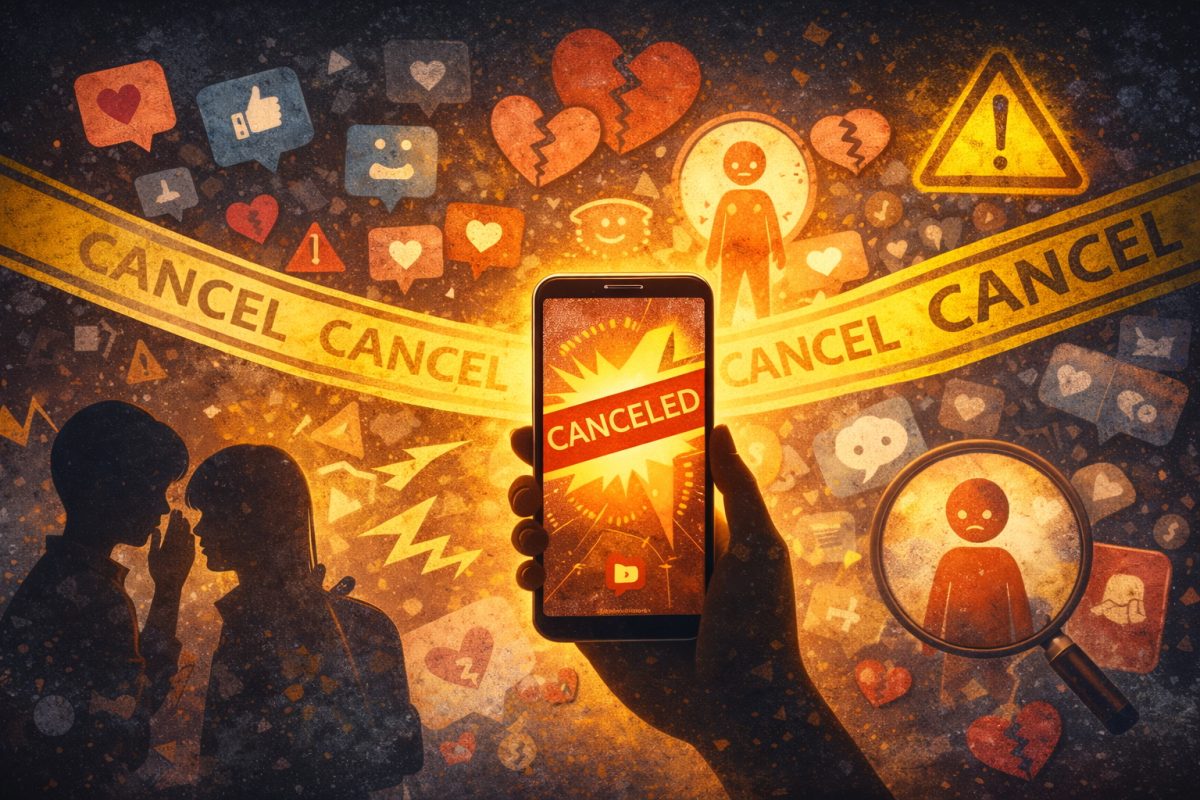
Cancel culture has become a powerful force on social media platforms like TikTok, Instagram, and X, but its influence no longer stays online. Increasingly, the same patterns of public shaming, judgment, and exclusion are appearing in schools. Brought in through social media, these behaviors affect how students interact with one another and how safe they feel expressing themselves.
While accountability is important, cancel culture often goes too far by relying on one-sided narratives, spreading rapidly without facts or the full story, and creating an environment of fear rather than learning.
One of the biggest problems with cancel culture is how easily people accept a single version of a story. As teacher Camilo Hoyos explains, “When you think something about somebody, and you base that thinking on one source or one side of the story, then you are a victim of the dominant narrative.”
In schools, this is especially dangerous. Students may form strong opinions about a classmate based on rumors or viral posts and spread them without knowing the full context or even caring to know the full story. Once a narrative takes hold, it becomes difficult for the targeted person to explain themselves or be seen as anything other than their mistake.
Social media plays a major role in allowing this behavior to spread quickly. Valeria Mantilla, a 12th grader at TCS, points out that “the drama online comes into school because students talk about it a lot, and then people start choosing sides, just like on TikTok or X.” This shows how online conflicts easily turn into real-life divisions between friends and classmates. She also explains that this sort of narrative “spreads very fast because people share things without checking if it’s true,” which highlights how reposting and commenting often happen without responsibility or consideration of the consequences. In a school environment, this leads to misinformation and unfair treatment of students.
Another serious issue is how online shaming changes student behavior. Mantilla observes, “I have seen students judge and criticize others online, but in school they avoid them or ignore them.” This avoidance may happen because students do not have the same confidence to treat people badly in person that they have online. In turn, this makes the situation worse for those involved, creating isolation and loneliness. Vicente Echavarria, another 12th grader, adds that students often feel pressured to participate, saying, “Students feel pressured to get involved in online drama, especially because there are a lot of haters online who don’t have to show their face.” Because of anonymity, students may say things online that they would never say in person, increasing cruelty and reducing empathy.
Cancel culture also makes it extremely hard for students to move on from mistakes. Echavarria explains that “if they do something bad and they get exposed to the whole online world… it’s very hard for people to forgive because it’s all over the place.” In schools, where learning from mistakes should be encouraged, cancel culture does the opposite. Instead of giving students a chance to grow, they may become excluded from group chats, activities, and sometimes even receive dirty looks in the hallway. This turns one mistake into long-term isolation, which damages mental health, weakens friendships, and reshapes social circles on a deeper level.
This is why many teachers and students believe canceling is not the solution. As Hoyos said, “I don’t think anyone should be able to cancel anyone just because of a difference in the way they think or act.” Schools exist to educate, not to punish students socially. Hoyos also argues, “As a school, we educate, so I think we should definitely create or design a strategy to address this issue.” By focusing on conversation and accountability instead of public shaming and exile, schools can help students resolve conflicts, rebuild trust, and feel safer participating in class and being themselves.
Ultimately, cancel culture has gone too far when it enters schools and creates fear, silence, and exclusion. The interviews show that it spreads quickly, pressures students to take sides, damages relationships, and prevents forgiveness. While accountability matters, this is not the correct way to bring mistakes to light or help people grow. Schools should focus on teaching understanding, critical thinking, and growth rather than allowing online shaming to control student life. Students should support one another instead of bringing each other down over what are often impulsive or immature mistakes. Only then can schools remain safe spaces for learning and personal development.