


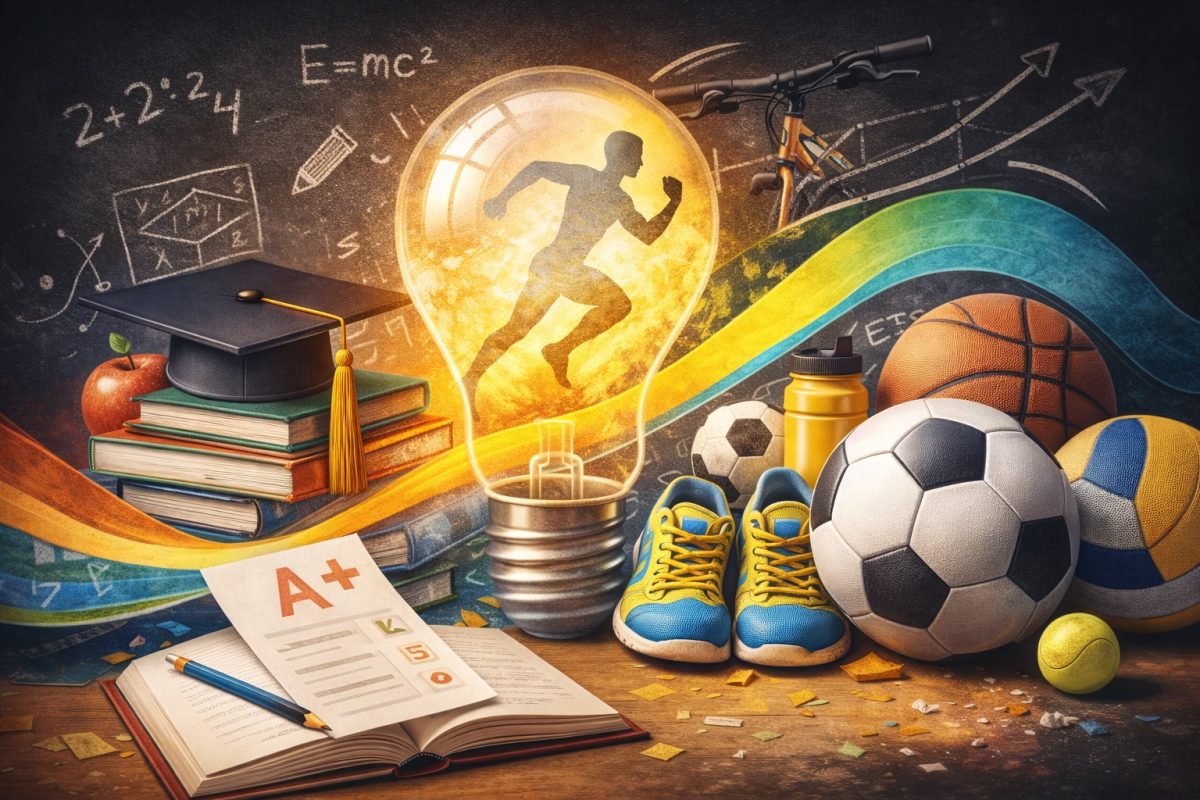
How do sports affect a student throughout their school life, and how do they correlate with academic performance? This is the question many parents ask when their children begin exploring different sports at The Columbus School. Many believe that a student-athlete will automatically become a better student because of the discipline sports build. On the other hand, some completely oppose this idea, stating that sports distract students from their true responsibility, academics.
However, what is the reality for our TCS community, more specifically for elementary school students?
At TCS, elementary students have access to sports such as volleyball, basketball, soccer, and cycling, in addition to Physical Education classes that expose them to a variety of athletic experiences. While some students take advantage of these activities others prefer to participate outside of school in clubs.
As Andrea Gil, the Elementary School Vice Principal, stated, “Yes, I do believe it is an important aspect of their development because kids are working on developing their motor skills, their fine motor skills and their gross motor skills, from grabbing a pencil to being able to run very fast or kick a ball. All of these things matter.”
To better understand how sports influence students at TCS, Vice Principal Andrea Gil and several elementary student-athletes who experience the balance between academics and athletics every day were interviewed to understand their specific points of view.
Transcending the Field
For Vice Principal Andrea Gil, as mentioned before, sports help students develop different aspects of their lives. She also states that sports correlate with academic performance by helping students concentrate better, follow instructions, and strengthen their thinking processes.
Gil gave an interesting insight by saying, “It all connects. If I have a healthy body, I think it connects to having a healthy mind.” This shows how sports and academics are not opposites, but rather complement each other.
Amalia Osorio, an elementary school student-athlete who practices ranching and basketball, mentioned that practicing sports helps her achieve better academic performance because sports help her stay focused while completing school activities.
Similarly, Maximiliano Ospina, a TCS elementary school student-athlete who practices soccer, was asked if he believed sports helped him in school. He responded in a short but powerful way, “Sports help me get discipline.” This shows that even young elementary students understand the importance of building discipline for life as a whole, and through sports, they are developing it.
Andrea expanded on this idea:
“I think sports contribute in a huge way to our elementary kids. By teaching them discipline, when they are really into a sport and they have to train after school, that helps them develop routines. I also believe they learn how to work in teams, how to communicate, and how to manage frustration. I think practicing sports brings so many positive things for our kids.”
This perspective highlights how sports become a tool for building discipline, especially when students sacrifice part of their personal time to attend practice and remain consistent.
The Importance of Physical Education Class
One of the most interesting points raised during the interviews was whether students truly take advantage of Physical Education classes. For the students, taking advantage of the class means not only exercising, but also having fun and being exposed to different sports.
When Alicia Uribe, an elementary school student-athlete who practices tennis, was asked what activities she practices in P.E. class, she responded that they do not practice tennis, which is her area of expertise. However, she did mention that she enjoys P.E. class and described it as fun. She also highlighted that the school could consider offering more sports related to tennis.
Gil remarked that students enjoy P.E. class because teachers create a fun and comfortable environment. She also stated that the majority of students understand the importance of the class.
Amalia Osorio agreed, explaining that her favorite unit is basketball, and she stated that P.E. class helps her practice and improve in one of the sports she enjoys most.
Whether a student practices sports outside of school or not, P.E. class is a great way to enter the world of athletics and stay active.
The Clashes Between Sports and Academics
As mentioned earlier, sports activities sometimes collide with academics. While students have shown that sports contribute positively to academic life, it is important to understand how to balance both.
Andrea was asked whether students struggle to balance academics and extracurricular sports. She responded:
“Yeah. Sometimes. There are others who actually excel at both. It does not matter how many sports they do, they still perform very well academically.”
Maximiliano Ospina was also asked whether he has faced challenges balancing his soccer commitments with academic excellence. He responded that he definitely has. Because he leaves school early to practice soccer outside of school, he sometimes falls behind and must catch up on his schoolwork.
So yes, sports do take time away from academics. However, the way sports and academics complement each other makes the effort worthwhile.
“Do You Recommend Practicing Sports?”
This question was asked to each student-athlete interviewed, and every answer was the same, yes.
It does not matter that each of them practices a different sport. They all agreed that sports provide individuals with immense advantages in life.
Practicing sports transcends simply exercising. It is a way to connect with new people, stay active, and develop crucial life skills.