


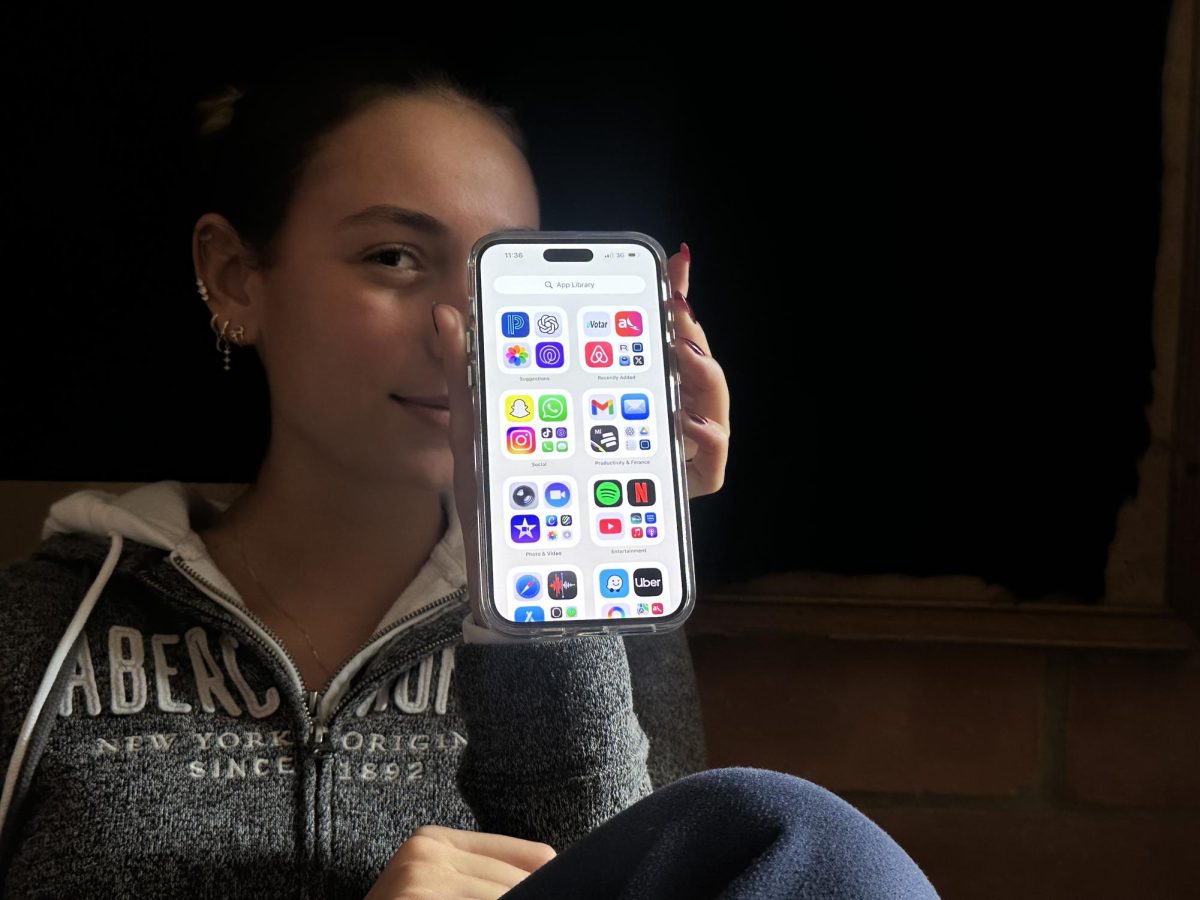
A student scrolls through TikTok during a break at school, laughing at a video that seems harmless. Minutes later, she sees another video with the same style, the same product, and even the same music. By the end of the day, that product feels familiar—almost necessary. While many students at TCS believe their choices are independent, a closer look reveals that social media algorithms may be quietly shaping what they wear, buy, and even believe.
Social media platforms like TikTok and Instagram have become central to students’ daily lives. These platforms are designed to show users content based on their interests, using algorithms that repeat similar videos and posts. As a result, what students see online is not random—it is carefully curated. This constant exposure can influence what students perceive as “popular” or “normal,” even if they are not aware of it.
According to 12th grade student Sara Gomez, TikTok plays a major role in introducing trends. She explains that she primarily uses TikTok and Instagram, checking TikTok most often because it is where she usually discovers new trends, while Instagram helps her keep up with her friends’ posts. Her experience highlights how students rely on these platforms not only for entertainment but also for identifying what is trending.
These trends often spread quickly throughout the school. Gomez notes that many students are exposed to the same videos at the same time, which leads them to talk about trends, try them, or purchase related products. This shared exposure helps trends move rapidly across campus, suggesting that algorithms play a key role in accelerating their spread.
Similarly, 12th grade student Manuel Londoño has observed how trends among male students frequently originate online. He explains that platforms like TikTok and Instagram push many of the same trends, causing certain clothing brands—such as specific sneakers, hoodies, or gym wear seen on influencers—to suddenly become popular. His observation demonstrates how social media influences not only preferences but also purchasing decisions.
Londoño also emphasizes the role of repetition. He explains that when a piece of content begins gaining attention, the algorithm continues to push it, resulting in large groups of students seeing the same trend within a short period of time. This repetition reinforces the trend’s visibility and makes it appear more widespread than it may actually be.
However, not everyone believes that algorithms fully control student behavior. Gomez offers a more balanced perspective, explaining that while students still make their own choices, algorithms influence what they see first. When certain trends appear repeatedly on a student’s feed, she notes, they are more likely to follow them. Her perspective suggests that student agency exists, but it is shaped by constant exposure.
From a parent’s perspective, this influence is also evident. Lina Gaviria, the mother of a TCS student, explains that social media affects the items her child asks for and shows interest in. She notes that many of the clothes, accessories, and brands her child mentions appear to be trending on platforms like TikTok and Instagram, demonstrating how these influences extend beyond school and into the home.
Gaviria also observes how trends seem to appear simultaneously among teenagers. She explains that her child will mention a product or style that all of her friends suddenly recognize at the same time, making it clear that the trend originated on social media. This pattern reinforces the idea that algorithms distribute content widely and quickly, creating a shared sense of what is “in.”
Furthermore, Gaviria highlights how repeated exposure shapes perception. When teenagers see the same styles, brands, or behaviors consistently on their feeds, she explains, it begins to feel like that is what everyone is doing. This can create subtle pressure to conform, even if students are not consciously aware of it.
Londoño agrees that algorithms have a significant influence, stating that they shape student behavior more than most people realize. He explains that they influence what students consider popular or normal, affecting everything from clothing choices to purchasing habits. His perspective underscores the powerful, often invisible role algorithms play in shaping student culture.
Despite this influence, students are not entirely controlled by social media. As Gomez emphasizes, they still make their own choices. However, those choices are often guided by what appears on their screens. This combination of personal agency and algorithmic influence creates a complex dynamic in which trends feel organic but are often digitally driven.
In conclusion, social media algorithms have a significant impact on what TCS students wear, buy, and believe. Through repeated exposure and carefully curated content, these platforms shape students’ perceptions of what is popular and normal. While students may feel that their choices are independent, the evidence suggests that algorithms play a powerful and often invisible role in influencing those decisions. Recognizing this influence is the first step toward understanding how digital platforms shape everyday life at TCS.