


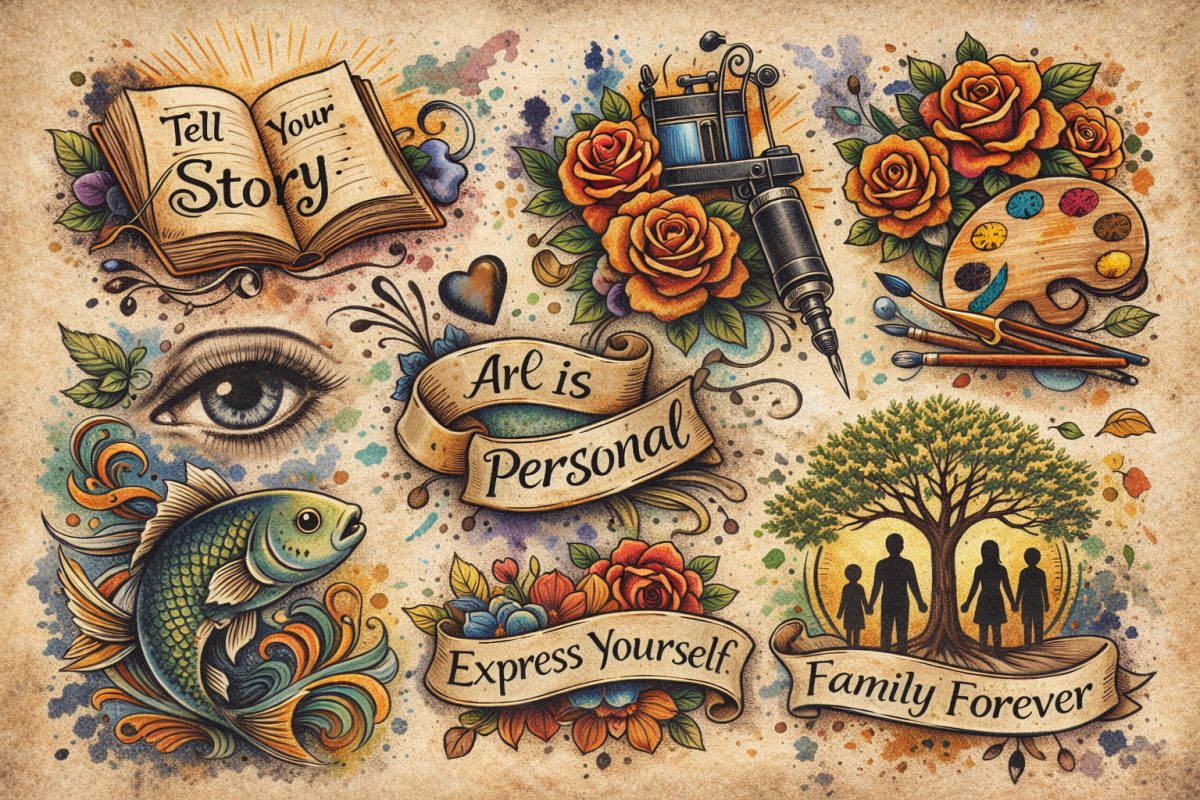
For some people at The Columbus School, tattoos are more than just images on skin. They are stories, memories, and expressions, created through a process many see as art. In this article, we explore the meaning behind tattoos and their unique way of being an art form.
“I think it’s an art form, like, not just for the person that receives them, but also the artist that designs them,” said Blaire Dawkins, a science teacher at The Columbus School. “It’s like going to a museum and seeing a painting or something from someone’s tattoos.”
Dawkins, who has many tattoos with multiple different meanings, believes that tattoos exist in the same category as artwork displayed on walls, valued both for how they look and for the creativity behind them.
At the same time, Dawkins pointed out an important difference between tattoos and traditional art. “I can go to a museum and look at some art, and then I leave, and it’s fine, but once I attach it to myself, I can’t take it away,” she said. Because tattoos stay with you, the decision carries a different weight. “This art is permanently on your body; it’s never going to go away,” she added, explaining how that permanence changes the way the art is understood.
That lasting quality also makes tattoos more personal. “You go to a museum and you’re looking at an art piece, and you have to interpret it,” Dawkins said. “Whereas with a tattoo, you can just ask them, like, ‘Hey, tell me your story with this tattoo,’ and it’s almost like you get more of that story than you would if you went to a museum.” Instead of guessing the meaning, you can hear it directly from the person who carries it.
Marco Garza, a 12th grade student at The Columbus School, also sees tattoos as a powerful form of expression. “I do think it’s an art form because it’s like a way to express feelings,” Garza said. Even without words, tattoos can communicate emotions. “Not just to express yourself to other people, but also to yourself,” Marco added, emphasizing that tattoos can be meaningful even if no one else understands their full significance.
Garza believes that creating tattoos can be especially challenging. “I think body art is way more difficult than, like, normal art,” Marco said. Tattoo artists have to understand how skin works, how it stretches, and how it looks when released. This complexity, he explained, adds another layer to the artistry involved in tattooing.
Meaning is a common theme in how people talk about tattoos. While Garza acknowledged that some people might get tattoos just for fun, he said, “I think most people, like, have a little bit of meaning to each of their tattoos.” Even small designs often carry personal importance.
For Luciano Henao, a 12th grade student at The Columbus School, that meaning comes directly from family. “The things that inspired me to get a tattoo were my family,” Luciano said. He described three main tattoos, a tree, a fish, and an eye, each connected to family members and ideas about family and time. “My tattoos are all connected to my family,” he said, explaining why those images matter to him.
Henao also talked about the experience of getting a tattoo. “It wasn’t painful,” he said, explaining that while the beginning hurts, “you managed to control the pain.” For him, the process itself was manageable, especially considering what the tattoo represented.
When asked why tattoos count as an art form, Henao summed it up simply. “Because there is creativity, and there are things that are memorable to you, that have significance,” he said. To him, tattoos are art because they combine creativity with personal meaning. But sometimes people don’t even apply meaning to a tattoo. They just think it’s funny or cool, but the truth is that while kids are young, they can’t be getting tattoos just because it looks cool. Your first tattoo should have a meaning that speaks to you. This is what I have come to understand while interviewing all these people.
Across different perspectives, one idea stays consistent: tattoos are seen not just as decoration, but as art that tells a story, one that stays with the person long after the ink settles. While tattoos are art, it’s also a unique type of art that can be viewed and perceived in all types of ways. Getting a tattoo while you are a student at The Columbus School is totally OK, as long as you are responsible and safe with your tattoo design.
According to Colombian regulations, individuals must be 18 years old to get a tattoo independently. Minors who are 16 or 17 years old may receive a tattoo only with parental consent. Students and families should confirm specific studio policies and local requirements in cities such as Medellín, Bogotá, and other parts of Colombia before making a decision.