


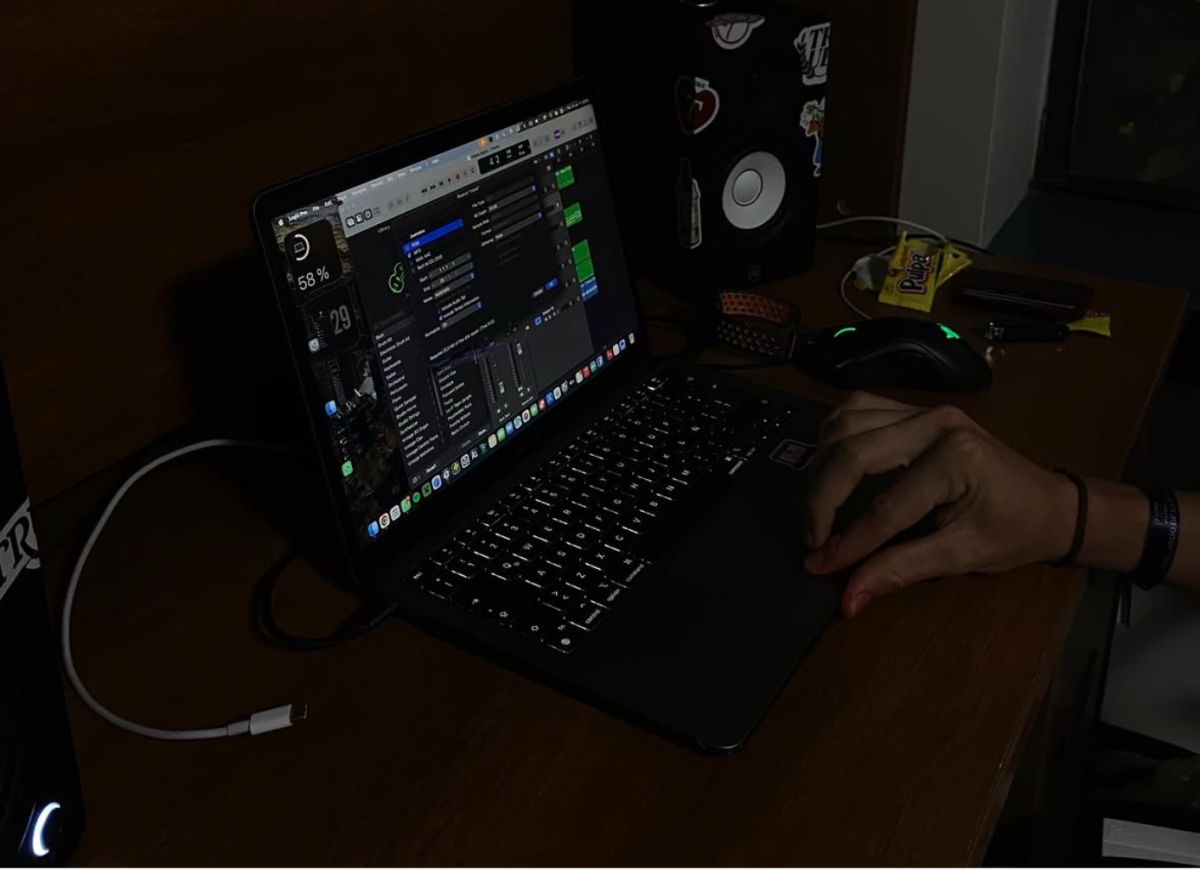
Making and releasing music has never been more accessible. Modern artists can record full tracks in their bedrooms, upload them directly to streaming platforms, and build an audience online without relying on traditional record labels. However, the same technology that gives artists more independence has also increased competition, making visibility much harder to achieve.
Felipe Naranjo, who has experience working with musicians and understanding the business side of the industry, offered insight into the challenges artists face when trying to build a career today. He pointed out the downside of this open access: “Everyone can upload music to the internet, but in the same way, since everyone is doing it, music becomes very hidden because Spotify could be like a ‘graveyard’ of music because people can share more music, but it’s harder to be visible because there is many information out there.”
This sudden surge in new releases is largely supported by affordable recording gear. “Now you can record at home and have a really good studio; thirty years ago you needed to go to a studio, you needed to pay, and now you can create a lot more quality content at home with good software and good microphones,” Felipe said. His observation shows how music production has become more accessible, allowing artists to create professional-sounding music without the same financial investment that was once necessary.
Yet, producing a good song is only one part of building a real career. “I think that musicians need every skill; for example, they have to be good musicians, do good music, and do good marketing,” Felipe said. These high demands make things more complicated for young artists, leading him to note that “the young musicians I know are taking their work very seriously, but they know it’s not the only career they have to pursue.”
To deal with these financial challenges, many artists look for different ways to bring in income. Felipe Naranjo described producer Adan Naranjo as someone who managed to “diversify like the possibilities of getting an income off music, like playing in concerts, producing, teaching, composing music, etc.” Adan Naranjo, a music producer and musician, provided a perspective based on his own experience creating, promoting, and finding different income opportunities through music. His experience helps explain how artists today must manage more than just the creative side of their work.
This push to diversify reflects a major shift in the music business, where self-promotion falls almost entirely on the artist. “Now you are the one who promotes yourself. That’s the big change,” Adan said. Artists are now responsible for building their own identity, promoting releases, managing their online presence, and finding ways to connect with listeners without depending entirely on a record label.
Even with a solid marketing plan, digital success can still feel completely random. Adan recalled that “one of our songs just got so viral, and it was one of the songs that we didn’t promote at all.” That unpredictability shows just how hard it is to guess what will actually catch on online. A song can receive little attention despite significant promotion, while another can suddenly gain popularity without a planned campaign.
On top of that, artists constantly have to shift strategies as social media changes. “When Facebook was the main platform, we needed to change all the content and the strategy to Instagram because everything was changing,” Adan said. This shows that musicians must continually adapt to new platforms and changing audience habits instead of relying on one strategy for a long period of time.
Because of this, being a modern musician requires wearing a lot of different hats at once. “The most difficult thing right now for the new artist is that they have to understand that they need to be everything,” Adan said. By “everything,” he means that artists are often expected to handle responsibilities beyond making music, including marketing, managing social media, organizing releases, networking, and finding ways to earn money. Instead of focusing only on writing and recording songs, musicians must also learn how to promote their work and manage the business behind it.
While modern technology has made it easier than ever to make and release music, standing out in a crowded market is a whole different story. As Felipe Naranjo explained, musicians need to be good at more than just creating music; they also need skills in marketing and promotion. Today’s artists can’t rely on musical talent alone. They have to become marketers, managers, and adaptable creators if they want their voices to actually be heard.