


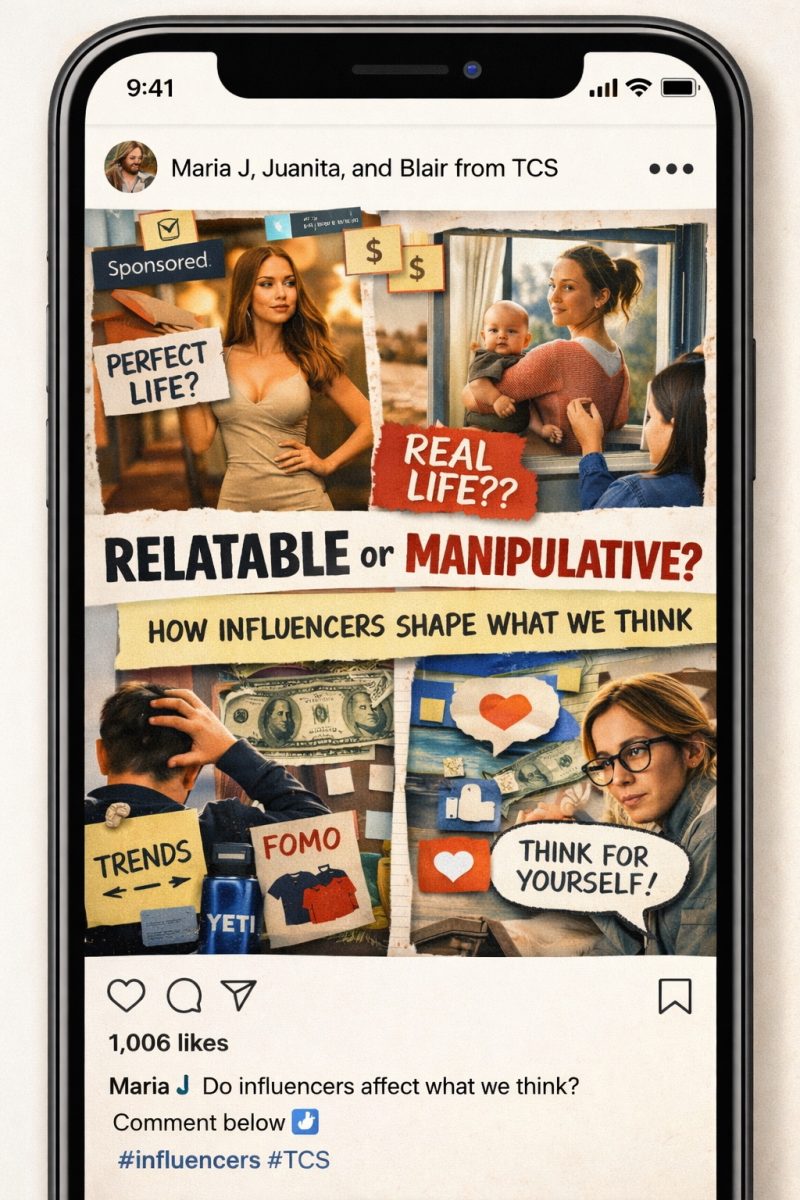
Even when students believe they are ignoring influencers, those voices still shape what they think, buy, and notice every day at our school. Some students feel disconnected from influencer culture, while others admit they are still affected by what they see online, even when they try not to be.
Maria Jose Mesa, a senior, explained that influencers often feel unrealistic because “they only show the best parts of their life… they make you feel like they live in a reality that’s too perfect, and that’s just not the way life truly works.” This creates doubt about whether what is shown online reflects real life at all. This kind of “perfect reality” can make students feel as though their own lives do not measure up, even when they are completely normal.
That distrust grows when influencers present moments that feel rushed or unnatural. One example students point to is Nara Smith, a South African model and influencer known for sharing curated glimpses of her personal life online. “When Nara Smith had a child and was immediately back on camera acting as if nothing had happened, I realized I didn’t trust that content—because in real life, recovery takes time,” Mesa said. This is something many students notice, even if they don’t always talk about it.
Even when influencers try to appear authentic, skepticism remains. Mesa believes that everything seen on social media is fake. “Even when influencers try to be relatable, they’re still manipulating the crowd, because you can’t ever truly be yourself in front of a camera with thousands of people watching,” she said.
Others feel differently. Some students, like Juanita Puerta, say relatability is what builds trust. “I feel more connected to influencers when they show their daily lives and emotions, like messy rooms, because it makes them feel more real and not perfect all the time,” Puerta explained.
Influencer content can also affect spending habits. This can be seen at TCS, where students are influenced by common trends such as YETI bottles and polo sweaters. “When I see clothes I like on TikTok, it really makes me want to buy them, even if I don’t do it immediately,” Puerta said, showing that even delayed decisions are shaped by online influence.
Marketing becomes more powerful when it is less obvious. “Sometimes sponsored content is hidden, and that makes you more influenced toward buying things without realizing it,” Puerta added.
While students experience influence firsthand, teachers observe its impact on a broader scale. “I don’t follow influencers and I don’t trust them, but what my friends think is definitely more powerful—that’s what actually influences me,” said Blaire Dawkins, a TCS teacher.
Even teachers who try to avoid social media say its influence still reaches them. “I can’t avoid it, even though I try to. Sometimes my friends tell me something, and later I realize it came from TikTok without me even knowing,” Dawkins said.
This constant exposure makes people less aware of how much they are being influenced. “I worry that students don’t realize how constantly they’re being marketed to, and that instead of forming their own opinions, they’re just going with trends,” Dawkins explained. This suggests that influence does not just shape what students buy, but also how they think.
Together, these perspectives show that influence looks different for everyone at TCS. Some students are affected directly by influencers online, while others are influenced more by friends at school. Either way, social media continues to shape opinions, habits, and trends—often without students even realizing it.