


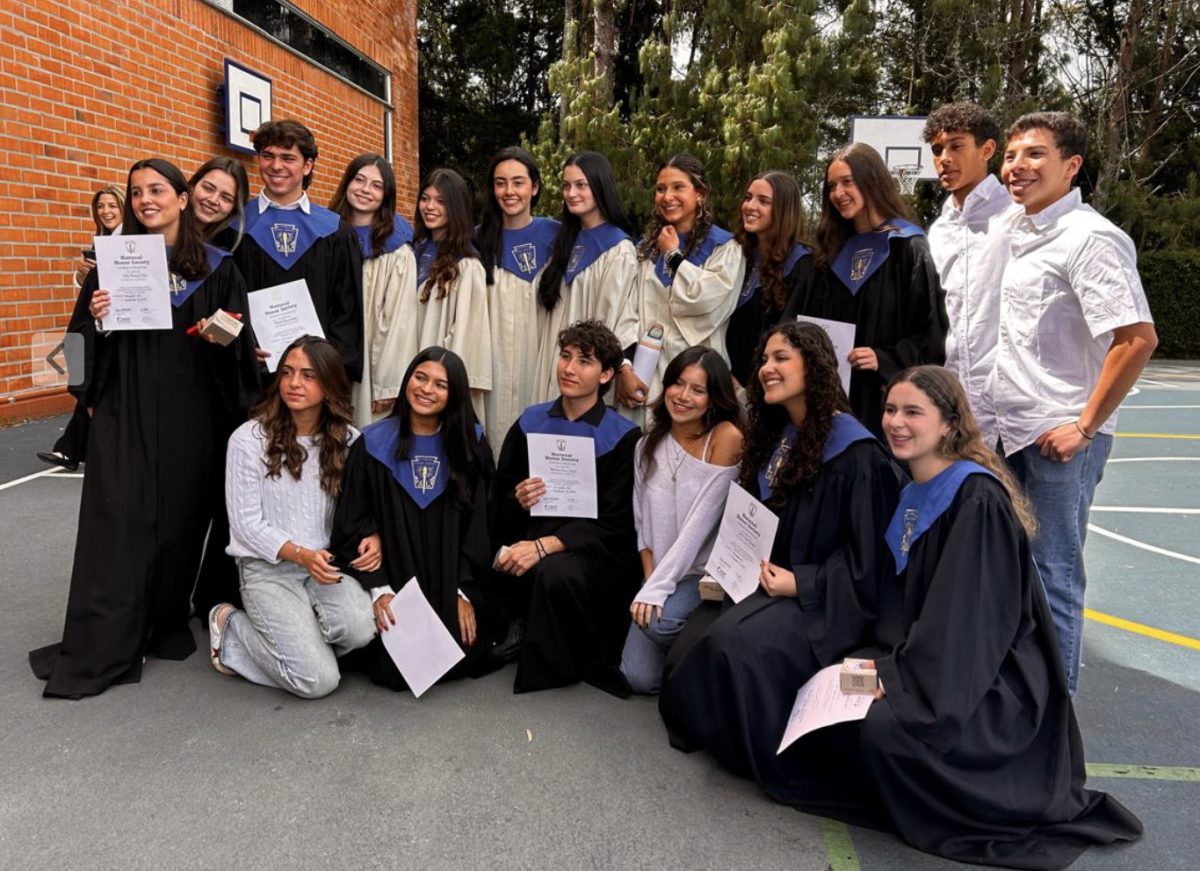
By the time freshmen walk into high school, many already feel like the clock is ticking. It’s not just about grades anymore, it’s about leadership, extracurriculars, service hours, and crafting a resume strong enough to stand out in competitive college admissions. What was once a time for exploration has increasingly become a strategic process, leaving students to navigate the tension between authenticity and achievement.
The pressure to build a strong resume early in high school has become a defining part of the student experience. With rising competition for college admissions, students often feel the need to constantly prove themselves through academics and extracurricular involvement. However, while some embrace this challenge, others question whether this pressure takes away from genuine personal growth.
Andrew Shainker, a high school journalism and english teacher, highlights that not everything meaningful fits into a resume. He explains, “But the thing I am most proud of sometimes doesn’t fall on a resume… maybe you’re most proud of the friendships that you built or the relationship that you maintained… that type of stuff doesn’t go on a resume”. His perspective introduces an important contrast: while students are encouraged to build impressive profiles, some of the most valuable aspects of their lives remain invisible in the admissions process.
Despite this, the pressure to achieve begins early. Shainker notes, “I learned pretty quickly… that if I wanted to go to a good school, I needed to start getting good grades in freshman year”. This mindset reflects what many students experience: the belief that every decision from the first year of high school can impact their future. As a result, students often prioritize performance over exploration, choosing activities that will “look good” rather than those they truly enjoy.
Juliana Arango, a high school student, reinforces this idea by describing how competitive the environment feels. She shares, “I think a lot of students feel pressure to start doing as many activities as possible really early in high school”. This pressure is not just internal, it is fueled by constant comparison. Arango adds, “Sometimes it feels like you’re always thinking about what else you could add to your resume… and it can make you feel like you always need to do more to stand out”. Her words capture the exhausting cycle many students face: no matter how much they accomplish, it never feels like enough.
As students try to meet these expectations, their schedules quickly fill up. Advanced classes, clubs, leadership positions, and service projects become the norm rather than the exception. Arango describes her own approach: “I tried to focus on things that showed both my interests and my initiative… I joined clubs… took on leadership roles… and participated in community service projects”. While her involvement reflects dedication and ambition, it also shows how students feel the need to constantly prove both passion and productivity.
Similarly, Juanita Puerta explains how she built her resume through rigorous academics and leadership roles. She states, “I’ve joined harder classes… the NHS… I’ve pursued leadership roles… and also many social service projects”. Her experience aligns with the typical image of a “successful” student, well-rounded, involved, and academically strong. However, even with these accomplishments, the underlying motivation often ties back to standing out in the admissions process.
Yet not all students experience this pressure in the same way. Puerta offers a different perspective, explaining, “I think that many feel this pressure but I didn’t because I only joined the extracurriculars that I felt passionate about”. Her viewpoint challenges the idea that pressure is unavoidable. Instead of focusing on quantity, she prioritized enjoyment and personal interest.
This perspective is important because it suggests an alternative approach. Puerta further explains, “When you’re applying to colleges, you always feel like the pressure, but… you need to… really like what you’re doing, and try to be the best at what you’re doing, and be happy”. Her words highlight a key balance: while pressure exists, students still have the ability to choose how they respond to it.
However, even this more relaxed approach does not fully eliminate the influence of competition. The broader system, college admissions, societal expectations, and peer comparison, continues to shape student behavior. As Shainker emphasizes, “What you do should be meaningful… real and authentic”. While this advice encourages students to focus on purpose, it also raises the question of whether authenticity can truly exist in such a high-pressure environment.
Ultimately, the experience of building a high school resume is complex. For some students, it becomes a source of stress and constant comparison. For others, it can be an opportunity to explore passions and develop skills. The difference often lies in how students interpret and respond to the expectations placed on them.
As college admissions continue to grow more competitive, the challenge for students is not just to succeed, but to define what success means for themselves. While resumes may open doors, they do not capture the full story of a person’s growth, relationships, and character. In the end, the most meaningful achievements may not be the ones listed on paper, but the ones that shape who students become beyond it.