


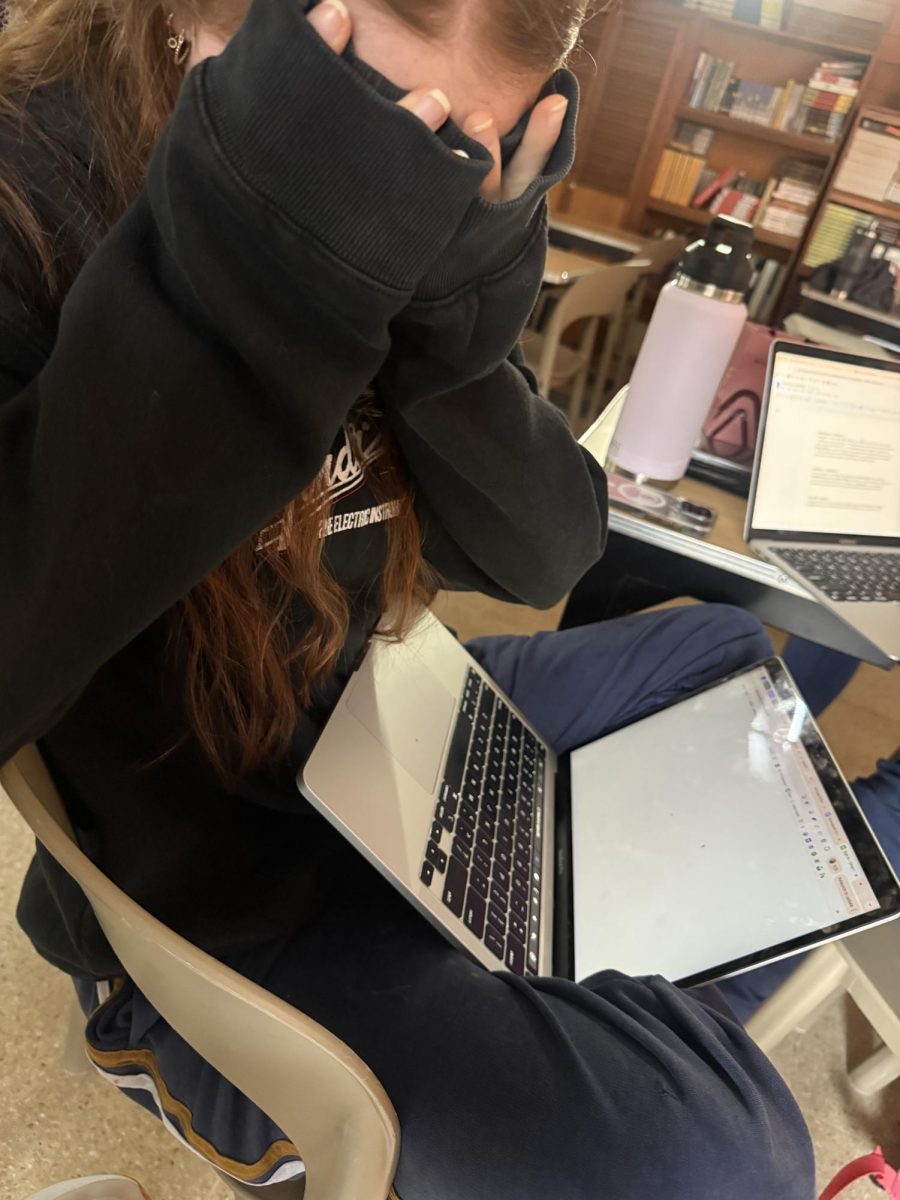
A student sits in front of her computer, clicking repeatedly as another website fails to load. The message is familiar: blocked. For many students at TCS, this moment of frustration is part of daily academic life. But while the experience is common, the system behind it remains largely unknown.
Internet restrictions at TCS are designed to create a safer and more focused learning environment, but they also raise important questions about access, control, and academic freedom. Through interviews with the head of the technology department, a senior student, and a teacher, it becomes clear that while the policy aims to protect students, it also has unintended consequences that impact learning in significant ways.
According to Jonatan Montoya, head of the technology department, the decision to implement strict filtering policies was driven primarily by safety concerns. “Las principales preocupaciones fueron la seguridad digital de los estudiantes y el uso responsable de la red escolar. En los últimos años vimos un aumento en intentos de acceder a sitios con contenido inapropiado, así como riesgos relacionados con malware y páginas inseguras,” he explained. These concerns reflect a broader responsibility schools face in managing digital environments, especially as students rely more heavily on online resources.
In addition to safety, data also played a key role in shaping the policy. Jonatan Montoya noted, “Cuando se implementó el sistema de filtrado más estricto, analizamos datos del uso de la red que mostraban que muchos estudiantes estaban accediendo a sitios de entretenimiento o redes sociales durante el horario de clases.” From the administration’s perspective, these findings justified stronger controls to keep students focused during the school day.
The process itself relies heavily on technology. “La evaluación se hace mediante un sistema de filtrado que clasifica automáticamente las páginas web según categorías como educación, entretenimiento, juegos o contenido potencialmente peligroso,” Montoya said, adding that the team also reviews sites manually when necessary. This combination of automated filtering and human oversight determines what students can and cannot access on campus.
From this viewpoint, restrictions are not meant to limit learning but to support it. “Desde nuestra perspectiva, las restricciones ayudan a crear un entorno digital más enfocado en el aprendizaje,” Montoya explained. However, this perspective is not shared by everyone in the school community.
For students like senior Raquel Isaza, the impact of these restrictions is felt directly in the classroom. “Since my freshman year, the internet restrictions have definitely become stricter. When I first arrived, fewer sites were blocked and teachers could use more online resources during class,” she said. Her experience suggests that the policy has evolved over time, becoming more restrictive as new concerns emerged.
This shift has not been without consequences. Raquel recalled a situation where a blocked website affected her academic work: “One time I was working on a research assignment and a source my teacher recommended was blocked by the school network, so I had to find another source that wasn’t as strong or as relevant to my topic.” In cases like this, the restrictions do not just limit access they can also impact the quality of student work.
Although administrators argue that blocking certain sites helps reduce distractions, Raquel believes the reality is more complicated. “I understand why the administration thinks the block helps with distractions, but at the same time, I think the restrictions are too broad and end up blocking resources that are actually useful for learning,” she said. Instead of improving focus, she argues, the system can slow students down and make assignments more difficult to complete.
As a result, many students have developed ways to bypass the restrictions. “A lot of seniors try to work around the restrictions by using their phones with mobile data or saving resources at home before coming to school,” Raquel admitted. This raises questions about the effectiveness of the policy if students can easily find alternatives.
Teachers, too, experience the effects of internet filtering, often in ways that directly impact instruction. Camilo Hoyos, a teacher at TCS, explained, “As a classroom teacher, the internet block has significantly affected how I plan lessons and share digital resources with my students.” For educators, the challenge is not just access but also the unpredictability of what might be blocked.
In some cases, this has led to major changes in curriculum. Hoyos described an assignment he had to modify due to restrictions: “In my entrepreneurship class, students were supposed to build a professional network using LinkedIn, but because LinkedIn is blocked on the school network, I eventually had to remove that part of the assignment from my curriculum.” This example highlights how digital policies can shape not only how students learn but also what they learn.
Even when teachers try to adapt, the limitations remain. “When important tools are unavailable, I often have to redesign activities quickly or find alternative resources,” Hoyos said. While these adjustments allow classes to continue, they may reduce the real-world relevance of lessons, particularly in subjects that rely on current digital tools.
Despite these challenges, Hoyos acknowledges the importance of some level of control. “I believe some level of filtering is necessary to protect students from harmful or misleading content,” he said. However, he also emphasized the need for balance, adding that overly strict policies can limit valuable learning opportunities.
The contrast between these perspectives reveals a central tension in the debate over internet restrictions at TCS. On one hand, the technology department aims to protect students and maintain a focused academic environment. On the other, students and teachers argue that the system can be overly restrictive, limiting access to important resources and complicating the learning process.
Ultimately, the issue is not simply whether websites should be blocked, but how those decisions are made and who has a voice in the process. While the current system relies on automated filters and administrative oversight, the experiences of students and teachers suggest that greater transparency and flexibility may be needed.
As digital tools become increasingly essential to education, the question facing TCS is not just how to control the internet, but how to use it effectively. For now, students will continue to click, wait, and sometimes feel the frustration of a blocked screen while the larger conversation about access and control remains open.