


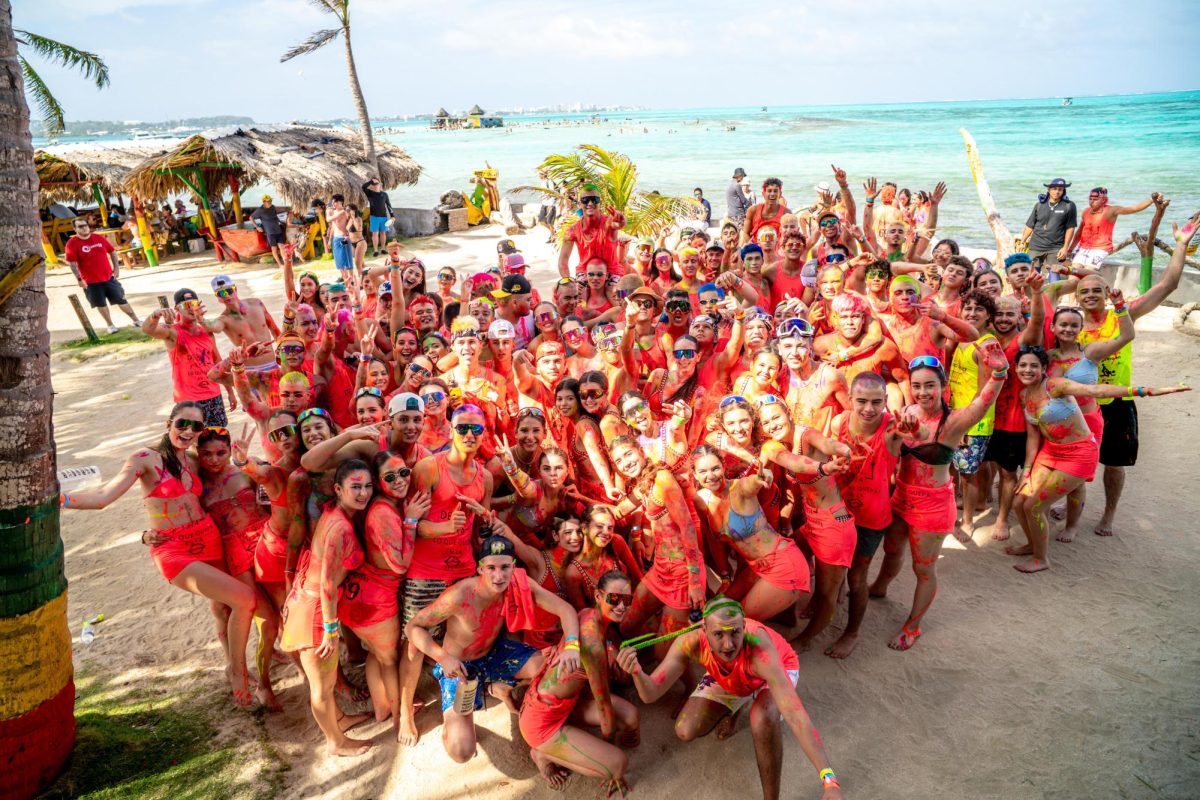
The countdown to San Andrés starts long before the plane takes off. In classrooms filled with restless energy, unfinished assignments, and whispered plans, one thing becomes clear: for seniors, the trip is more than just a vacation. It is the moment they have been waiting for all year. But what happens when it ends?
For many students, the return from San Andrés marks a shift not just in routine, but in mindset. While the trip creates unforgettable memories and strengthens friendships, it also leaves behind a noticeable change in motivation, focus, and priorities during the final stretch of senior year.
Before the trip, anticipation dominates students’ attention. Senior Emiliana Alvarez admits that academics often take a backseat during this period. “I was mostly thinking about San Andres instead of thinking of the classes and the homework I had,” Alvarez said. “I only thought about the trip, and I think that got me disconcentrated.”
This sense of distraction is not isolated. The excitement builds collectively, making it difficult for students to stay engaged in class.
Paulina Ospina describes a similar atmosphere leading up to departure. “We were all very excited and it was something to look forward to,” Ospina said. “However, we were also very distracted from our school priorities because we were thinking more about the San Andres trip instead of school.” In many ways, the trip begins to influence behavior even before it happens, pulling attention away from academics and toward what feels like a once in a lifetime experience.
However, the real impact becomes clearer after students return. Without the anticipation of the trip, many seniors experience a shift in their motivation. Alvarez explains that the absence of the trip changed her focus. “Since I didn’t have a trip to look forward to, I only focused more on school,” she said. For some, this helps them refocus. But for others, the effect is the opposite.
Ospina highlights this contrast, noting that the return can feel emotionally deflating. “I would argue that I feel more unmotivated,” Ospina said. “We were all very excited, and now that we’re back, I feel like we need to recover that routine again and get back to our old study habits.” The sudden transition from excitement to routine creates a kind of academic whiplash, forcing students to readjust quickly.
This shift is not only personal but also visible in the classroom. According to Ospina, participation and focus change noticeably after the trip. “Now that we’re back, I feel like we are more concentrated, working more properly, and taking our priorities more seriously because we need to recover that study routine,” she said. While this suggests improvement, it also reflects the need for recovery, an acknowledgment that something was disrupted during the trip period.
Teachers observe these patterns as well. Mr. Andrew notes that the effects of the trip extend both before and after it happens. “The week prior is very difficult to teach the senior students because they’re so excited for their trip,” he said. “Then the week coming back, a lot of them have kind of spent all of their energy, so when they come back their mindset isn’t necessarily on the academics.” His perspective reinforces the idea that the trip creates a cycle of anticipation, peak excitement, and eventual burnout.
Beyond motivation, the trip also carries symbolic meaning. For many seniors, it represents the beginning of the end. Mr. Andrew explains that these experiences are important but complicated. “Bonding experiences with your class are really monumental,” he said. “It almost seems like it’s a part of tradition. The problem is that it takes place in the third quarter. We’re not at the end of the year. We have a whole other quarter.”
Students feel this sense of closure deeply. Ospina reflects on the emotional shift after returning. “It feels very sad to know that we’ve already experienced most of our senior events,” she said. “I definitely felt the shift when we returned because everyone was very sad, and it feels like there’s nothing exciting going on anymore.” The trip, instead of simply being a highlight, becomes a turning point where everything afterward feels less significant.
As a result, some students begin to disengage. Alvarez offers a direct perspective. “I think seniors stop caring about school because the senior trip is the concluding part of the year,” she said. “After the trip, everyone starts to feel like they are done.” This idea that the trip signals completion helps explain why motivation can decline so sharply.
However, not everyone agrees that the trip is solely responsible. Mr. Andrew complicates this narrative by pointing to a broader factor: senior burnout. “I think there’s definitely truth to being a senior and just wanting to be at the finish line,” he said. In this view, the trip does not create the problem but amplifies an existing mindset.
To address these challenges, schools often respond by reinforcing academic expectations. “We try to increase rigor and be stricter because without it, it becomes more of a chill hangout environment than it does academics,” Mr. Andrew said. This approach reflects an effort to counterbalance the drop in motivation and keep students engaged through the final months.
Ultimately, the San Andrés trip is both a celebration and a turning point. It brings seniors together, creates lasting memories, and marks an important milestone in their final year. Yet, it also disrupts routines, shifts priorities, and highlights the emotional complexity of approaching graduation.
As seniors return to their classrooms, they are no longer just students counting down to a trip. They are students counting down to the end. And in that transition, the challenge becomes clear: finding a way to stay present in the final chapter, even after the most exciting moment has already passed.