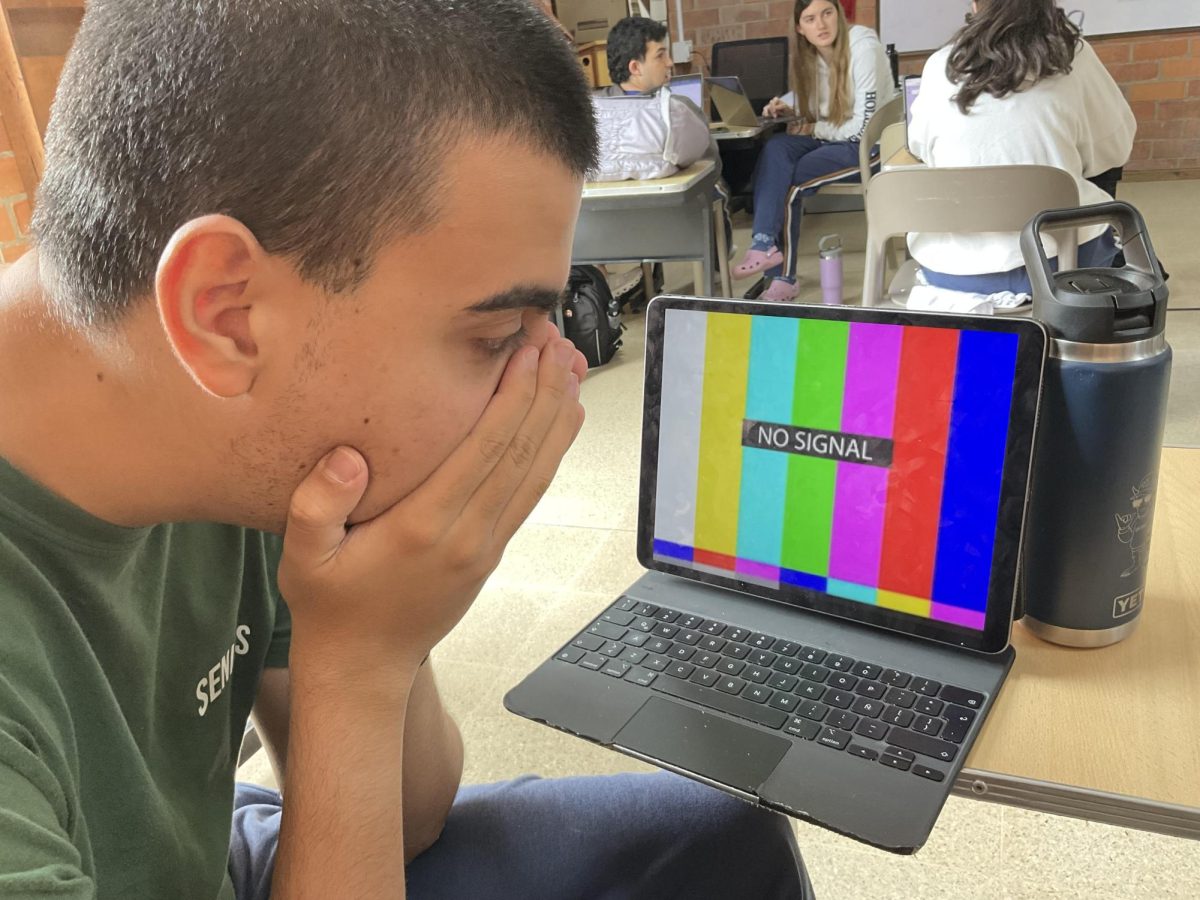
At TCS, many students use technology every day. However, there is one major problem: the Wi-Fi does not work well in all parts of the school. While this may seem like a small issue, it creates real challenges in the classroom. When the internet is slow or unreliable, learning becomes more difficult for everyone.
Today, schools depend heavily on internet access. Students need it to conduct research, complete assignments, and use online tools. Teachers rely on it as well. When Wi-Fi is weak, these tasks become frustrating or even impossible. This shows that reliable internet is no longer a luxury—it is essential.
Nicolás Jiménez, a student at TCS, explains how important internet access is during the school day. He says that being able to complete work at school helps students stay on track academically. He also notes that, although some students can complete their work at home, it is often better to work at school with a strong internet connection. His perspective highlights the role school plays in providing equal access to learning resources.
Jiménez also describes the impact of unreliable Wi-Fi, explaining that when the internet is not available, it slows his ability to complete assignments. His experience shows how connectivity issues directly affect student performance.
Other students share similar concerns. Matías Gonzales, a 12th-grade student, explains that he often plans to complete assignments at school but is unable to do so when the internet does not work. He adds that this can be especially frustrating for students with busy schedules.
Gonzales also raises an issue of equity. He points out that students who do not have reliable internet at home depend on the school’s Wi-Fi. When it fails, those students are placed at a disadvantage. This shows that the issue is not just about convenience, but also about fairness.
Some suggest that students can rely on mobile data as an alternative. However, Gonzales explains that mobile data costs money, and not all students can afford it. This reinforces the idea that access to reliable internet at school is necessary for all students to succeed.
A Tech 911 staff member at TCS provides insight into the technical challenges. He explains that Wi-Fi signals do not reach all areas of the campus due to factors such as walls, distance, and the number of users connected at once. This means the issue is not simply about having Wi-Fi, but about ensuring it works consistently across the entire school.
He also notes that improving the network requires time and financial investment, which can make immediate solutions difficult. Despite these challenges, he acknowledges that when the internet fails, it impacts both teachers and students, disrupting the learning process.
While some believe the current Wi-Fi is sufficient, students like Jiménez disagree. His perspective shows that reliable internet access is critical for staying on track and completing academic work. This suggests that improving connectivity could have a direct positive impact on student learning.
There are potential solutions. The technician explains that with upgraded equipment, Wi-Fi coverage could extend across the entire campus. This indicates that, with the right resources and planning, the issue can be addressed.
In conclusion, limited Wi-Fi access at TCS is a significant issue that affects learning, productivity, and fairness among students. Although it may seem minor at first, its impact is substantial. Schools must ensure that students have the tools they need to succeed, and reliable internet access is one of those essential tools.