


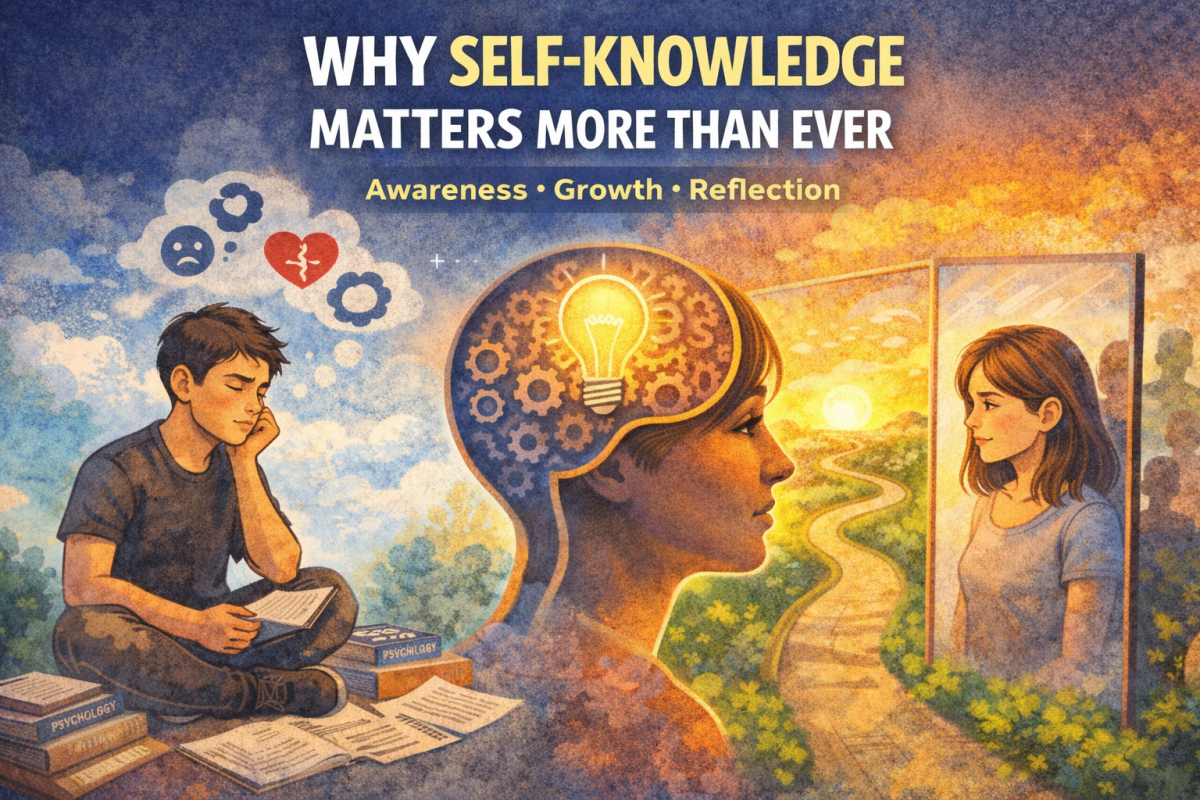
Across The Columbus School community, one idea keeps coming up in conversations: understanding ourselves is not optional; in fact it is essential. We feel emotions we cannot explain, make decisions we later regret, and follow paths that may not truly belong to us.
When you know yourself; your fears, your passions, your patterns one stops living on autopilot. You begin to understand why certain words hurt more than others, why some dreams refuse to leave you, and why certain moments make you feel alive.
Through different perspectives, students from The Columbus School, like Juan Sebastian Romero, and psychology graduates at the school repeatedly point to self-knowledge and psychology as tools for growth, awareness, and change.
For many students, this looks like finally understanding why they feel overwhelming pressure before an exam; not because they are incapable, but because they tie their worth to their performance. Through psychology, they begin to separate their identity from a single negative feeling, allowing them to face challenges with resilience instead of fear.
Juan Sebastian Romero, an 11th grade psychology enthusiast, emphasized that students especially need time to explore who they are by understanding what they like, what they dislike, and the reasons behind those feelings. It means asking difficult questions in moments of silence, confronting uncomfortable truths, and daring to be honest about what truly drives you. According to Romero, this process builds “a better picture of who you are,” not just an unworthy, shallow outline shaped by expectations.
Without it, students risk drifting, making decisions to please others while losing themselves in the process. With it, they gain clarity, confidence, and the ability to move through the world with intention instead of uncertainty.
Self-exploration in this view is essential.
Another perspective shared by Susana Arias, a graduate in psychology and pedagogy at The Columbus School, connected this need for self-reflection to the post-pandemic world. Mental health issues, Arias explained, have become more visible, pushing people to ask why they feel unpleasant emotions. Lockdowns forced many to face themselves in solitude and question their purpose in everyday life. For this generation, self-questioning is not abstract but rather it is a response to a shared global experience.
Self-knowledge also goes beyond the individual. Arias explained that societies have “group identities” with their own blind spots and subconscious influences. These unseen forces shape social hierarchies and organization, quietly influencing who is heard, who is overlooked, and what is considered “normal.” Group identities become a fundamental pillar of how we see the world and ourselves, shaping beliefs, values, and a sense of belonging long before we are even aware of it.
Just as individuals carry hidden fears, motivations, and biases, groups carry shared assumptions that define cultures, communities, and entire generations. Recognizing these collective blind spots is essential because it allows societies not only to understand themselves, but to question, evolve, and consciously shape the future they are creating.
Several interviewees described psychology as a gateway to self-understanding. Romero shared that learning about psychology helped explain personal struggles and provided comfort and clarity. For the first time, emotions that once felt chaotic and isolating began to make sense. Feelings were no longer random or overwhelming — they had names, patterns, and reasons. Being introduced to different interpretations allowed him to better understand what he was going through and who he was, naturally motivating him to learn more.
Romero also shared a more intimate approach to psychology, focusing on biases and irrational behaviors. He explained that these reactions are automatic mental patterns shaped by past experiences, emotions, and unconscious influences. Becoming aware of them can help people improve in almost every area of life. Awareness, he said, strengthens relationships and personal growth.
Similarly, Romero explained that learning psychology increased his confidence and ability to handle difficult situations, directly supporting his self-growth. When you begin to understand how your mind responds to stress, fear, and uncertainty, those moments stop feeling like overwhelming forces and become challenges you can face with clarity. Psychology gives you the language to understand yourself and the awareness to change, allowing you not only to react to life, but to shape who you become through it.
The importance of reflection came up again in discussions about decision-making. Ana Garcia, another graduate in psychology and counselor at The Columbus School, pointed out that many decisions are influenced by unconscious beliefs, family influences, and upbringing. Without recognizing where reactions and emotions come from, people may act without truly understanding themselves.
Taking time to reflect allows individuals to challenge those reactions and improve how they relate to others and their environment. When people understand the origins of their emotions and reactions, they stop projecting unresolved fears or insecurities onto others. Instead of reacting impulsively, they gain the ability to pause, communicate with intention, and respond in ways that build trust rather than conflict.
Garcia added that when people explore what they do not know about themselves, they become more aware of their thoughts, behaviors, and reactions. That awareness creates choices that are intentional rather than automatic, allowing people to act based on understanding instead of impulse, fear, or unconscious patterns. This gives people more control over their decisions and their lives. Without that control, people often repeat patterns they do not understand and repeat mistakes they regret.
Finally, Romero highlighted how self-knowledge helps stop negative patterns. By recognizing unproductive behaviors, people can change course and avoid repeating mistakes. Identifying these patterns, he explained, leads to better results over time.
For example, a student who notices they always procrastinate until the last minute may realize it is not laziness, but fear of not meeting expectations. With that awareness, they can begin to break the cycle, starting earlier, asking for help, and approaching their work with less fear and more confidence. Identifying these patterns allows people to interrupt harmful cycles instead of reliving them, gradually replacing frustration and self-doubt with growth, progress, and better results over time.
Together, these voices send a clear message: self-knowledge is not just about understanding feelings, it is about awareness, responsibility, and growth.
Awareness means recognizing the hidden forces behind your thoughts, emotions, and reactions, even when they are uncomfortable to face. Responsibility means accepting that once you understand those patterns, you have the power, and the obligation, to decide whether you will remain the same or choose to grow.
In a world shaped by uncertainty, bias, and change, knowing yourself may be one of the most powerful tools you have. It gives you clarity in moments when the world feels uncertain and overwhelming. It allows you to recognize what truly matters to you instead of blindly following expectations or pressure from others. When you know yourself, you make decisions with confidence, recover faster from failure, and resist paths that do not align with who you are.