


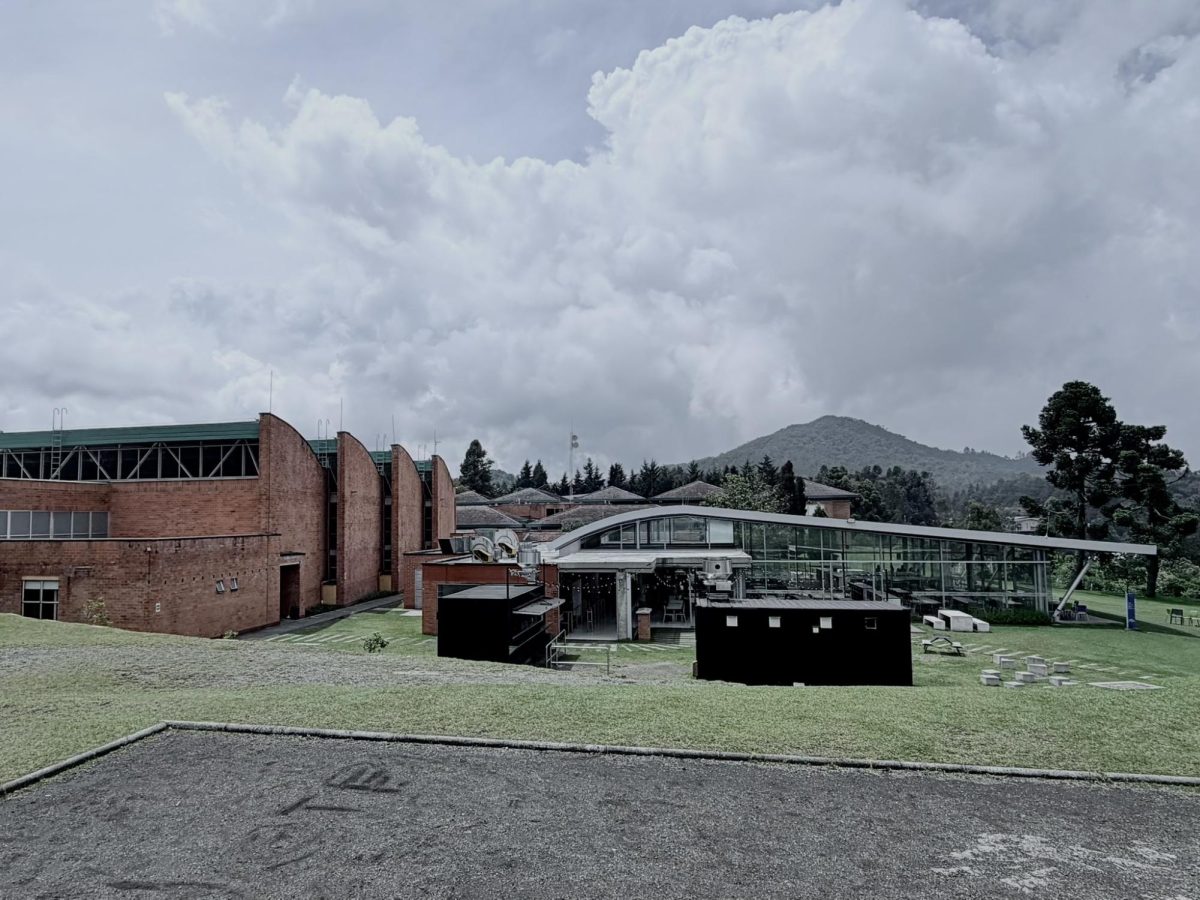
On any given morning at The Columbus School, students walk past green fields, modern buildings, and a community that feels both deeply rooted and constantly evolving. But behind this environment lies a bigger question: who really built The Columbus School? Was it the founders in 1947, the administrators who expanded it, or the generations of students and teachers who continue to shape its identity today?
The story of The Columbus School begins with a small group of visionaries. According to senior student Luciano Restrepo, the school was founded by a group of Colombian international educators. Restrepo said they aimed to create something new in Medellín: a bilingual institution that could connect Colombian education with international perspectives. The school was officially established in 1947, marking the beginning of a long process of growth and transformation. However, its origins were even more modest than what students see today. Restrepo said the school was first established in Robledo, a reminder that the institution started small before becoming what it is now.
While the founders laid the foundation, the school’s identity did not remain fixed. Over time, it evolved through the contributions of educators, administrators, and students. Principal Paul Navarra reflects on this transformation by emphasizing how the school has grown from a small community into a large institution. Navarra said the school began with probably 15 to 20 students from families who came together. Today, that number has expanded dramatically. Navarra said the school now has about 1800 students, highlighting the scale of its development. This growth shows how the school was not just built once, but continuously reshaped over decades.
Beyond numbers, the school’s identity has also been influenced by its traditions. Norberto Villa, a long-time teacher, believes that continuity plays a key role in shaping what the school represents today. Norberto said, “I do believe the school has a very strong tradition.” His perspective suggests that while the school has changed, it has also maintained core values that define its character. These traditions are not abstract ideas; they are reinforced through real connections between generations. Norberto said, “I have been receiving visits from alumni for about ten years,” showing how former students continue to return and stay connected to the institution.
This connection between past and present is essential to understanding how the school’s identity has been shaped. Norberto said, “What has happened with this school is similar to what has happened with many international schools.” In other words, The Columbus School is part of a broader model of international education, but it has adapted that model to its local context. This balance between global influence and local identity is one of the defining characteristics of the school.
At the same time, students themselves play a crucial role in shaping the school’s identity. Luciano Restrepo, who has spent 14 years at the school, has witnessed many changes firsthand. His experience reflects how each generation contributes something new to the community. While the founders established the vision, it is the students who live it every day, redefining what it means to be part of The Columbus School.
Principal Navarra also highlights the symbolic elements that contribute to the school’s identity. Navarra said he believes symbols around the school play a big role in shaping how students experience it. Although he refers to something as simple as school signs, his comment suggests that identity is built not only through major decisions but also through everyday details.
Taken together, these perspectives reveal that The Columbus School was not built by a single group or at a single moment in time. Instead, it is the result of continuous collaboration between founders, educators, administrators, and students. The founders created the initial vision, but teachers like Norberto preserved traditions, principals like Paul Navarra guided growth, and students like Luciano Restrepo brought new perspectives and experiences.
This ongoing process explains why the school feels both stable and dynamic. It has a strong foundation, but it is also constantly evolving. Each generation adds something new while maintaining the values that define the institution.
In the end, the answer to the question “Who built The Columbus School?” is not simple. It was built by the founders in 1947, but it has been shaped over time by everyone who has been part of it. From a small group of families in Robledo to a community of 1800 students, the school’s story is one of growth, tradition, and transformation.
The Columbus School is not just a place; it is a living community. And as long as new students, teachers, and leaders continue to contribute to it, its identity will keep evolving. That is what makes its story not only interesting, but ongoing.