


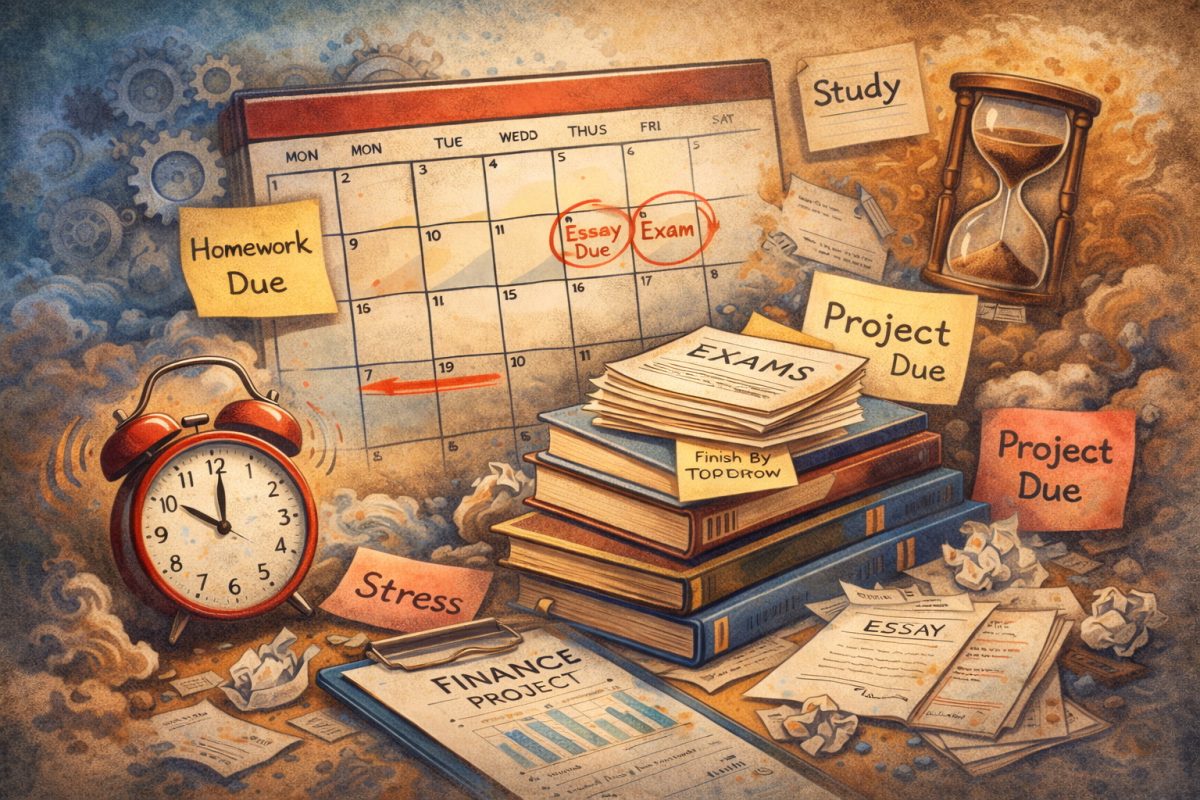
Senior year is often described as the most exciting chapter of high school. For many students, it is also the most overwhelming.
“As a senior, the pressure feels heavier than before,” said Irene Hinestroza. For Irene, that pressure builds when multiple responsibilities collide. “I had deadlines for exams, essays, and regular homework all in the same week,” she explained. When several major assignments fall together, the impact goes beyond being busy. “Academic pressure sometimes increases my anxiety and makes me doubt myself.”
For her, the stress comes from overlapping responsibilities and deadlines. When multiple assessments and longer assignments are given at the same time, especially in classes like Financiera, where projects can be extensive and sometimes need to be completed at home, the pressure becomes overwhelming.
Like Irene, Sara Gomez also experiences stress when balancing multiple responsibilities. However, for Sara, the challenge centers more on time management. “I try to stay organized by planning my week in advance, especially on the days I have horseback riding practice,” Gomez said. Planning ahead helps her structure her academic workload around her training schedule, showing how managing time becomes essential when responsibilities overlap.
Even with careful planning, balancing responsibilities is not easy. “The biggest challenge is time management. Some days I feel physically tired after training, but I still need to stay focused on studying and meeting deadlines,” she explained. That physical exhaustion makes it harder to concentrate and stay productive, even when assignments still need to be completed. The long days can stretch into the night. “There are nights when I go to sleep later than I should because I need to finish assignments or study for tests.”
Camilo Hoyos sees another cause of stress. “If many teachers plan to give summative assessments on the same day, that can definitely create stress for students,” he said. When several summative assessments are scheduled at once, the pressure is not only about how students manage their time but also about how deadlines are coordinated across classes.
Hoyos also emphasizes flexibility. “If I see that students are working, I have no problem giving extensions or even talking to another class to give them more time to finish what they have to do,” he said. By allowing extensions and adjusting deadlines, Hoyos addresses the same pressure students described earlier—overlapping assignments that lead to stress, fatigue, and late nights spent finishing work.
He proposes a broader, systemic solution to the issue of overlapping deadlines. “I think, for example, a shared schedule among the teachers, like the school community could share a schedule in which they plan the summatives and deadlines for projects,” Hoyos said. A coordinated schedule among teachers could help prevent multiple major assessments from being assigned at the same time, addressing the root cause of the stress students described.
While Irene and Sara describe the emotional and physical effects of overlapping deadlines, Hoyos focuses on how coordination and flexibility can help manage that pressure. Students experience the stress directly through anxiety, fatigue, and late nights, while Hoyos emphasizes adjusting schedules and offering extensions to reduce it. His proposal for a shared planning system suggests that clearer communication among teachers could prevent many of these conflicts before they happen. If deadlines are better coordinated, the heavy weeks students describe may become more manageable and less overwhelming.