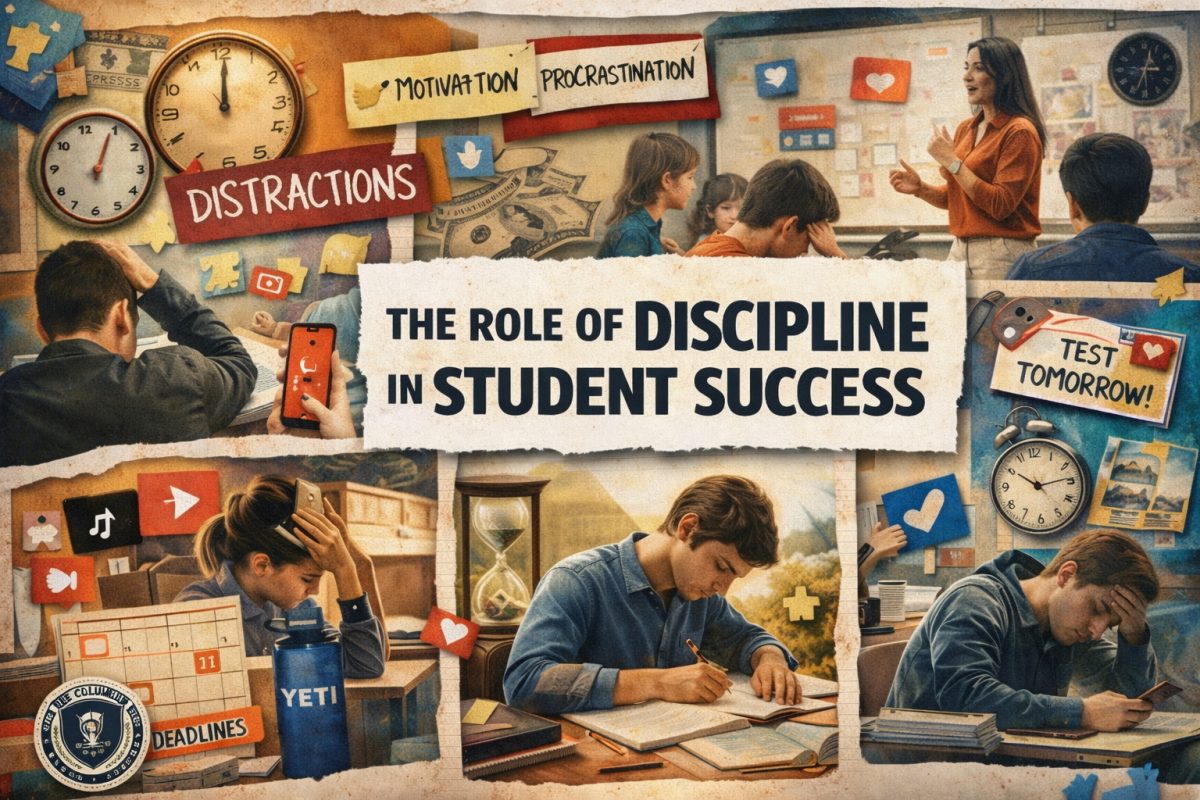
Discipline is often the difference between students who stay focused in class and those who fall behind. At The Columbus School in Medellín, both teachers and students say discipline appears in everyday choices, from managing time to resisting distractions like cell phones and YouTube. Science teacher Blaire Dawkins explained that successful students “know how to manage their time” and choose to work even when others around them are distracted.
When discipline is lacking, the classroom environment can quickly be affected. Dawkins said that “the biggest thing that I see is a lack of self-control,” describing students who talk or move around during instruction. This behavior interrupts learning and makes it harder for others to stay engaged. She also believes discipline must be modeled, explaining that “students just need to be shown how to have discipline,” and comparing teachers to parents who lead by example.
While teachers see discipline play out in daily classroom behavior, students often notice it most during tests and major assignments. Camilo Arroyave, a 12th-grade student at The Columbus School, explained that when he has tests or quizzes, “I go study at home in the afternoons,” which helps him feel prepared the next day. At the same time, he admitted that distractions can interfere. “Instead of studying, I go out with my friends,” he said, also mentioning texting and calling as common distractions. Although he studies more during exams or major projects, he acknowledged that he often prepares “the day before the exam,” showing that procrastination remains a challenge.
Other students say discipline can develop over time. Another 12th-grade student, Matias Gonzales, described how changing his habits affected his approach to schoolwork. “In the last quarter, I started doing the work when the teacher assigned it,” he explained. He added that this made him feel better and less stressed, helping him finish more quickly and work more efficiently. Even so, distractions continue to be an issue. Gonzales admitted that spending time with friends, using Snapchat, and even feeling uncomfortable when the weather is hot can interrupt his focus.
Gonzales also offered a different perspective on discipline altogether. He said he almost never studies and procrastinates often, stating, “I never work. My intelligence is in my mind, not in doing homework.” As mentioned earlier, he finds it difficult to concentrate on homework. This viewpoint challenges traditional ideas about discipline and suggests that some students rely more on natural ability than consistent study habits.
Taken together, these perspectives show that discipline is not one-size-fits-all. For some students at The Columbus School, it means time management and focus. For others, it is something learned through role models or developed under pressure. What is clear is that discipline—or the lack of it—has a direct impact on how students experience learning at school.