


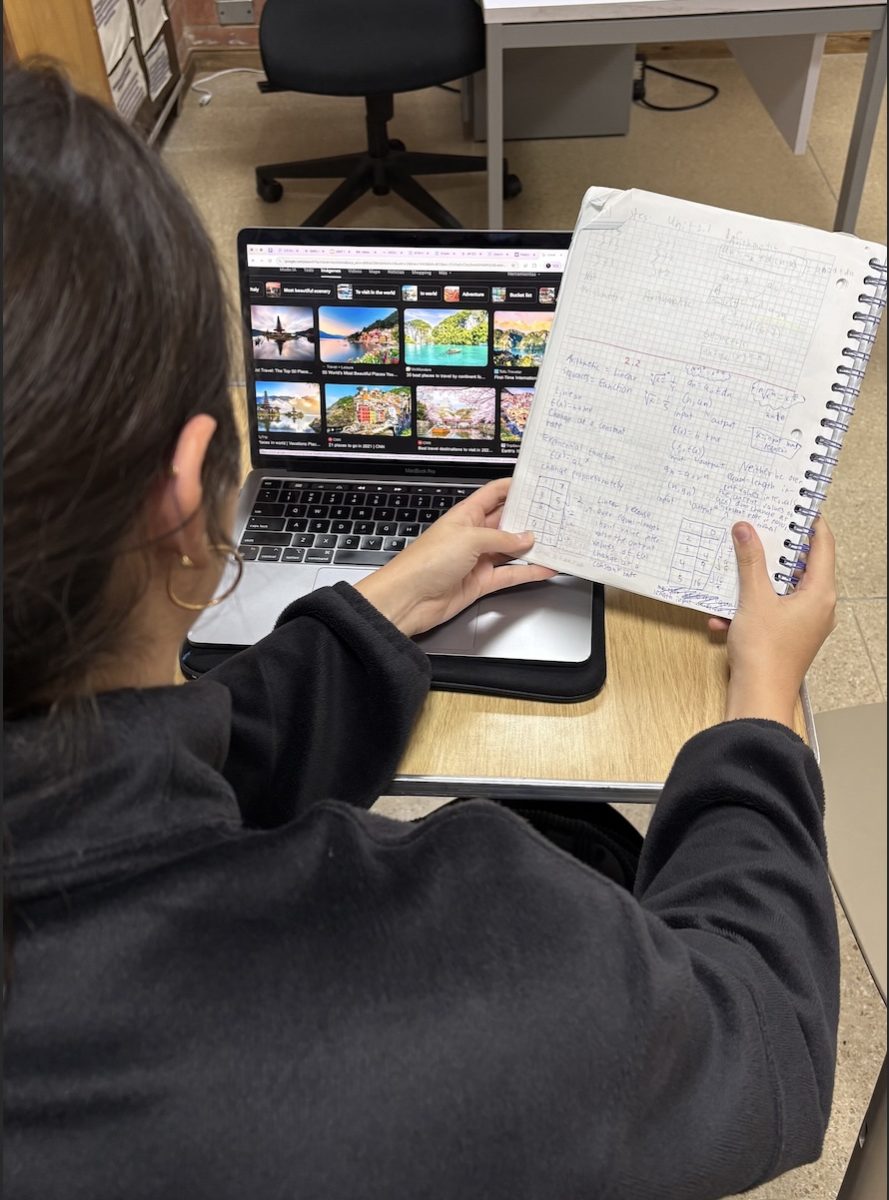
Missing school for a trip might sound like the perfect break—no classes, no homework (at least for a few days), and the chance to relax or explore somewhere new. For many students, traveling during the school year feels exciting and even harmless. But once the trip is over, reality often hits much harder than expected. Behind the fun and memories, students frequently return feeling stressed, tired, and completely overwhelmed. Traveling during the school year can negatively affect students’ academic performance by disrupting their routines, increasing stress, and making it difficult to catch up on missed lessons and assignments.
One of the biggest problems students face when traveling is the disruption of their daily routine. During the school year, most students follow a consistent schedule that helps them stay focused and organized. When that routine is interrupted, it can be surprisingly hard to adjust back. Mariana Echavarria, an 11th-grade student who has traveled during the school year, explains how even vacations can leave students more exhausted than before. “Well, it definitely depends on why I’m traveling, but sometimes when I’m on vacation, you want to do a lot of things. You wake up early, but go to sleep really late. So when I go back to school, I feel even more tired,” Echavarria said. Instead of coming back refreshed, students often feel more tired, which makes it harder to focus in class and keep up with schoolwork.
This lack of routine also affects how well students understand what they are learning. When students miss class, they miss more than just notes—they miss explanations, examples, and the chance to ask questions in real time. “It really affects my confidence because it’s different reading instructions on your own than hearing them from the teacher,” Echavarria said. Trying to learn new material alone is not the same as being in class, and many students struggle to fully understand concepts without that direct support.
Along with confusion comes stress, which is another major issue caused by traveling during the school year. Even before leaving, students often feel pressure trying to balance school responsibilities with planning for the trip. “Yes, of course, because you need to plan the trip and you also miss a lot of school, which creates a lot of stress,” Echavarria said. This shows that the stress doesn’t just happen after the trip—it can start before students even leave.
For many students, the stress becomes even worse when they return. Manuela Trujillo, another 11th-grade student, explains how missing school affected her learning, especially in difficult classes. “My understanding of the material was greatly affected. For example, in AB Pre-Calculus, it was really difficult because I couldn’t start off on a good note,” Trujillo said. In classes like math, where each lesson builds on the previous one, missing the beginning of a unit can make everything that comes after much harder to understand.
As assignments pile up, the pressure can quickly become overwhelming. Students often have to complete multiple tasks in a short amount of time, which leads to frustration and anxiety. “It made me really stressed because I had a lot of work bunched up and didn’t have time to do anything properly,” Trujillo said. Instead of doing their best work, students may rush through assignments just to catch up, which can hurt their grades and overall learning.
Another challenge is the feeling of being behind compared to classmates. When students return after missing several days, it can feel like everyone else has moved ahead without them. “I’d say the hardest part was feeling behind and not understanding what was happening in the middle of class,” Trujillo said. This sense of confusion can make it harder for students to participate and can lower their confidence even more.
These experiences are not just individual cases—they reflect a larger pattern. Travel advisor Jorge Alvarez has seen how traveling during the school year affects many students. “When students travel during the school year, their routine is disrupted. Their sleep schedules change, and when they return, they often feel stressed because of everything they need to catch up on,” Alvarez said. His perspective supports what students are experiencing: disrupted routines and stress are very common outcomes of missing school for travel.
Alvarez also points out that the biggest issue is not just missing assignments, but missing the learning itself. “The main problem is that students miss important explanations, homework, and sometimes evaluations, which makes it more difficult to catch up,” Alvarez said. This shows that even if students complete the work later, they may still lack a full understanding of the material.
Finally, Alvarez addresses a common misunderstanding among students—that catching up is easy. “A very common mistake is thinking that catching up on missed classes is easy, when in reality understanding the topics without having been in class can be very complicated,” Alvarez said. This highlights an important point: the challenge is not just finishing assignments, but actually learning what was missed.
Traveling during the school year may seem like an exciting opportunity; however, in many cases it creates more problems than benefits. Students may have their routines disrupted, experience increased stress, and struggle to understand what they are learning. These issues can directly impact their academic performance, self-confidence, and overall experience at school.
In summary, although travel can be an enjoyable and enriching experience, there are significant drawbacks when it occurs during the school year. The experiences of Echavarria and Trujillo, along with the insights from Alvarez, provide clear evidence that even short trips can lead to lasting academic challenges. Students often return tired, stressed, and unable to keep pace with their classmates. For this reason, it is important for families and students to carefully consider the impact of traveling during the academic year. Missing a few days of school may not seem significant at the time, but the consequences can last much longer than expected.