


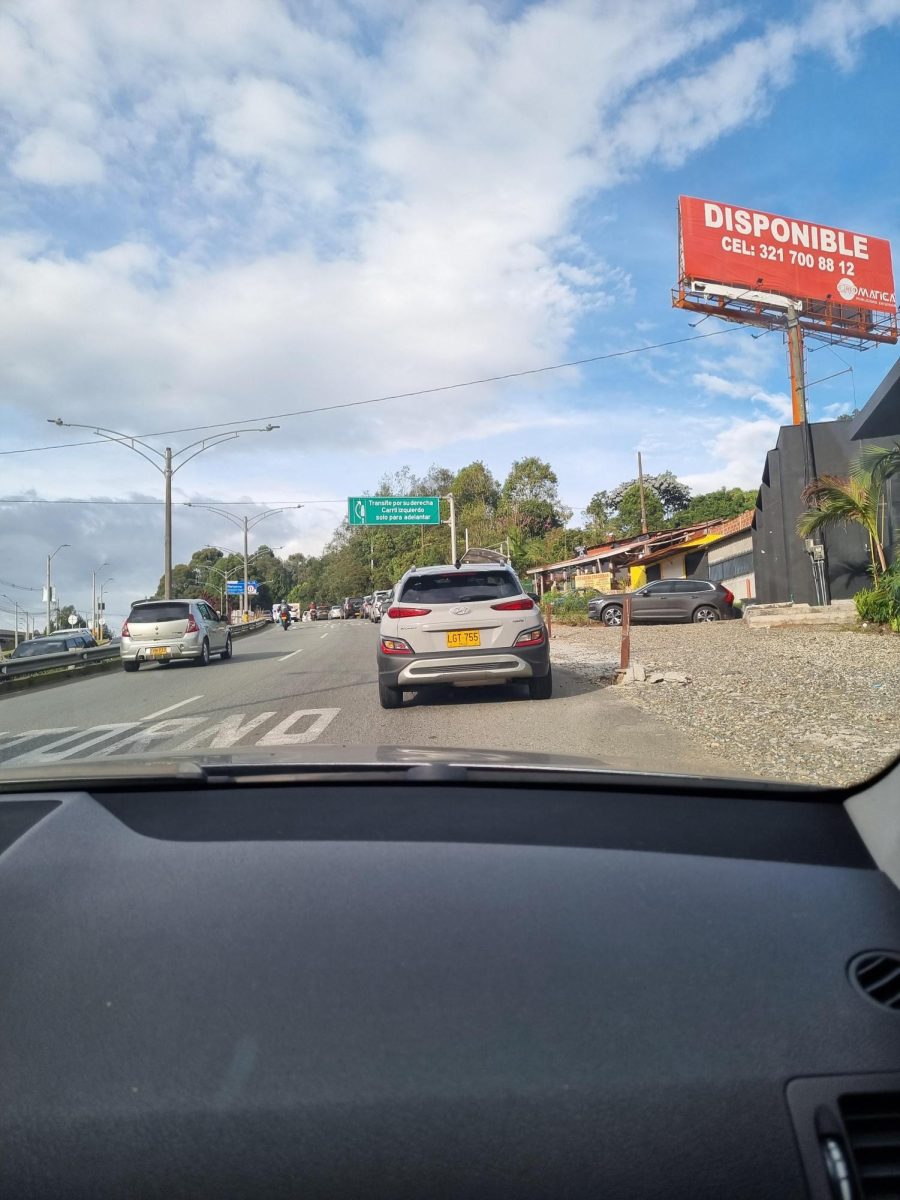
At 5:30 in the morning, when most of Medellín is still dark and quiet, some students are already awake, getting ready for school. Not because they want extra study time or a slow morning but because they have no choice. For many students at The Columbus School, the school day doesn’t start at 8:00 a.m. It starts on the road.
While all TCS students end up in the same classrooms, their journeys to get there can look completely different. Some wake up just minutes before leaving the house, while others spend hours in traffic before their first class even begins. These differences may seem small at first, but they have a real impact on students’ energy, stress, and ability to keep up with everything school demands.
Because TCS draws students from all over Medellín and nearby areas like El Poblado, San Lucas, and Llanogrande, commute times vary a lot. For some, the ride to school is short and manageable. For others, it’s long, unpredictable, and exhausting. Talking to students with different commutes reveals just how much those extra minutes or hours can shape daily life.
For Sara Gómez, who lives in Llanogrande, commuting is one of the hardest parts of her day. “My commute usually takes between 45 minutes to an hour… I have to wake up around 5:30–6:00 a.m., which is much earlier than most of my classmates,” she said. Starting the day that early makes it difficult to get enough sleep, especially when homework keeps her up at night.
Over time, that lack of rest adds up. “It definitely affects my sleep… This makes me feel tired during the day, and it’s harder to stay focused, especially in early classes,” Sara explained. For her, the challenge isn’t just getting to school it’s having the energy to fully be there once she arrives.
The effects don’t stop after the last class ends. Long commutes also limit what students can do after school. Whether it’s joining a club, playing a sport, or simply relaxing, time becomes very limited. Sara’s experience reflects a bigger issue: when so much time is spent traveling, there’s less time left for everything else.
Matilda, who lives in El Poblado, has a shorter commute, but that doesn’t mean it’s easy. Traffic in her area has become increasingly heavy, turning even short distances into long, frustrating rides. “Even though the distance isn’t that far, the heavy traffic especially in areas like El Poblado makes everything more stressful and time-consuming,” she said.
For Matilda, the biggest challenge comes after school. Instead of going home and resting, her afternoons feel rushed and packed. “I often feel like I have very little time to rest… traffic is so bad… it makes my afternoons feel very rushed,” she explained. Even though her commute isn’t as long as Sara’s, the constant stress of traffic still affects how she feels throughout the day.
That stress builds over time. Being stuck in traffic every day doesn’t just waste time; it affects mood, energy, and motivation. As Matilda put it, “The daily stress and time lost in traffic really add up and affect your routine.” Her experience shows that even a “medium” commute can still have a significant impact.
On the other hand, students like Sofia Thiriez have a completely different experience. Living in San Lucas, her commute is short and predictable, which makes a big difference in her daily routine. “Having a shorter commute really helps my morning routine… I’m usually less stressed before school… which makes a big difference in how I start the day,” she said.
Because she spends less time traveling, Sofia has more time for everything else. She can sleep longer, take her time getting ready, and still arrive at school feeling prepared. After school, she also has more flexibility. “Because I spend less time commuting, I have more time… I’m not as tired when I get home, so it’s easier to stay focused and productive,” she explained.
At the same time, Sofia recognizes that her experience isn’t the same as everyone else’s. “Students with long commutes… deal with more fatigue, which definitely affects their schedules and energy levels,” she said. Her perspective highlights an important reality: commute time creates very different experiences for different students.
Some people might argue that commuting is just part of living in a big city like Medellín, and that students eventually get used to it. But these interviews suggest something else. Even if commuting becomes routine, it still takes a toll. Whether it’s the exhaustion Sara feels, the stress Matilda deals with, or the advantages Sofia has, commute time continues to shape students’ lives in ways that are hard to ignore.
In the end, this isn’t just about distance or traffic it’s about time. All TCS students are expected to meet the same academic demands, but not all of them have the same amount of time or energy to do so. Longer commutes mean less sleep, less flexibility, and more stress, putting some students at a disadvantage before the school day even begins.
As Sara said, “Commute time has a real impact on sleep, stress, and academic performance… it should be considered when talking about overall well-being.” Her words capture the core of the issue.
Because for many students, the hardest part of the school day isn’t a test or an assignment it’s getting there in the first place.