


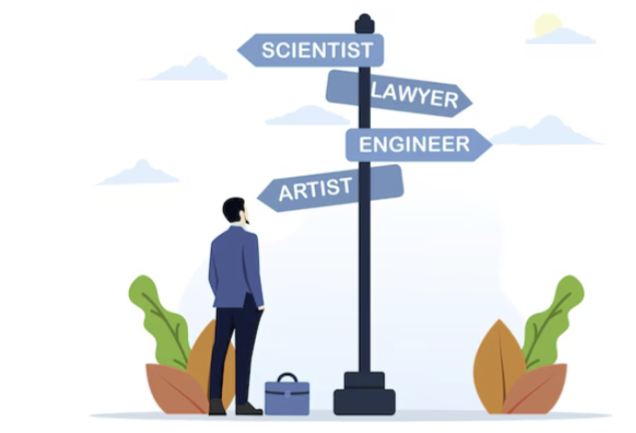
Every year, millions of high school seniors face one of the biggest decisions of their lives — choosing what to study and where to go next. Yet in many schools, the emphasis seems to fall more on test scores and grades than on helping students plan for their futures. Students are often told to “follow their passion,” but very few are actually given the tools to discover what that passion might be. Instead, teenagers are expected to magically know what they want to do with the rest of their lives, without meaningful guidance or exploration. That isn’t real preparation — it’s pressure disguised as readiness.
The truth is, most students aren’t confident about their futures because schools simply don’t provide enough personal guidance. Senior Camilo Arroyave admitted, “Honestly, I really don’t know what to do. I don’t even know what university I want to go to or what I’m going to study.” His uncertainty isn’t an exception; it’s a reflection of a system that leaves students to figure everything out on their own.
Data backs this up. According to the National Career Development Association (NCDA), students who receive structured career guidance are 30% more likely to choose college majors aligned with their interests and abilities. Yet in many schools, including ours, one counselor is often responsible for more than a hundred seniors. As high school English teacher Alyssa Jodoin explained, “We have one guidance counselor, but with so many students, it’s hard to actually have that intimate time to talk about futures.” Schools cannot claim to be preparing students for success when they rarely have the time or structure to talk to them about it.
Research also shows the impact of meaningful support. A 2023 OneGoal report found that students who receive steady mentoring and career exploration throughout high school are 55% more likely to enroll in and stick with a college program. Despite this, many schools only begin these conversations in senior year — when the pressure is already at its peak. As Alyssa pointed out, “In senior year, it kind of becomes the push to apply,” instead of a time to explore options. Imagine if schools started in ninth grade — allowing students to shadow professionals, attend career workshops, explore technical programs, or hear from alumni with diverse paths. That early exposure would empower students to make informed decisions long before deadlines hit.
The lack of real career exploration doesn’t just lead to confusion — it fuels stress. The NCDA reports that schools with active career development programs see a 25% drop in students’ anxiety about postsecondary choices. This connects directly with what both Camilo and Alyssa described. Camilo shared that most of his ideas about the future “have come from my parents and me,” while Alyssa noted that many students end up “going into what their parents recommend because it feels like the correct path.” Without structured support from schools, teens default to pressure from family instead of discovering their own ambitions. This can lead to burnout, regret, and even students dropping out later when they realize the path they chose wasn’t truly their own.
Some may argue that schools already offer support through college fairs, basic counseling, and reminders about deadlines. But that isn’t the same as teaching students about careers. As Alyssa put it, “We don’t have a careers class where you actually get to explore. You do a career aptitude test, but that’s just a layer.” Schools spend more time helping students apply to college than helping them figure out who they are and what they want. That difference matters. Real guidance means connecting a student’s skills, interests, and values to the options available — not just helping them submit applications.
If schools truly want to prepare students for life — not just graduation — meaningful career support must become a priority, not an afterthought. That means hiring more counselors, offering classes dedicated to exploring careers, and creating consistent opportunities for students to learn from alumni and professionals. The research is clear: early mentoring boosts success, lowers stress, and helps students make choices with confidence. Grades might show what a student has learned, but guidance helps shape who they will become. Until schools recognize this, they will continue graduating students who can ace their exams — but have no idea what comes next.