


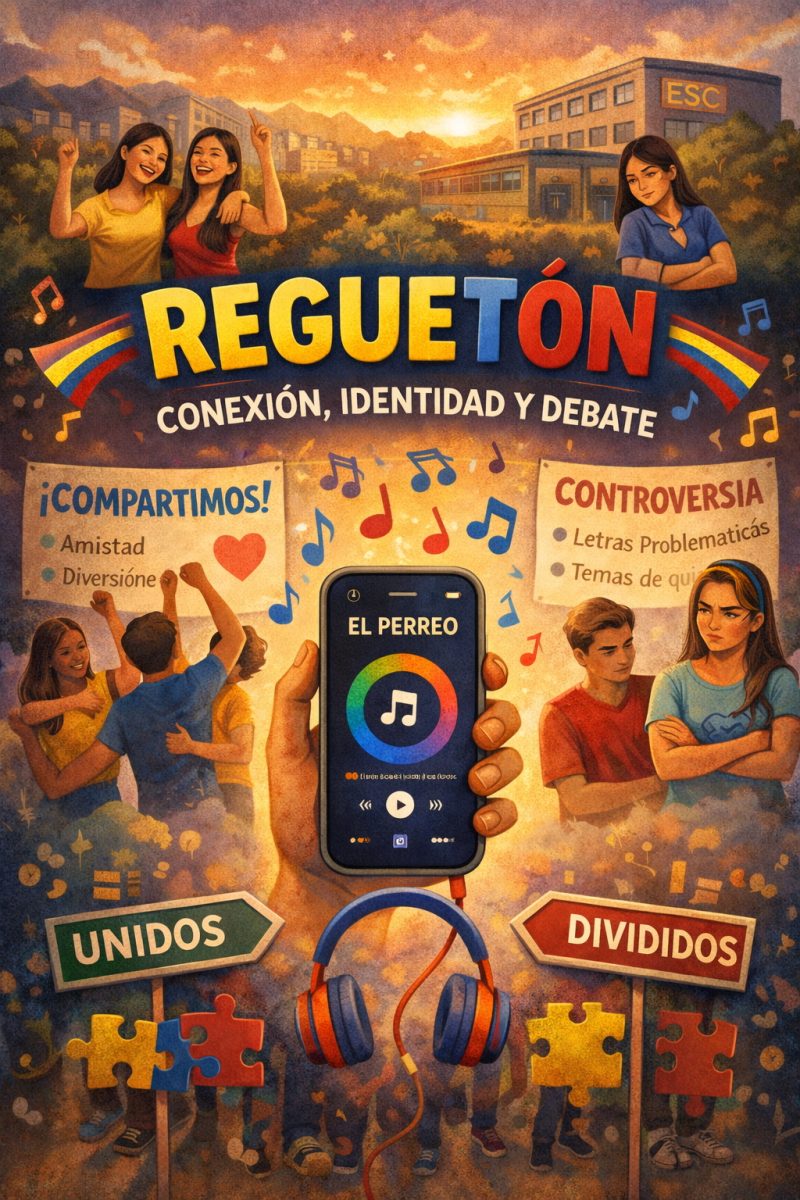
Music plays a powerful role in student life, and reguetón is one genre that sparks strong reactions across campus. For some students, its rhythm is impossible to ignore.
“Let’s talk about the beat. The beat actually causes happiness. It has been scientifically proven that it triggers happiness in your brain,” said ISC teacher Camilo Hoyos, describing how the sound itself creates a positive emotional response.
That emotional impact often connects directly to friendships and shared experiences. Several students described how reguetón is tied to their memories with friends.
“I think that reguetón shows up in my life in many different ways because it reminds me of when I have fun with my friends,” said Sofia Betancur, a 12th-grade student.
“I get déjà vu or flashbacks of these fun times with my friends,” added Miranda Oliveira, also a 12th grader.
For these students, the music becomes more than entertainment. It serves as a reminder of meaningful social moments.
This sense of shared experience helps explain why reguetón can bring students together.
“It’s just something that connects us all,” Betancur said.
Oliveira emphasized how music taste can shape social circles, saying, “It gives us something to have in common, and we can make friends based on our music taste.”
In that way, reguetón can act as a social bridge, helping students bond over songs they enjoy.
For many students, sharing music helps create a sense of belonging, shaping friendships and social connections through common interests.
However, not everyone experiences the genre the same way. Some students expressed discomfort with its lyrics.
“Reguetón usually uses language in which they define women in a certain way,” Hoyos said.
Oliveira shared a similar opinion: “I do feel a little disrespected when I hear songs that are too heavy in this type of context.”
These reactions show that while the beat may be energizing, the content can raise concerns for some listeners. Because of these differences, opinions on reguetón often fall at opposite extremes.
“There’s the majority of people who don’t like it, they hate it, and the majority of people who enjoy it love it,” Hoyos added.
This contrast shows how personal music preferences can be and how strongly students react to the genre.
Despite the controversy, many students feel a strong sense of identification with reguetón.
“Many of the old reguetón was written by artists our age. We can relate to their mindset,” Betancur said.
This relatability helps explain why the genre continues to resonate with young listeners.
Whether celebrated for its rhythm and shared memories or criticized for its lyrics, reguetón plays a significant role in student culture. It connects students, creates debate, and sparks conversation, making it a powerful presence in everyday school life.