


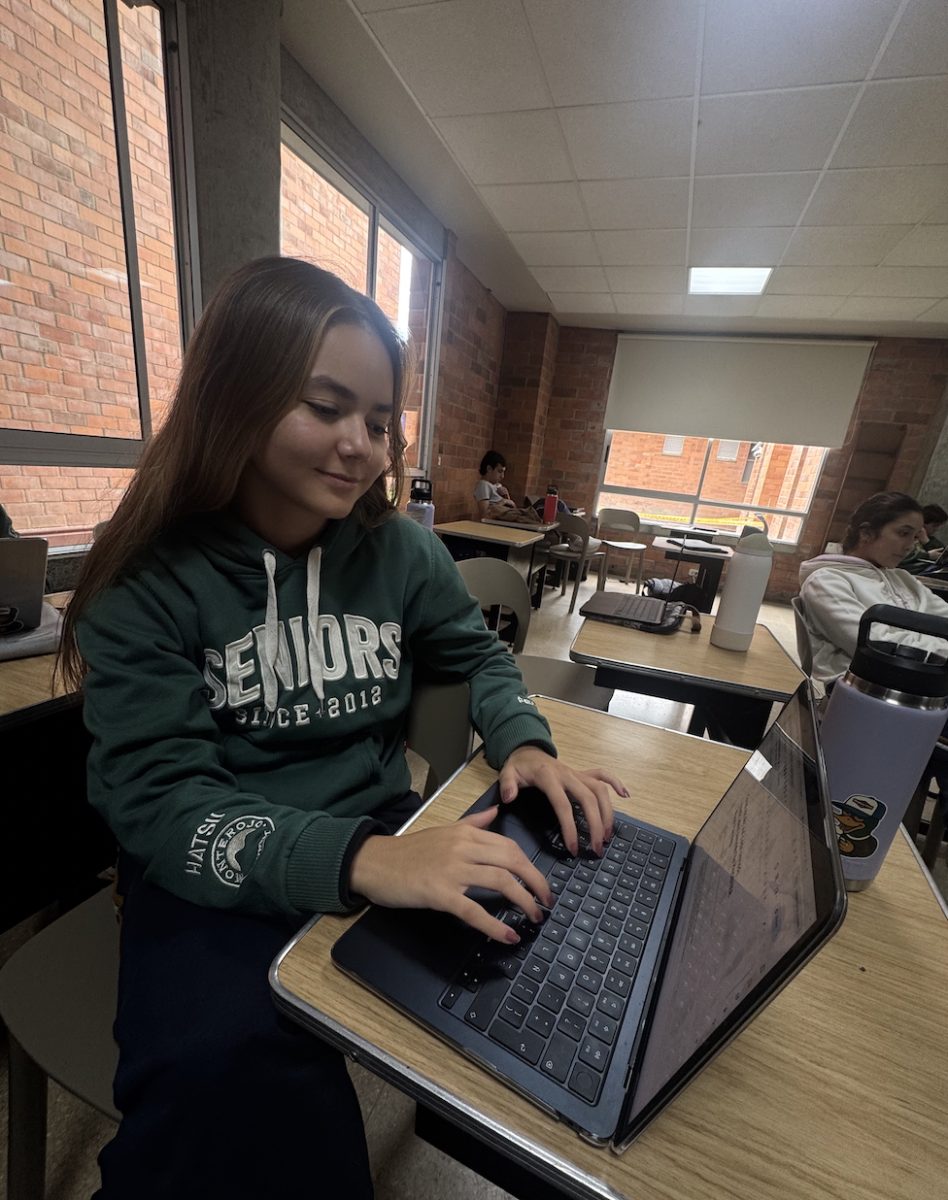
In recent years, more students have considered studying internationally, particularly in countries such as Spain, the United States, and the United Kingdom. Along with researching universities, preparing transcripts, and completing applications, students must also write personal essays that explain who they are and why they want to pursue a specific academic path. These essays have traditionally been one of the most personal parts of the application, but the growing use of AI tools has introduced new questions about authenticity.
For many students, the essay section requires the deepest level of reflection. Jeronimo, a student who recently applied to universities abroad, explained how personal this part of the process can be. “The essays needed the most personal reflection because I had to explain my goals, my experiences at TCS, and why I want to study abroad,” he said. Unlike standardized forms or transcripts, essays require students to articulate their motivations and identity.
However, writing about personal experiences is not always easy, especially when students must do so in a second language. Jeronimo described one of the difficulties he encountered during the process. “One challenge was communication because I had to write my essays in English and sometimes it was hard to explain my ideas clearly,” he said. For international students, the application process often requires them to translate not only their words but also their personal stories into a language that may not be their first.
Because of these challenges, many students turn to technology for support. Artificial intelligence tools, grammar checkers, and editing platforms have become increasingly common resources during the writing process. Jeronimo acknowledged that he used these tools carefully while maintaining control of the content. “I used AI mainly to check grammar and help organize my ideas, but the ideas and final writing were mine,” he said.
Other students share a similar approach. Irene, another student who researched universities abroad, described the resources that helped her navigate the application process. “The most helpful resources for me were official university websites, webinars hosted by admissions offices, and guidance from my school counselor,” she said. Access to reliable information allowed her to better understand application requirements and expectations.
When it came time to write her essays, Irene focused on making her story personal and specific. “I tried to focus on specific personal experiences rather than general statements, writing my first draft freely like telling a story and editing later to make it clearer,” she said. This approach helped her avoid sounding overly formal or generic while still presenting her experiences in a structured way.
Maintaining authenticity remained one of her top priorities throughout the process. “I wanted the ideas and experiences in the essay to remain my own, so I focused more on being honest about my motivations instead of trying to sound overly impressive,” Irene explained. Her perspective reflects a common belief among many applicants: that authenticity matters more than perfection.
Despite these efforts, the rise of AI tools has also raised concerns among educators about how technology may influence student writing. Andrew, who has experience reviewing student essays, believes that artificial intelligence cannot replicate certain human elements of storytelling. “Whittynes is something that ChatGPT can’t do, It can’t do humor, it can’t do those whitty and gritty details that give your writing soul,” he said.
According to Andrew, there are also subtle signs that can reveal when AI has been used excessively in writing. “The spacing and formating, you can tell when its used by AI, emojis, another dead giveaway, students are now using emojis way more in their writing and the dash, if I see a dash, we never used to use dashes the way AI uses them,” he explained. These patterns, he suggests, sometimes make essays feel less personal and more mechanical.
At the same time, Andrew emphasized that strong college applications are not simply about perfect writing. Admissions officers are often looking for deeper qualities in applicants. “What people are looking for, at least in my opinion when it comes to college applications is a, that we are answering the prompt b, we are showcasting how we overcame struggle or we overcame adversity,” he said. In other words, the content of the story matters more than stylistic perfection.
These perspectives reveal a complex reality for students applying to universities today. On one hand, AI tools can help students overcome practical challenges such as grammar, structure, and organization. On the other hand, overreliance on technology can risk removing the personal voice that admissions officers value most.
Ultimately, the process of applying abroad remains deeply personal. Essays provide students with an opportunity to reflect on their experiences, aspirations, and identity. While technology may assist with certain technical aspects of writing, it cannot replace the authenticity that comes from real experiences and personal reflection.
For students navigating this process, the challenge is not whether to use technology at all, but how to use it responsibly. As Jeronimo and Irene’s experiences show, tools can be helpful when they support, not replace the student’s own ideas.
In the end, the most compelling applications are not the ones that sound perfect, but the ones that sound real. Behind every essay is a student trying to tell their story, and that voice: imperfect, personal, and human, is still the most powerful part of the application process.