


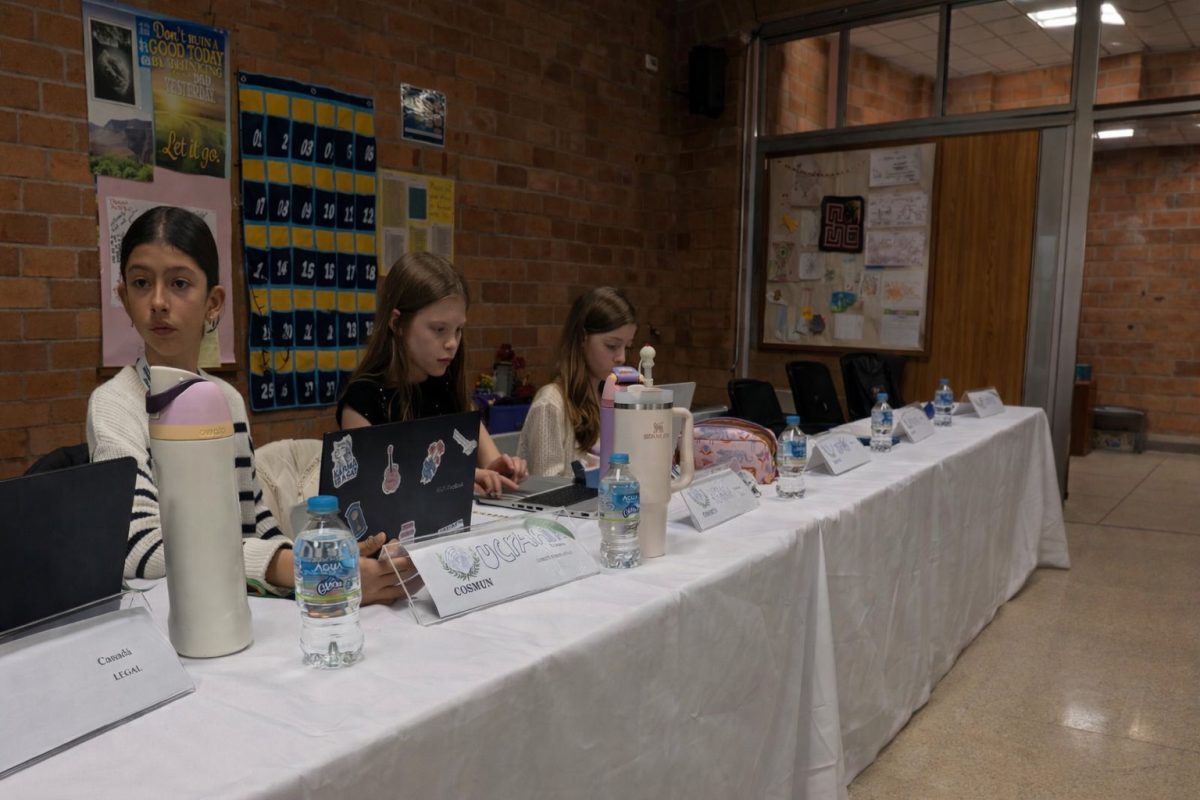
The room is quiet except for the sound of typing. Delegates sit behind country placards, laptops open, focused on drafting resolutions and responding to fast paced debate. From the outside, COSMUN appears seamless, almost effortless. But what happens inside these rooms is only a small fraction of what makes the conference possible.
“I would say probably 90% of the event is before the event,” said Mr. Murphy, teacher sponsor of COSMUN.
While COSMUN lasts only a few days, the conference is the result of months of planning, coordination, and collaboration between different student led teams. From logistics to media coverage, each department plays a critical role in ensuring the event runs smoothly. What appears as a polished conference is, in reality, the outcome of systems built long before the first delegate walks into a committee room.
A large part of that preparation falls on the logistics team. According to Alina, Vice President of Logistics, organizing COSMUN requires careful coordination of space, time, and movement across the entire school. “Before COSMUN begins, I help organize room assignments for committees, coordinate schedules, and plan delegate movement around the school.”
Managing these elements is not simple. With multiple committees running simultaneously, even small mistakes can disrupt the flow of the conference. “One of the most challenging parts has been coordinating room assignments and schedules because we have many committees running at the same time and need to avoid overlaps,” Alina explained.
These challenges highlight how much of COSMUN’s success depends on invisible work. The conference itself may feel structured and organized, but that structure is built through constant adjustments behind the scenes. “The conference itself only lasts a few days, but the preparation takes months, with constant planning, coordination, and adjustment behind the scenes,” Alina said.
However, organization alone is not what defines COSMUN. According to Mr. Murphy, the systems created before the event are only part of the process. “The idea is to put systems into place that ensure the success of the event, but ultimately we leave the majority up to the students and we trust them in their processes.”
This balance between structure and independence is what makes COSMUN unique. Students are not only following plans, but actively making decisions, solving problems, and leading in real time. “I think it’s extremely important for learning outside of the classroom because students are self motivated, and that can be some of the most impactful type of learning,” Mr. Murphy added.
Beyond logistics and leadership, another key component of COSMUN is how the event is communicated and perceived. Elisa, Vice President of Prensa, explained that her team is responsible for shaping that image. “Prensa is not just about photos or social media posts. It shapes the narrative of COSMUN.”
This role extends far beyond documenting the event. Much like logistics, a large portion of Prensa’s work happens before the conference even begins. “A significant amount of work happens before COSMUN even begins… by the time the conference starts, most of the structure is already in place so everything runs smoothly.”
Through planning content, organizing coverage, and coordinating with other departments, Prensa ensures that the work of COSMUN is visible. Without this effort, much of the conference would go unnoticed. “Without Prensa, the work of committees, logistics, and leadership wouldn’t be visible or recognized.”
Together, these perspectives reveal a more complex reality behind COSMUN. What appears as a short, well organized event is actually the product of months of preparation, collaboration, and trust. Each team, from logistics to Prensa to faculty support, contributes to a system that allows students to take ownership of the conference.
In the end, COSMUN is more than a conference. It is a reflection of student leadership in action, where planning meets execution, and where the work behind the scenes is what makes everything else possible.