


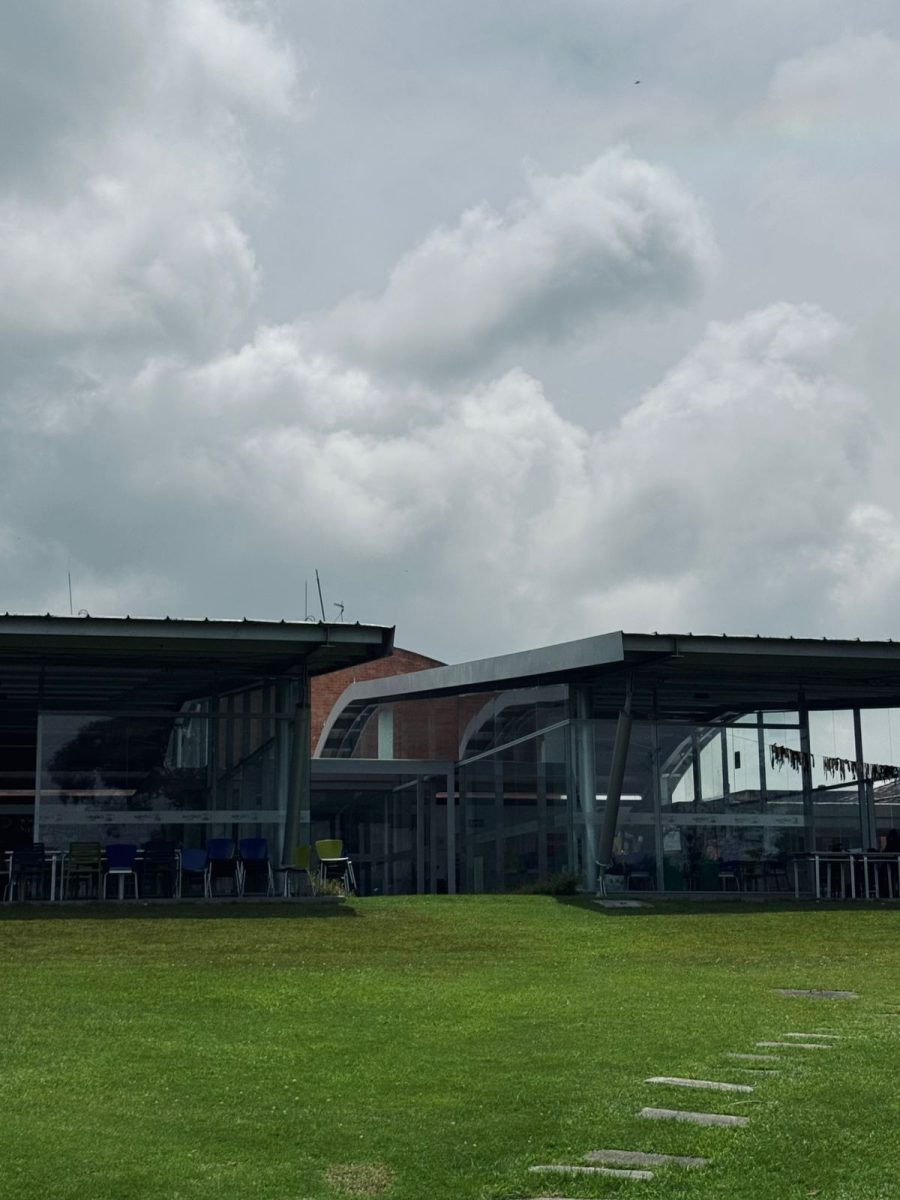
As soon as the lunch bell rings, students rush out of the cafeteria, laughing and heading to their next class. But what they leave behind tells a completely different story. Food is scattered across the floor, tables are covered in trash, and the cafeteria looks more like a dumpster than a place where students eat. This ongoing problem raises an important question: why does this keep happening?
Recently, the situation has worsened due to an increase in food fights. Food flies from table to table, turning what should be a normal lunch period into chaos. Even though school administrators like Mr. Navarra and Mr. Valentin have been working to stop this behavior, the problem persists. This suggests that the issue is not just about rules, but about understanding why students act this way in the first place.
One of the main causes appears to be peer pressure. Students often feel the need to react when something is thrown at them. Mr. Valentin explains that “there’s a big piece of this that’s peer pressure—if someone throws food at me, I feel like I have to get them back.” This reaction creates a chain effect, where one action quickly escalates into a larger disruption.
Students agree with this perspective. Lucas McLean, a 10th-grade student, says that in the moment, when someone throws food at you or your friends, it can feel like the best option is to throw it back. While this reaction may seem justified at the time, it often leads to larger consequences for everyone involved.
However, the impact of food fights extends beyond those participating. Some students are directly affected in negative ways. Emiliana Rojas shares her experience, recalling that a piece of chicken was once thrown at her, which she described as “really uncomfortable” and “horrible.” Her experience highlights how actions that seem funny to some can make others feel disrespected and unsafe.
In addition, the mess created by food fights affects the maintenance staff. Rojas explains that staff members have told her the situation impacts them significantly, as they already have a large workload after lunch, and food fights make it much worse. This shows that the issue is not limited to students—it also places an unfair burden on those responsible for maintaining the school environment.
To address the problem, the school has implemented consequences. Mr. Valentin explains that students involved in food fights are typically assigned detention for several days, during which they must eat in the office and help clean the cafeteria. These measures are intended to teach responsibility by connecting actions with consequences.
Some students say these punishments are effective. McLean shares that after receiving a referral, he had to spend multiple lunch periods in the office away from his friends, which made the punishment feel serious. He also reflects that the excitement of the moment is ultimately “not worth the punishment,” suggesting that students often regret their decisions afterward.
Still, punishment alone may not solve the issue. Mr. Valentin points to a deeper concern, explaining that current consequences act more as a response than a solution, and that the real issue involves community and caring. His perspective suggests that improving student behavior requires a shift in mindset, not just stricter discipline.
Some students agree that responsibility should play a larger role. McLean suggests that students who participate in food fights should be required to clean the cafeteria, emphasizing that such behavior is disrespectful. This approach could help students better understand the direct impact of their actions.
Ultimately, the condition of the cafeteria reflects more than just a messy lunch period—it reflects the culture of the school. If students continue to treat the space without respect, the problem will persist. But if they begin to take responsibility and care for their environment, meaningful change is possible.
When the bell rings and students leave the cafeteria, the mess they leave behind sends a message. The real question is not just why the cafeteria looks like a dumpster, but whether students are willing to take responsibility and change it.