


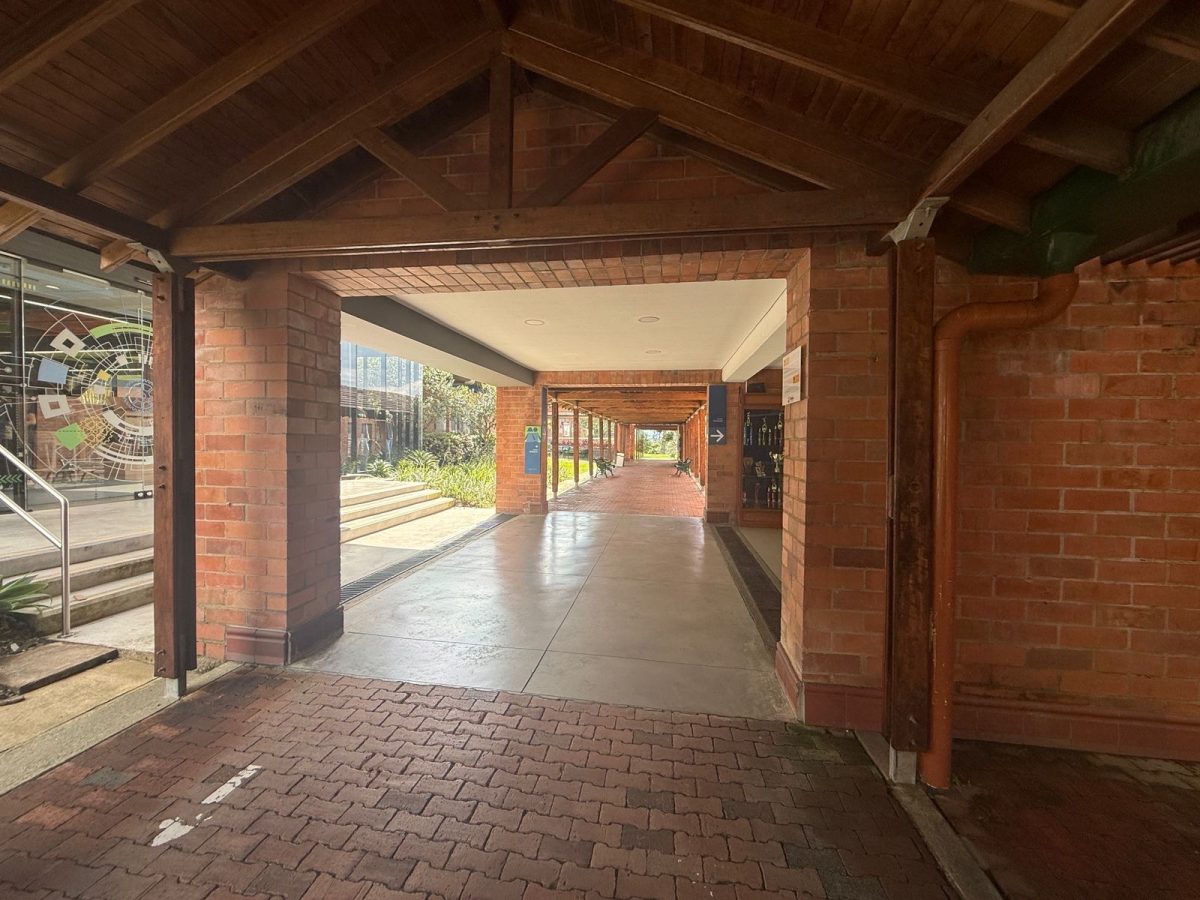
At The Columbus School, the day does not begin when students sit down in their first class. Instead, it begins outside the gates — on sidewalks, in parking areas, or stepping off buses — followed by a walk that can take anywhere from three to ten minutes. While this routine may seem ordinary, the physical journey to the High School building plays a major role in shaping students’ punctuality, stress levels, and overall start to the school day.
For many students, the morning routine begins before they even enter campus. Senior Mia Hodek is one of several students who park outside the school and walk in every morning. The distance between parking and the High School building has become a regular part of her daily schedule.
“I park right next to the school in the little street next to Las Palmas, and it takes us about 10 minutes to walk into the school,” Hodek said.
While the walk itself is predictable, the surrounding environment has changed over time. According to Hodek, more students driving to school has increased congestion around the entrance.
“In earlier years not as many people drove to school, now there’s a lot more people and a lot more cars,” Hodek said.
These changes make the walk more than just a simple routine. Increased traffic and crowded arrival areas can add pressure to students trying to arrive on time for first period.
Weather conditions can also complicate the experience. When rain hits in the morning, the walk quickly becomes uncomfortable for students entering campus from outside.
“One day it was raining a lot, so we got to school drenched and it was just a really terrible morning,” Hodek said.
Experiences like this highlight how exposure to weather and the lack of covered walkways affect students before the academic day even begins.
However, not every student arrives at school the same way. For students who ride the bus, the walk across campus tends to be shorter, though it still comes with its own challenges. Senior Gabriela Bohórquez enters campus through the bus drop-off area near the parking lot.
“The bus usually drops us off in the parking lot, and it takes me about three to five minutes to reach the building,” Bohórquez said.
Although the distance is shorter, congestion becomes a major factor during peak arrival times. When multiple buses arrive at once, large groups of students move toward the High School building simultaneously.
“I think around 7:50 all buses are dropping off students, so it gets really congested,” Bohórquez said.
Even with the crowds, Bohórquez explains that the walk itself is relatively manageable.
“And I think it’s really easy because it’s close by. It’s only to like walk up the stairs and you reach the buildings,” Bohórquez said.
Her experience shows that the impact of campus geography varies depending on where students enter school. For bus riders, the walk may be quick, while students parking outside campus face longer distances.
Still, weather can complicate the experience for everyone. Rain forces students to change routes in order to stay under covered areas.
“When it’s raining, you have to take a long way to walk up to the art building and then go through the covered part,” Bohórquez said.
These adjustments demonstrate how campus layout and infrastructure shape the morning routine in ways students might not always notice.
Teachers who observe students arriving each day also recognize how the physical structure of the campus influences student behavior. Journalism teacher Andrew Shainker says the location of the High School building plays an important role in how students move through campus.
“It’s an uphill walk to get to high school and we’re the furthest away,” Shainker said.
Because of this distance, students sometimes move quickly across campus when they feel pressure to arrive on time.
“I’ve noticed that people are starting to run or walk faster throughout the campus,” Shainker said.
The combination of distance, elevation, and time pressure can shape how students begin their school day.
In addition to the challenges inside campus, the walk to school can also involve safety concerns outside the gates. Students who park nearby or walk in from surrounding streets must navigate roads that are not always designed for pedestrians.
“It’s not such a safe walk, to be honest with you. You’re walking on the side of a road that is notorious for accidents,” Shainker said.
This highlights how the student arrival experience extends beyond the campus itself, involving the surrounding infrastructure as well.
Although many students view the walk to class as a normal part of their routine, it quietly affects how they start each day. Some mornings it offers a few minutes to wake up or talk with friends, while other mornings it means rushing uphill, navigating crowded pathways, or arriving soaked from the rain.
Ultimately, the daily walk to High School reveals something larger about life at TCS. The design of the campus — from entrances and parking areas to hills and covered walkways — shapes how students experience the beginning of every school day. What may appear to be a simple seven-minute walk is actually a routine that influences punctuality, comfort, and the rhythm of student life before the first bell even rings.